Modern-day parallels abound in Winter War historical novel
Advertisement
Read this article for free:
or
Already have an account? Log in here »
To continue reading, please subscribe:

Digital Subscription
One year of digital access for only $205*
- Enjoy unlimited reading on winnipegfreepress.com
- Read the E-Edition, our digital replica newspaper
- Access News Break, our award-winning app
- Play interactive puzzles
*First annual payment billed as $205.00 + GST for one year. This annual subscription will automatically renew at $233.00 + GST every 52 weeks (10% off the regular annual price of $259.35). Offer available to new and qualified returning subscribers only. Cancel any time.
To continue reading, please subscribe:
Add Free Press access to your Brandon Sun subscription for only an additional
$1 for the first 4 weeks*
- Enjoy unlimited reading on winnipegfreepress.com
- Read the E-Edition, our digital replica newspaper
- Access News Break, our award-winning app
- Play interactive puzzles
*Your next Brandon Sun subscription payment will increase by $1.00 and you will be charged $17.95 plus GST for four weeks. After four weeks, your payment will increase to $24.95 plus GST every four weeks.
Read unlimited articles for free today:
or
Already have an account? Log in here »
Hey there, time traveller!
This article was published 14/02/2026 (215 days ago), so information in it may no longer be current.
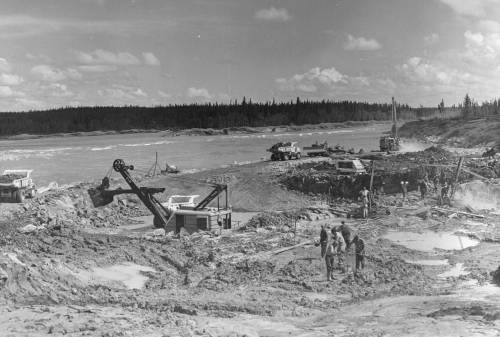
It isn’t hard to see how recent events have brought a new currency to the 1939-40 Winter War between Finland and the Soviet Union, the setting of this first historical novel by a leading French crime writer.
Author Olivier Norek is a former police officer who has written a string of bestselling novels, including a series set in the crime-ridden immigrant suburbs (banlieus) surrounding Paris. Several, including The Lost and the Damned and Between Two Worlds, have been translated into English.
In The Winter Warriors, translated by Nick Caistor and based on the 105-day Winter War (and especially on the exploits of Finnish sniper Simo Hayha, who earns the nickname White Death), parallels abound with Russia’s war against Ukraine.
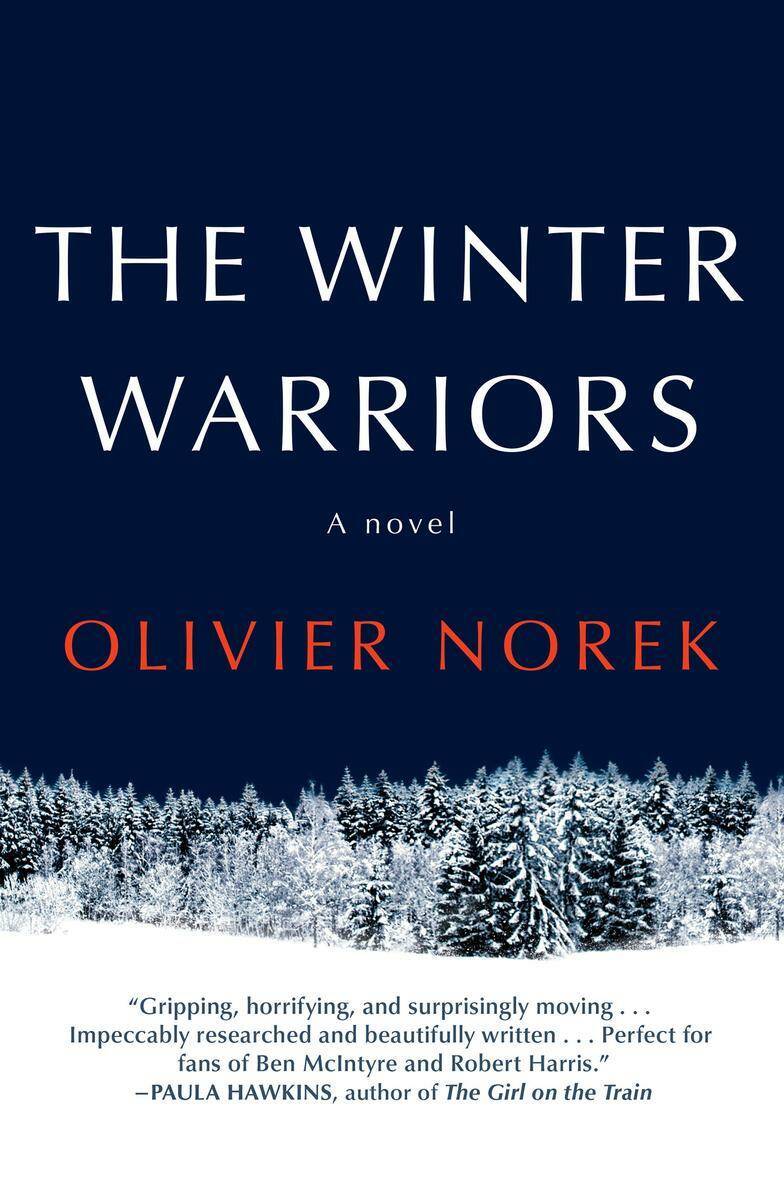
The novel begins with young Finns being called up for military exercises in response to Soviet territorial demands, and follows one group of village youths through the nightmare of battle with a numerically superior foe.
Scenes from the young soldiers’ perspectives are interspersed with sections focusing on the high command in Finland and Moscow, civilians in Helsinki and even diplomatic activity in Paris.
In these scenes beyond the frontline, Norek underlines the historical connections between past and present. The head of Finland’s military, Carl Gustaf Mannerheim, notes to a colleague: “Ukraine, too, wanted its independence. And he starved it. Four million dead can testify to that… I don’t know how he’ll do it, but if Stalin wants to move against Finland, he’ll find an excuse.”
Just as today’s Ukraine was part of the Soviet Union until 1991, Finland had only declared independence from Russia after the October Revolution of 1917. In the Winter War, like the Soviet invasion of eastern Poland a few months earlier, Stalin sought to re-establish the Czar’s empire under the hammer and sickle.
The parallels continue with Vladimir Putin’s “special operation” against Ukraine, which the Kremlin thought would be over in a few days. Norek has Soviet foreign minister Vyacheslav Molotov demonstrate the arrogance of the invaders: “Stalin wants to celebrate his birthday on the steps of the Finnish parliament. In other words, in precisely 20 days. We will be facing an army hastily thrown together, badly equipped, few in numbers and unevenly trained … After all, it’s only Finland.”
As it turned out, the Red Army (whose officer class had recently been purged by Stalin) was the one that was poorly equipped and unevenly trained, and its soldiers paid for that in blood.
And in one additional parallel to today, Finland gets moral support and vague promises of military aid from France — but with Hitler threatening to turn his attentions to the West, that aid never arrives.
While the novel succeeds in showing the continuity of Russian Empire/Soviet Union/Russian Republic ambitions and ruthlessness, as a work of fiction it’s a bit flat. Some of the shortcomings may be a result of translation, such as this mathematical howler: “Each of the twelve aircraft in the first Russian wave dropped 100 kilos of bombs — that is, more than seven tonnes of incendiaries.”
More often, though, the novel suffers from Norek’s determination to pack information into every conversation, leading to unnatural sounding dialogue.
In one scene, a political commissar tells an army commander that an incoming Moscow official is a powerful figure because “He helped to plan the Holodomor.” Surely a proper Stalinist would not have used that Ukrainian word, and would have referred to the manmade starvation as the “liquidation of the kulaks.”
Ultimately, The Winter Warriors is a novel for history buffs, rather than for lovers of fiction.
Bob Armstrong is a history buff, a frequent traveller and a writer who works in every genre but poetry and ransom notes.