Water woes

Financial, environmental impact of Keeyask and other dams on northern communities explored

Advertisement

Advertise with us

Whether the Keeyask dam should have been built is the focus of this opportune study, which also details how meeting the needs of a business-oriented Crown corporation while respecting the cultural expectations of northern Manitoba’s Indigenous inhabitants is a delicate balancing act.

Read this article for free:


or

Already have an account? Log in here »

To continue reading, please subscribe:

Subscribe and receive a limited-edition Free Press branded hat or tote.

Digital Subscription

One year of digital access for only $205*

  • Enjoy unlimited reading on winnipegfreepress.com
  • Read the E-Edition, our digital replica newspaper
  • Access News Break, our award-winning app
  • Play interactive puzzles

*First annual payment billed as $205.00 + GST for one year. This annual subscription will automatically renew at $233.00 + GST every 52 weeks (10% off the regular annual price of $259.35). Offer available to new and qualified returning subscribers only. Cancel any time.

To continue reading, please subscribe:

Add Free Press access to your Brandon Sun subscription for only an additional

$1 for the first 4 weeks*

  • Enjoy unlimited reading on winnipegfreepress.com
  • Read the E-Edition, our digital replica newspaper
  • Access News Break, our award-winning app
  • Play interactive puzzles
Start now

*Your next Brandon Sun subscription payment will increase by $1.00 and you will be charged $17.95 plus GST for four weeks. After four weeks, your payment will increase to $24.95 plus GST every four weeks.

Hey there, time traveller!
This article was published 09/07/2022 (1533 days ago), so information in it may no longer be current.

Whether the Keeyask dam should have been built is the focus of this opportune study, which also details how meeting the needs of a business-oriented Crown corporation while respecting the cultural expectations of northern Manitoba’s Indigenous inhabitants is a delicate balancing act.

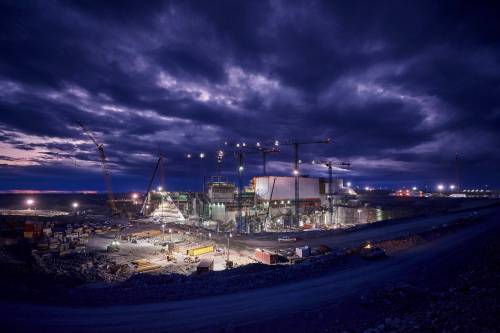
This most recent hydroelectric station built by Manitoba Hydro on the Nelson River began transmitting power in February 2021 along an equally controversial Bipole III transmission line, and follows a string of several earlier stations built in northern Manitoba, beginning with the Kelsey station in the 1950s.

The relatively cheap electrical energy that first supported the Thompson nickel mine — and now feeds an ever-growing, modern provincial economy — is frequently touted as a “green” alternative to fossil fuels, but even prior to Keeyask, earlier dams had changed the river’s flow patterns, affecting beaver and muskrat habitat, disrupting caribou migratory routes and flooding sets of rapids where sturgeon spawned, depriving northern residents of centuries-old fur and food sources.

MANITOBA HYDRO
This comprehensive study encompasses the six-decades-long evolution of hydroelectric development in Manitoba.
MANITOBA HYDRO This comprehensive study encompasses the six-decades-long evolution of hydroelectric development in Manitoba.

Windfall profits from sales to other jurisdictions often justify the costs of hydroelectric development to a debt-laden provincial Crown corporation, but as this timely study affirms, problems arise in justifying the costs handed to certain people and their environment.

Co-editors Aimée Craft, an Indigenous lawyer from Winnipeg and associate professor at the faculty of law at the University of Ottawa, and Jill Blakley, an associate professor in the department of geography and planning at the University of Saskatchewan, reveal how the construction of dams has altered the five largest rivers in the province along with six of its 12 largest lakes, changing the future for several Indigenous communities.

Craft and Blakley are actively involved in issues pertaining to land and water usage. In this book they — along with an eclectic literary panel of academics, researchers and environmental advocates from Manitoba and other provinces, as well as Indigenous community members from several northern First Nations — show why true reconciliation with Indigenous people must acknowledge the effects of hydro development.

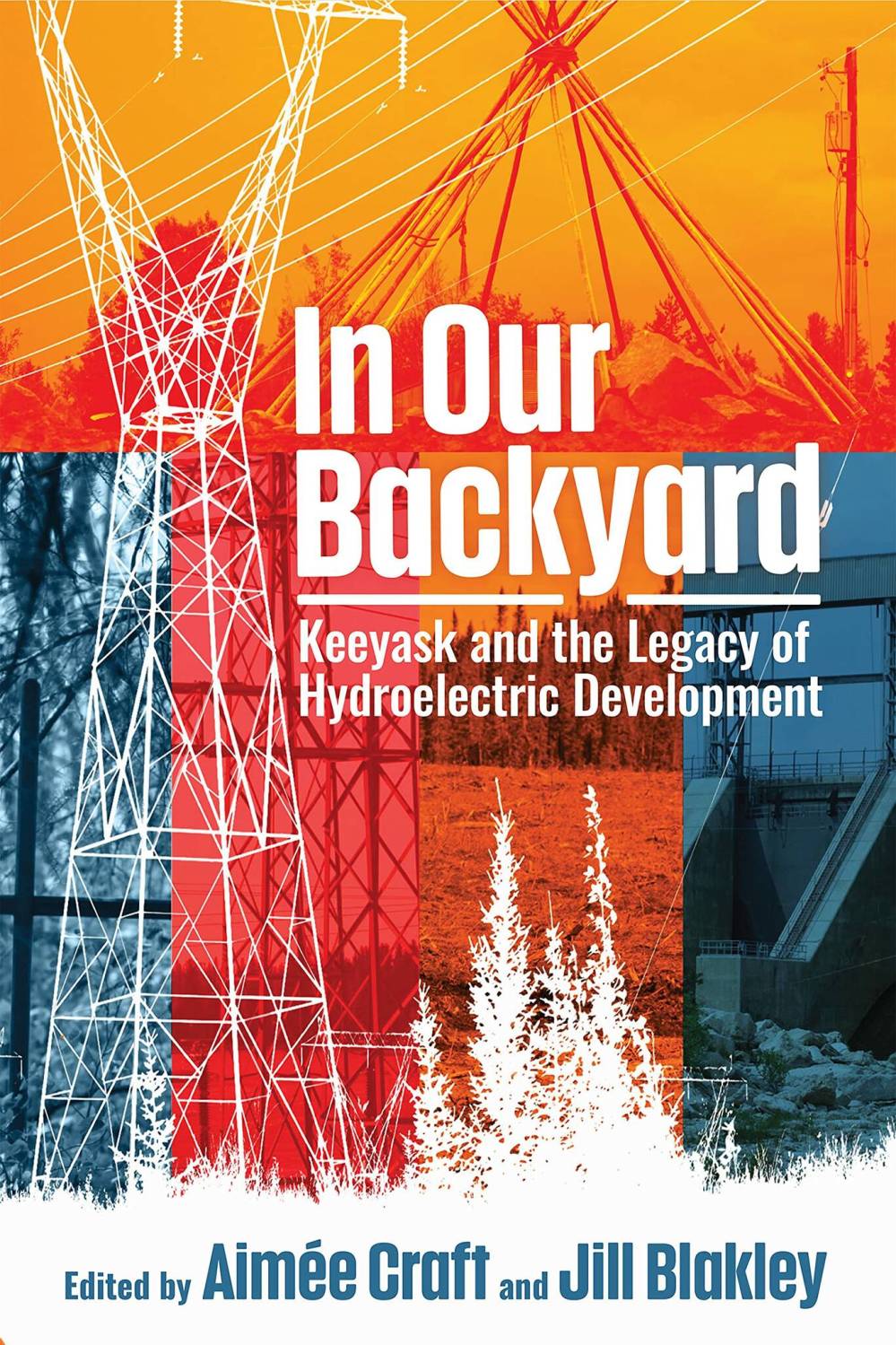
In Our Backyard is an aptly titled collection of heartfelt personal observations and rigorously researched, amply documented scholarly analyses that expose how massive dams have affected formerly pristine landscapes while generating the electricity used by southern Manitoba’s industries and its people.

Images of unconcerned urban-dwelling NIMBYs being cooled by humming air conditioners may cross readers’ minds when encountering the words of a northern community member, speaking in Cree at a public hearing held in Winnipeg in 2013 regarding the Keeyask project then being proposed: “You killed the land. You killed the water. You killed the fish. You killed the Indian.”

This comprehensive study encompasses the six-decades-long evolution of hydroelectric development in Manitoba, revealing the effects of dam construction on northern Manitoba’s river system and tracing the transition from authoritative pronouncements made by Manitoba Hydro to its present-day partnering with Indigenous communities regarding employment and profit-sharing opportunities.

Ending with suggestions for better “consultative processes” prior to future hydro projects, In Our Backyard offers appendices that further dispel the notion of hydroelectricity being a clean and green energy source.
In Our Backyard
In Our Backyard

They include a verbatim apology issued in 2015 by Manitoba’s then-premier, Greg Selinger, to the community of Pimicikamak (formerly Cross Lake First Nation), followed by Chief Cathy Merrick’s appreciation for the gesture, while reminding him, “Our lands, water, and resources are still a mess.”

Several panel contributors support the co-editors’ view that the Keeyask development “goes far beyond” the energy consumption needs of Manitobans, a sentiment echoed in another appendix citing an excerpt from an Economic Review of Bipole III and Keeyask conducted by former Saskatchewan premier Brad Wall and released in 2020.

Yet when recent historic snowfall amounts raised water levels in the Keeyask dam’s reservoir, helping the station’s seven huge generators deliver hydroelectricity to Midwestern states at higher-than-anticipated prices, millions of dollars flowed into Manitoba Hydro coffers, temporarily silencing some critics but emphasizing the difficulty in balancing benefits and costs of hydroelectric development.

Joseph Hnatiuk is a retired teacher who remembers just opening or closing windows to stay cool.

Report Error Submit a Tip

More Stories

Hellebuyck standoff caused by… Nathan MacKinnon?

Mike McIntyre 6 minute read Preview

Hellebuyck standoff caused by… Nathan MacKinnon?

Mike McIntyre 6 minute read Yesterday at 6:34 PM CDT

Looking for someone to blame in the Connor Hellebuyck fiasco and cast as public enemy No. 1? How about long-time Winnipeg Jets nemesis Nathan MacKinnon?

Allow us to explain as we fire up the time machine and head back to February in Italy.

Oh, what could have been if MacKinnon had been able to score on what appeared to be an open net late in the third period of the men’s gold medal game with Hellebuyck down and seemingly out of position.

Instead, the star forward fired wide, keeping the score deadlocked at 1-1 as the clock ticked down on regulation.

Read
Yesterday at 6:34 PM CDT

Siloam Mission, WFPS discussing on-site paramedic to reduce staggering number of emergency calls

Scott Billeck 4 minute read Preview

Siloam Mission, WFPS discussing on-site paramedic to reduce staggering number of emergency calls

Scott Billeck 4 minute read Yesterday at 2:00 AM CDT

Winnipeg’s fire-paramedic service and its largest homeless-serving organization are discussing what it would look like to station at least one paramedic at Siloam Mission, as emergency calls to the downtown facility surge.

The ongoing discussions come as Winnipeg Fire Paramedic Service crews were dispatched 1,771 times during the first eight months of the year to the two adjacent Siloam properties at 303 Stanley St. and 300 Princess St.

WFPS said most of the calls were related to overdoses or other consequences of substance use, with the total nearly double the 854 calls recorded over the same period last year. By comparison, there were 831 calls during the same span in 2024, and 591 in 2023.

“The number of emergency calls isn’t sustainable for us as a service, but it’s certainly not sustainable for them as an agency trying to provide services,” WFPS chief Ryan Sneath told the Free Press. “And they recognize that they’re impacting emergency services, not them specifically, but the site in a significant way.”

Read
Yesterday at 2:00 AM CDT

Impact of Keeyask dam on northern communities, bottom line explored

Reviewed by Joseph Hnatiuk 4 minute read Preview

Impact of Keeyask dam on northern communities, bottom line explored

Reviewed by Joseph Hnatiuk 4 minute read Saturday, Jul. 9, 2022

Whether the Keeyask dam should have been built is the focus of this opportune study, which also details how meeting the needs of a business-oriented Crown corporation while respecting the cultural expectations of northern Manitoba’s Indigenous inhabitants is a delicate balancing act.

This most recent hydroelectric station built by Manitoba Hydro on the Nelson River began transmitting power in February 2021 along an equally controversial Bipole III transmission line, and follows a string of several earlier stations built in northern Manitoba, beginning with the Kelsey station in the 1950s.

The relatively cheap electrical energy that first supported the Thompson nickel mine — and now feeds an ever-growing, modern provincial economy — is frequently touted as a “green” alternative to fossil fuels, but even prior to Keeyask, earlier dams had changed the river’s flow patterns, affecting beaver and muskrat habitat, disrupting caribou migratory routes and flooding sets of rapids where sturgeon spawned, depriving northern residents of centuries-old fur and food sources.

Windfall profits from sales to other jurisdictions often justify the costs of hydroelectric development to a debt-laden provincial Crown corporation, but as this timely study affirms, problems arise in justifying the costs handed to certain people and their environment.

Read
Saturday, Jul. 9, 2022

Give-and-take relationship of Roman leaders takes centre stage in Harris’s historical fiction

Reviewed by Kathryne Cardwell 4 minute read Preview

Give-and-take relationship of Roman leaders takes centre stage in Harris’s historical fiction

Reviewed by Kathryne Cardwell 4 minute read 2:01 AM CDT

British novelist Robert Harris’s latest work is a reflection on tyranny, corruption and betrayal among all-powerful political leaders.

You might be forgiven for thinking it’s a contemporary thriller — it’s actually historical fiction set in ancient Rome.

A former BBC journalist, Harris debuted as a novelist in 1992 with Fatherland, an alternative history where Nazi Germany won the Second World War.

Since then, the prolific author has become best-known for his works of historical fiction, especially his ancient Rome trilogy released from 2006-2015 and the novel Conclave, which was published in 2016 and was made into the film of the same name in 2024.

Read
2:01 AM CDT

Canada must not accept another Iranian autocracy

David Matas 5 minute read 2:01 AM CDT

Iran is a state run by a radical government victimizing its citizens and its neighbours. How do we change that? Any regime change that repeats the mistakes of the past is not a solution.

What went wrong in the past which led to the current regime? One answer is the U.K. and American aided coup which led to the ouster in 1953 of a democratically elected government headed at the time by Mohammad Mossadegh and its replacement with an American friendly autocrat, the Shah of Iran, Mohammad Reza Pahlavi.

The Shah imposed his rule through the Iranian National Intelligence and Security Organization — SAVAK, the acronym of its Persian name. SAVAK systematically inflicted torture, arbitrary killings and extra-judicial killings on perceived opponents of the regime. It was only a matter of time before repression of a regime directed to serving foreign interests would be overthrown.

What replaced the regime of the Shah, in 1979, the current regime of the mullahs, is a regime as intolerant and violent as the regime of the Shah and then some. That was not inevitable. But neither was it surprising. The vicious nature of the current regime, following the example set by the Shah, and its hatred for the United States, reacting to the U.S. aided imposition of the Shah, both echoes and reacts to the past. In 1979, the U.S. reaped what it sowed in 1953.

‘She was looking to destroy me’: convicted harasser faces new charges

Dean Pritchard 6 minute read Preview

‘She was looking to destroy me’: convicted harasser faces new charges

Dean Pritchard 6 minute read Thursday, Sep. 17, 2026

When Agnieszka Ciochon-Newton moved into the 55-plus apartment building on Stradbrook Avenue last year, she came across as “timid, soft-spoken and sensitive,” said building manager Tanya Owen.

Little did Owen know the meek-looking 58-year-old woman would soon turn her life and the lives of many of her tenants upside down and threaten her career and family.

“She was looking to destroy me for a simple tenant disagreement,” Owen said Thursday.

Court records show Ciochon-Newton was arrested earlier this month and charged with seven counts of criminal harassment, two counts of uttering threats and one count each of fraud, breaking and entering, attempting to obstruct justice, intimidation of a justice official, mischief and defamatory libel.

Read
Thursday, Sep. 17, 2026