Night at the opera: Dustin Hoffman debuts as director on aging diva tale ‘Quartet’
Advertisement
Read this article for free:
or
Already have an account? Log in here »
To continue reading, please subscribe:

Digital Subscription
One year of digital access for only $205*
- Enjoy unlimited reading on winnipegfreepress.com
- Read the E-Edition, our digital replica newspaper
- Access News Break, our award-winning app
- Play interactive puzzles
*First annual payment billed as $205.00 + GST for one year. This annual subscription will automatically renew at $233.00 + GST every 52 weeks (10% off the regular annual price of $259.35). Offer available to new and qualified returning subscribers only. Cancel any time.
To continue reading, please subscribe:
Add Free Press access to your Brandon Sun subscription for only an additional
$1 for the first 4 weeks*
- Enjoy unlimited reading on winnipegfreepress.com
- Read the E-Edition, our digital replica newspaper
- Access News Break, our award-winning app
- Play interactive puzzles
*Your next Brandon Sun subscription payment will increase by $1.00 and you will be charged $17.95 plus GST for four weeks. After four weeks, your payment will increase to $24.95 plus GST every four weeks.
Read unlimited articles for free today:
or
Already have an account? Log in here »
Hey there, time traveller!
This article was published 24/01/2013 (4992 days ago), so information in it may no longer be current.
TORONTO – At least Dustin Hoffman is honest when asked why it took him so long to make his directing debut.
“I don’t know,” Hoffman said.
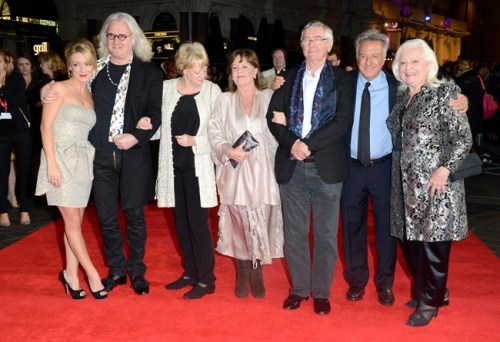
The 75-year-old Hoffman went behind the camera for “Quartet,” starring Maggie Smith, Tom Courtenay, Billy Connolly and Pauline Collins as aging British opera divas at a retirement home for musicians who put aside past differences for a reunion concert.
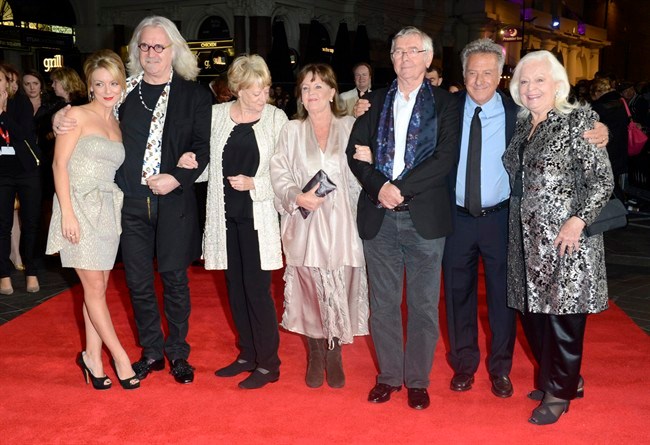
“Quartet,” which premiered at last September’s Toronto International Film Festival, opened in a handful of theatres Jan. 11 and expands to wider release Friday.
Hoffman always wanted to direct, optioning stories, working on scripts, developing projects. He even started out to direct the 1978 ex-convict drama “Straight Time,” in which he also was starring. Hoffman cast the film, worked on the script with several writers and said he “even got myself secreted into San Quentin — which is another story — in a convict’s outfit for about five hours before I got found out.”
Clearly, it was Hoffman’s passion project, but as he began watching dailies of the footage he had shot, he lost confidence and “fired myself” as director. Hoffman turned to old friend Ulu Grosbard, who had directed him in “Who Is Harry Kellerman and Why Is He Saying Those Terrible Things About Me?”, to finish “Straight Time,” but it wound up being an acrimonious shoot as Hoffman continued to try to co-direct and their friendship chilled.
“Between that one and now, I don’t know. I worked on stuff, I’ve developed stuff and talked myself out of it for whatever reason,” Hoffman said in an interview at the Toronto festival.
“People will say, ‘Well, you didn’t do too badly, but nevertheless, we all would like to go back. I mean, it just goes under the heading of, I should have done this a long time ago. … I should have, should have, should have. I should not have gone into acting. I should have stayed and become a jazz pianist and worked at it until I was good enough. That’s the thing I most regret.
After “Straight Time,” it took more than 30 years for Hoffman, a two-time Academy Award winner for “Kramer vs. Kramer” and “Rain Man,” to try directing again. After finishing production on the 2008 romance “Last Chance Harvey” in London, Hoffman told cinematographer John de Borman to let him know if any interesting scripts came his way for the actor to direct. Soon after, de Borman called Hoffman about “Quartet,” which had been adapted by screenwriter Ronald Harwood from his stage play.
Hoffman read it on the plane flying home and was hooked. While his lead players are actors, Hoffman filled up the retirement home with real aging opera singers, “people who had performed in places like La Scala, but no one has rang their phone or knocked on their door in 20 years,” he said.
“They’re a special breed of people. Everything is heightened. I do think they’re superhuman,” Hoffman said. “They’re like an exaggeration, kind of, of actors. I mean, we’re all horny bastards but they’re off the charts. And they’re detached from themselves. ‘How are you doing today, Maurice?’ He says, ‘The voice isn’t good.’ Not my voice. It’s THE voice.”
Just like his aging opera stars, Hoffman has found his acting choices diminishing as he ages. A stage star in his 20s, Hoffman hit it big in Hollywood at age 30 with “The Graduate” and had a solid run of leading roles well into his 50s.
Inevitably, he has fallen back mostly on secondary roles in his 60s and 70s.
“I think supporting roles by definition are two-dimensional. You can’t put the third dimension on it, you don’t have the screen time to go home and see what their life is like,” Hoffman said. “They’re supporting the three-dimensional characters, and yes, I guess you do miss that, because you got used to trying to peel that onion in terms of those lead characters that you played.”
The exception to losing out on lead roles as actors age “would be people that carry the gun. The people that hold the gun have a longer lifespan,” Hoffman said. “John Wayne hung in there, Sean Connery hung in there. If you’re an action star, the gun is a phallic symbol. It’s the last thing to age.”