A quiet power
Film shines in its modesty and avoidance of clichés

Advertisement
Read this article for free:
or
Already have an account? Log in here »
To continue reading, please subscribe:

Digital Subscription
One year of digital access for only $205*
- Enjoy unlimited reading on winnipegfreepress.com
- Read the E-Edition, our digital replica newspaper
- Access News Break, our award-winning app
- Play interactive puzzles
*First annual payment billed as $205.00 + GST for one year. This annual subscription will automatically renew at $233.00 + GST every 52 weeks (10% off the regular annual price of $259.35). Offer available to new and qualified returning subscribers only. Cancel any time.
To continue reading, please subscribe:
Add Free Press access to your Brandon Sun subscription for only an additional
$1 for the first 4 weeks*
- Enjoy unlimited reading on winnipegfreepress.com
- Read the E-Edition, our digital replica newspaper
- Access News Break, our award-winning app
- Play interactive puzzles
*Your next Brandon Sun subscription payment will increase by $1.00 and you will be charged $17.95 plus GST for four weeks. After four weeks, your payment will increase to $24.95 plus GST every four weeks.
Read unlimited articles for free today:
or
Already have an account? Log in here »
Hey there, time traveller!
This article was published 25/11/2016 (3567 days ago), so information in it may no longer be current.
Focusing on the mixed-race couple from Virginia who challenged the United States’ anti-miscegenation laws — that is, the statutes forbidding interracial relationships — this drama combines pared-down cinematic poetry with fact. By happy historical accident, for example, the couple’s last name was Loving.
Writer-director Jeff Nichols is handling the kind of emotionally wrenching and politically important subject that could easily skew toward the sentimentalized or the sensationalized. Instead, the gifted filmmaker behind Take Shelter and Mud has crafted one of the slowest and quietest films of 2016. Combining a scrupulously intelligent script with standout lead performances, Loving is stubbornly modest and profoundly moving.
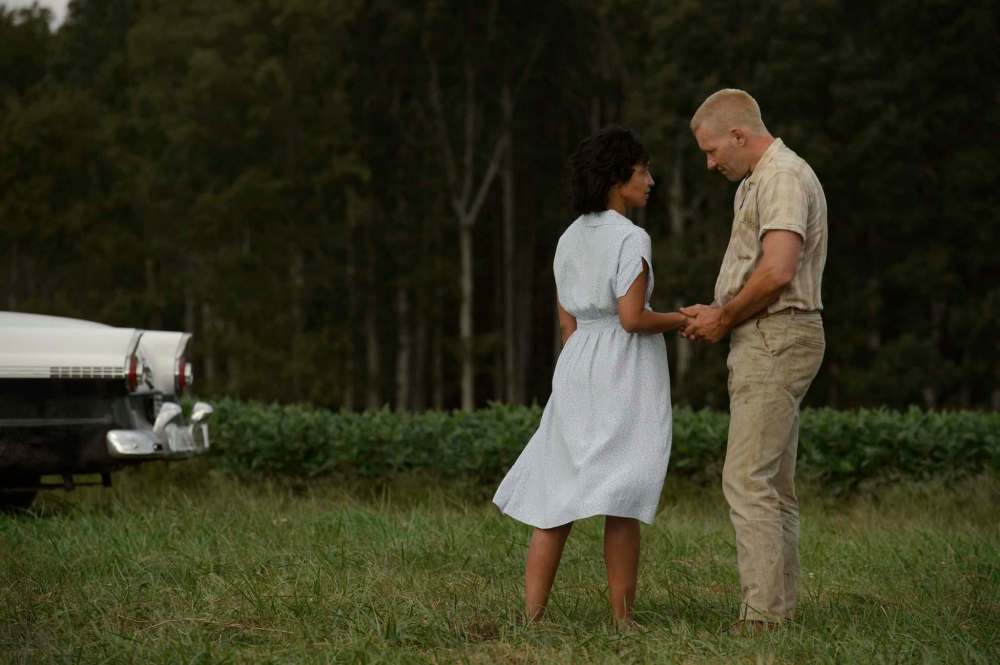
Richard Loving, played by Australian Joel Edgerton (Black Mass, The Gift), is a bricklayer by trade. He’s also white. Mildred Jeter (Preacher’s Ruth Negga) is of African-American, Cherokee and Rappahannock indigenous descent. They live in Central Point, a rural area where the races mostly rubbed along all right even during the Jim Crow era, probably because of a shared experience of poverty and hard labour.
Richard and Mildred might have been called high school sweethearts, except they attended different schools in segregated Virginia. In 1958, Richard and Mildred married in Washington, D.C. a few hours away, where their union was legal. Despite the marriage licence hung defiantly above their bed, they were arrested in Virginia five weeks after their wedding.
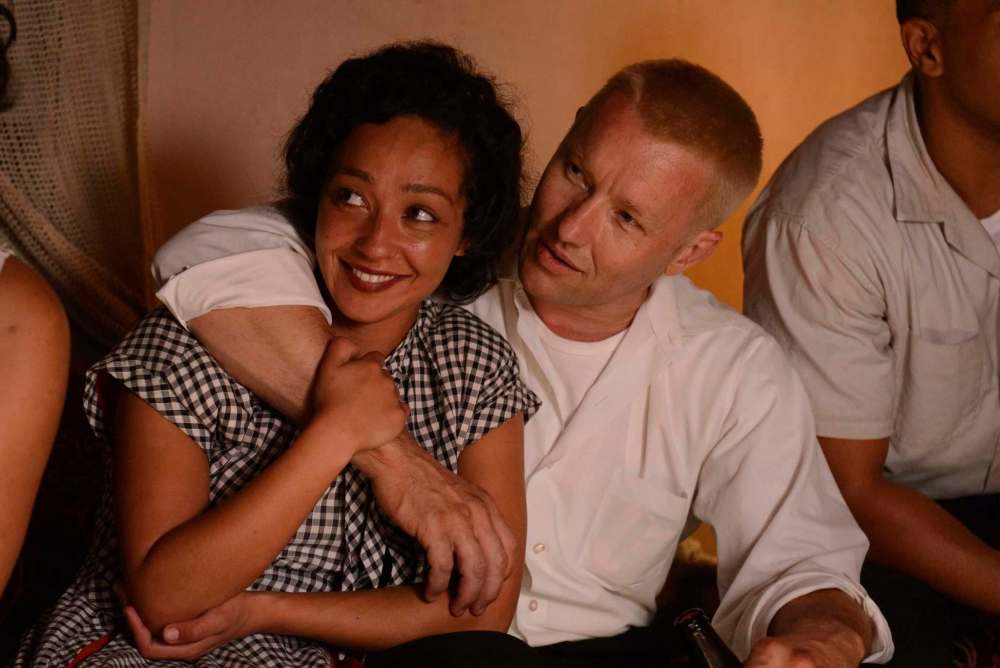
The couple avoided prison sentences on condition they leave Virginia, never to return at the same time, for a period of 25 years. Living in exile in Washington, eventually with three young children, Mildred, especially, misses the countryside and her large, close family. She begins a long legal struggle to get them back home.
Nichols takes some liberties with the historical record, but not to fall into Hollywood clichés. He avoids impassioned courtroom speeches, scrappy David-and-Goliath showdowns and sudden story pivots. The Arkansas-born director is also one of the few American filmmakers who can deal with Southern locales, economic hardships and the experience of ordinary working people without treating these subjects as somehow exotic.
His characters are recognizably human, not high-minded paragons. Bernie Cohen (Nick Kroll), the lawyer who takes the Lovings’ case, is motivated by liberal idealism but also by hopes for a high-profile Supreme Court case. The Lovings, especially Richard, are reluctant civil-rights activists.
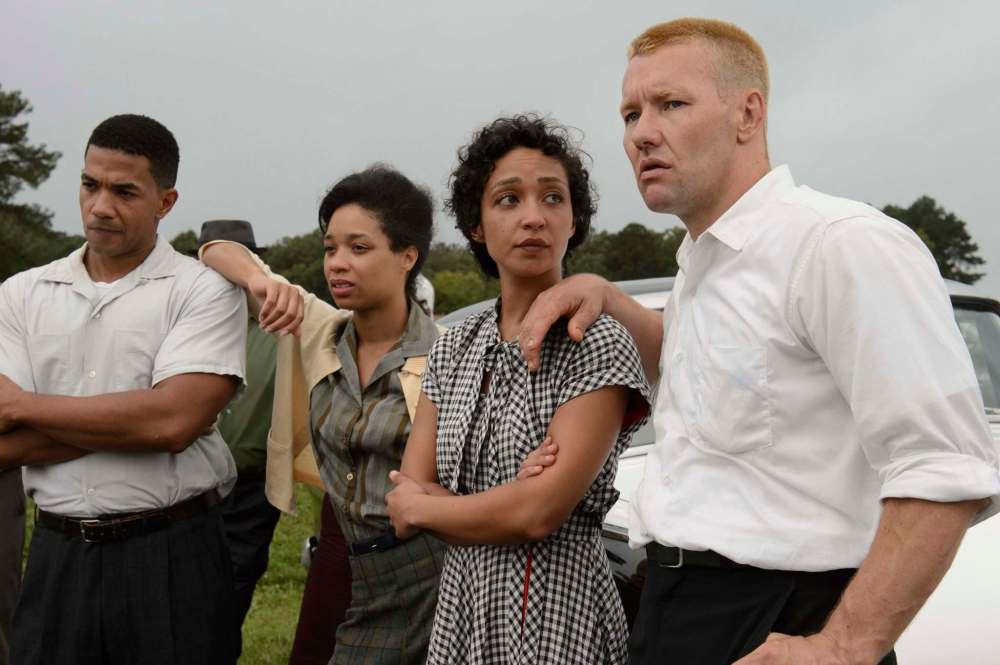

Despite a lack of obvious, showy drama, there is, nonetheless, an atmosphere of constant dread. The Lovings have been told that their union, their family and their children are illegal and unacceptable, and when they return surreptitiously to Virginia, they live in perpetual fear of being found out. This feeling ultimately spreads to the audience. In one scene, we see a rope swung over a branch. The first thought is of lynchings, but no, it’s just a tree swing for the kids.
Loving feels current, partly because Nichols avoids dressing up the past as an earnest, sepia-toned history lesson, but partly for the more depressing reason that the racism and divisiveness it depicts haven’t gone away. There is a sudden urgency to this film that Nichols and the cast could not have foreseen.
In 1963, Mildred turned for help to U.S. attorney general Robert Kennedy, who referred her to the American Civil Liberties Union (ACLU), which took on the case without charge. More than 50 years later, president-elect Donald Trump has appointed as attorney general an on-the-record racist who has called the ACLU an “un-American” organization.
That’s not to say that Loving is a bringdown film. Anchored by Negga and Edgerton’s understated but immediate performances, this is, in fact, a very loving story, tender as well as deep, and filled with everyday hopefulness in the face of hatred.
alison.gillmor@freepress.mb.ca
Studying at the University of Winnipeg and later Toronto’s York University, Alison Gillmor planned to become an art historian. She ended up catching the journalism bug when she started as visual arts reviewer at the Winnipeg Free Press in 1992.
Our newsroom depends on a growing audience of readers to power our journalism. If you are not a paid reader, please consider becoming a subscriber.
Our newsroom depends on its audience of readers to power our journalism. Thank you for your support.
Movie review
Loving
Starring Ruth Negga and Joel Edgerton
Grant Park
PG
123 minutes
4.5 out of five
Other voices
It shows how far America has come in its views of race and equality — and how far is left to go.
— Colin Covert, Minneapolis Star Tribune
An emotional powerhouse that will leave audiences drained and exultant, Loving is the best film I’ve seen so far in 2016.
— Robert W. Butler, Kansas City Star
Loving has a big, powerful story at its fingertips but only scratches the surface of telling it.
— Lauren Chval, RedEye
Negga and Edgerton make these noble people three-dimensional, turning a docile, unambitious couple with neither the self-knowledge nor the words to launch a social revolution into unlikely protagonists in the civil-rights movement.
— Kate Taylor, Globe and Mail
Intimate, moving and superbly underplayed, Loving is every bit as soft-spoken and subtly implacable as its protagonists.
— Ann Hornaday, Washington Post
Studying at the University of Winnipeg and later Toronto’s York University, Alison Gillmor planned to become an art historian. She ended up catching the journalism bug when she started as visual arts reviewer at the Winnipeg Free Press in 1992.
Our newsroom depends on a growing audience of readers to power our journalism. If you are not a paid reader, please consider becoming a subscriber.
Our newsroom depends on its audience of readers to power our journalism. Thank you for your support.
Advertisement Advertise With Us
Advertisement Advertise With Us