Soaring with Parachute Club
Singer pulled rip cord on music career after success in the '80s
Advertisement
Read this article for free:
or
Already have an account? Log in here »
To continue reading, please subscribe:

Digital Subscription
One year of digital access for only $205*
- Enjoy unlimited reading on winnipegfreepress.com
- Read the E-Edition, our digital replica newspaper
- Access News Break, our award-winning app
- Play interactive puzzles
*First annual payment billed as $205.00 + GST for one year. This annual subscription will automatically renew at $233.00 + GST every 52 weeks (10% off the regular annual price of $259.35). Offer available to new and qualified returning subscribers only. Cancel any time.
To continue reading, please subscribe:
Add Free Press access to your Brandon Sun subscription for only an additional
$1 for the first 4 weeks*
- Enjoy unlimited reading on winnipegfreepress.com
- Read the E-Edition, our digital replica newspaper
- Access News Break, our award-winning app
- Play interactive puzzles
*Your next Brandon Sun subscription payment will increase by $1.00 and you will be charged $17.95 plus GST for four weeks. After four weeks, your payment will increase to $24.95 plus GST every four weeks.
Read unlimited articles for free today:
or
Already have an account? Log in here »
Hey there, time traveller!
This article was published 19/10/2014 (4353 days ago), so information in it may no longer be current.
In the mid-1980s, Parachute Club’s infectiously effervescent dance hit Rise Up was all over the airwaves, and its colourful video of multicultural inclusion was in regular rotation on MuchMusic.
The Toronto group’s song has since transcended the pop charts to become an anthem for empowerment for women, the LGBT community and even the late Jack Layton, who employed it to rouse the NDP faithful (Parachute Club lead singer Lorraine Segato sang Rise Up at Layton’s memorial service).
At the height of their success, Parachute Club won six Juno Awards, six CASBY awards (Canadian Artists Selected By You, given out by Toronto radio station CFNY), several gold and platinum albums and a place on Canada’s Walk Of Fame, and performed before tens of thousands of adoring fans across Canada and in Europe. Their self-titled debut album was produced by whiz kid Daniel Lanois (U2, Neil Young, Bob Dylan, Peter Gabriel), while their third album, Small Victories, was co-produced by (and featured) John Oates of Hall & Oates. The band also successfully sued McCain Foods for unlawful use of their signature song, Rise Up, in a commercial for rising-crust pizza.

Few knew one of the principal members of the group was a Manitoban. Singer/percussionist Julie Masi was born and raised on a farm near Dominion City and sang in Winnipeg for a decade before moving to Toronto. In Manitoba, she was known by her maiden name, Julie Opocensky.
“From the time I was a little girl, I wanted to be a singer,” Masi said from her home in Kelowna, B.C.
Starting out singing with choirs, at age 11 Masi’s father bought her a drum kit and her sister Janet an electronic keyboard. With her older brother, Bobby, on guitar, the three Opocensky kids would perform at house parties around southern Manitoba.
Following Bobby’s death, the sisters were approached by Letellier musicians Rick (bass) and Bob Gallant (vocals) to join their band, the Roadside Rums. Julie was 14 but already an accomplished drummer and vocalist.
“We were made up of musicians from Letellier, Dominion City and St. Pierre-Jolys,” recalls Rick Gallant. “We rehearsed in the Opocenskys’ basement. We played mostly male vocal songs, but the two sisters could do background harmonies beautifully.”
With the addition of guitarist Gilles Carriere (Ken Shultz also played guitar in the band), the Roadside Rums transformed into ManMaid. In the latter ’60s, ManMaid played community centres and high school dances throughout southern Manitoba. The highlight of their sets came when Julie would step up front and belt out White Rabbit.
“She had such a strong voice for such a small, frail girl,” said Gallant. “It was our most requested number.”
Adds Masi, “That was such a thrill for me, to stand in front of the band and sing. I felt so empowered.”
c_
“I think Janet and Julie’s parents were a little uneasy with their girls travelling around the countryside with a bunch of hormonally charged teenage boys, but they were very supportive,” Gallant said with a smile.
Following a gig at the University of Manitoba in April 1970, where record producer Bob Burns remarked how good the band was, ManMaid folded that spring. Masi completed high school, then moved to Winnipeg to study hairdressing.
“My heart was still in music, but my dad insisted I needed a regular career.” She soon found work singing around town with various bands. “I would go to clubs and introduce myself to the band and ask if I could sing a song with them.”
Stints with local outfits, including the Bobby Bilan Band (“That was so strange,” Masi said), Benge (who released the single Money Man) and disco band Bermuda, ultimately led to a featured role as a vocalist with Ron Paley’s jazz band.
“We used to do a Saturday afternoon jazz gig at the Norwood Hotel, and people would be lined up to see us.”
Masi appeared on Paley’s 1977 album Boxton, recorded at Roade Studios on Grosvenor Avenue. Her soulful version of Am I Blue is one of the highlights of the album.
“I started doing a lot of session work at Roade Studios,” Masi recalls. “I was making a good living doing that. I did lots of jingles, as well as sessions with Burton Cummings, who was working on demos for his first solo album, and with singer/songwriter Tim Thorney.
“Julie was the best,” said Thorney. “Ron Paley got Julie and me to sing a duet on a Jon Hendricks song he was producing. Julie nailed it right away. I remember thinking I’d never get it, but she was kind enough to help me find the notes. We later got together in Toronto and wrote and recorded a cool five-tune demo that I’d love to hear again.”
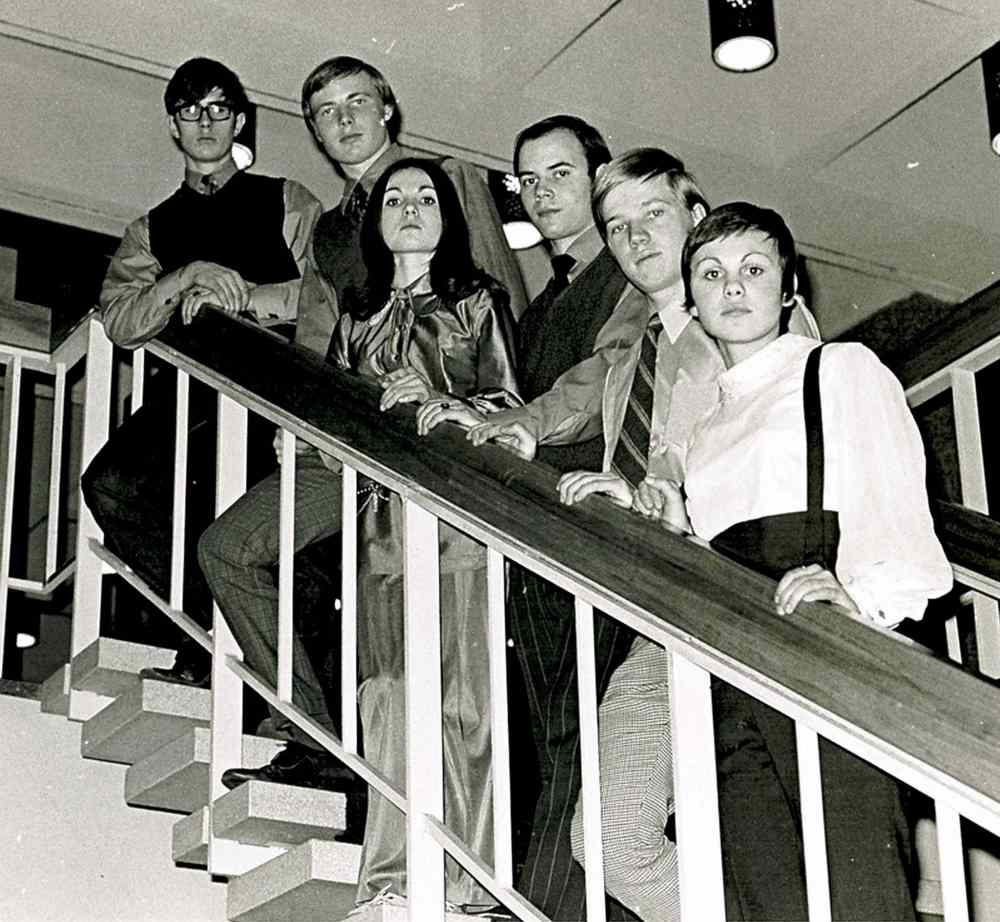
Married to local hair-salon owner Agostino Masi, by the early ’80s, Masi was looking for something more musically challenging. A friend suggested he could get her plenty of studio work in Toronto, so she headed east, quickly integrating into the music scene. In 1982, Lorraine Segato, Billy Bryan and Lauri Conger were putting together what would become Parachute Club, and Masi was invited to join on timbales and backing vocals.
“Part of the thing around Parachute Club was we made a very conscious decision to recruit women who played instruments,” said Segato.
The highly percussive group played the burgeoning Queen Street club scene before being signed to a recording contract. “It all happened so quickly,” said Masi.
Despite a strong political and social agenda in their music, there was no denying the popular appeal of Rise Up.
“It was fun music for us, but we really believed in the lyrics and message,” said Masi. “It was a very creative experience, and the camaraderie between everyone in the band was tremendous.”
“Julie has an uncanny ability to blend her voice with others and still retain her own personality in her voice,” said Segato. “She brought a fantastic energy to what we were doing in Parachute Club. She could have been the leader of her own group, yet was the perfect supporting member. She has tremendous charisma and was so easy to work with, a beautiful person.”
Further hits, including The Feet Of The Moon, co-written by Masi, and Love is Fire, a duet with Oates, plus extensive touring, awards and video shoots solidified Parachute Club’s stature at the top of the Canadian music scene.
“It was a dream come true and a very exciting time,” Masi said of the band’s heyday. “We were treated in certain ways that you never imagined before. My dad never thought I could make a living in music, but when he saw a limo come to pick me up he changed his mind.”

By 1986, Masic was tiring of the touring grind and growing dissatisfaction within the group and left after a tour to promote their third album.
Session work and backing up the likes of Dan Hill, Bruce Cockburn, Shirley Eikhard, Alannah Myles, Leonard Cohen, Ken Whiteley and David Foster, among others, kept Masi busy.
“I got a call from k.d. lang to go on tour in the States as her supporting singer, but when I told her manager how much I was making doing sessions they couldn’t match it,” she said.
In 1990, Masi turned her back on her singing career to move to Temecula, Calif., where her husband had an interest in a restaurant. She spent the next 15 years there raising her son, Lucca, and doing the occasional singing gig. In 2005, the family moved to Kelowna. Agostino died in 2010.
Masi continues to perform around Kelowna, with the band Cover-2-Cover or accompanied by pianist Steve Soucy. In recent years, she has appeared several times with a reunited Parachute Club.
“Even when she was still a teenager, we all thought Julie was destined for a career in music,” said Gallant. “Everyone here in southern Manitoba is proud of her success.”
Masi’s mother passed away in 1971, never seeing her daughter find fame.
“Julie was fearless and determined to create a name for herself,” said her sister, Janet. “The passion and perseverance in her was so strong, there was no doubt she would build a successful singing career.”

Adds Segato, “Julie is a best-kept secret yet to be discovered for the massive talent she is.”
“I feel very fortunate that my career went the way it did,” said Masi. “There are always ‘what ifs,’ but I have no regrets. My life went the way it was supposed to. If I hadn’t gone to California, I might not have had my son. I’m still performing and writing better than ever, so who knows? I’ve been blessed with this voice, and I love seeing that I can still touch people with my singing.”
Sign up for John Einarson’s winter Off The Record music-history classes at mcnallyrobinson.com.