Hologram tours remove magic from music
Laser projection not the only way to immortalize artists

Advertisement
Read this article for free:
or
Already have an account? Log in here »
To continue reading, please subscribe:

Digital Subscription
One year of digital access for only $205*
- Enjoy unlimited reading on winnipegfreepress.com
- Read the E-Edition, our digital replica newspaper
- Access News Break, our award-winning app
- Play interactive puzzles
*First annual payment billed as $205.00 + GST for one year. This annual subscription will automatically renew at $233.00 + GST every 52 weeks (10% off the regular annual price of $259.35). Offer available to new and qualified returning subscribers only. Cancel any time.
To continue reading, please subscribe:
Add Free Press access to your Brandon Sun subscription for only an additional
$1 for the first 4 weeks*
- Enjoy unlimited reading on winnipegfreepress.com
- Read the E-Edition, our digital replica newspaper
- Access News Break, our award-winning app
- Play interactive puzzles
*Your next Brandon Sun subscription payment will increase by $1.00 and you will be charged $17.95 plus GST for four weeks. After four weeks, your payment will increase to $24.95 plus GST every four weeks.
Read unlimited articles for free today:
or
Already have an account? Log in here »
Hey there, time traveller!
This article was published 05/01/2019 (2785 days ago), so information in it may no longer be current.
Every music fan has a list of bands they wish they’d seen live; a wish-I-saw list, if you will. These lists are usually populated with legends and gone-too-soons.
For some, that’s the Beatles. Or Queen, with Freddie Mercury. Or Whitney Houston. Now, those lists might include Prince, or Bowie or Aretha.
For me, it’s Nirvana. I was six when Nevermind came out, and by the time I got seriously into Nirvana a decade later, Kurt Cobain had been dead for seven years.
Thanks to the creepy business of posthumous “hologram” tours, however, it’s more possible than your favourite, long-deceased act will grace a stage near you.
As The Canadian Press has reported, fans and musicians alike are grappling with this new (virtual) reality.
Musicians such as Tom Stephen, the former drummer and manager of the Jeff Healey Band, was approached about bringing back the late guitarist Healey, who died in 2008 at 41, via hologram. Understandably, he was reluctant.
The upcoming year will see several high-profile hologram tours, including one by the late Amy Winehouse courtesy of BASE Hologram, the American production company behind last fall’s holographic Roy Orbison tour that stopped in Toronto.
I saw Winehouse before her tragic death in 2011. It was an afternoon set at Lollapalooza ’07 in Chicago.
By then, she was already so skinny and tired, and her set was painful to watch.
Later that same year, she was booed during the first night of a tour that was then cancelled. Seeing her then felt like watching an obviously sick woman being exploited.
Putting a dead woman on stage? I’ll pass, thanks.
Indeed, the premise of a hologram tour raises all kinds of ethical questions — people are, in effect, being brought back from the dead. But something about them seems inevitable, too, the next chapter in the evolution of arena shows.
Concerts, especially at the arena level, are increasingly tightly honed, big-budget affairs that value precision and perfection over the things that make live music exciting: the opportunities for musical improvisation, banter, a surprise performance of a rare song, a charming screw-up, an ad-libbed lyric.
You know, the stuff that reminds you that the people behind those classic, enduring songs are, in fact, human beings.
Concerts are no longer concerts. They are “spectacles,” a word that used to be reserved for chart-topping pop acts who can’t really sing and have to pad their shows with sparkly distractions.
Now, everyone from country crooners to rock bands are investing in mesmerizing, larger-than-life shows that command triple-digit ticket prices. This can result in higher quality live shows, sure — people sound and look amazing more often than they don’t these days — but the concert-going experience risks becoming increasingly homogenous and, well, boring. Something to hashtag and Instagram.
As our artists become more slickly packaged and artificial, is it any wonder that holograms — a perfect projection in their likeness — would eventually replace them?
A hologram tour can contain only hits and career highlights.
There’s no awkward road-testing of new songs, no ballads from the latest album that send everyone for beer.
An artist doesn’t even need to show up. Hell, an artist doesn’t even have to be dead. ABBA is still alive, and even the iconic Swedish pop band is planning a hologram tour for 2019.
Perhaps this is a new way for artists to survive the rigours of touring. A hologram can’t develop vocal nodules. A hologram’s body can’t wear out. And considering how much mid-level acts need to tour to just survive this business, maybe sending out a hologram in their stead is the (bleak) future of touring.
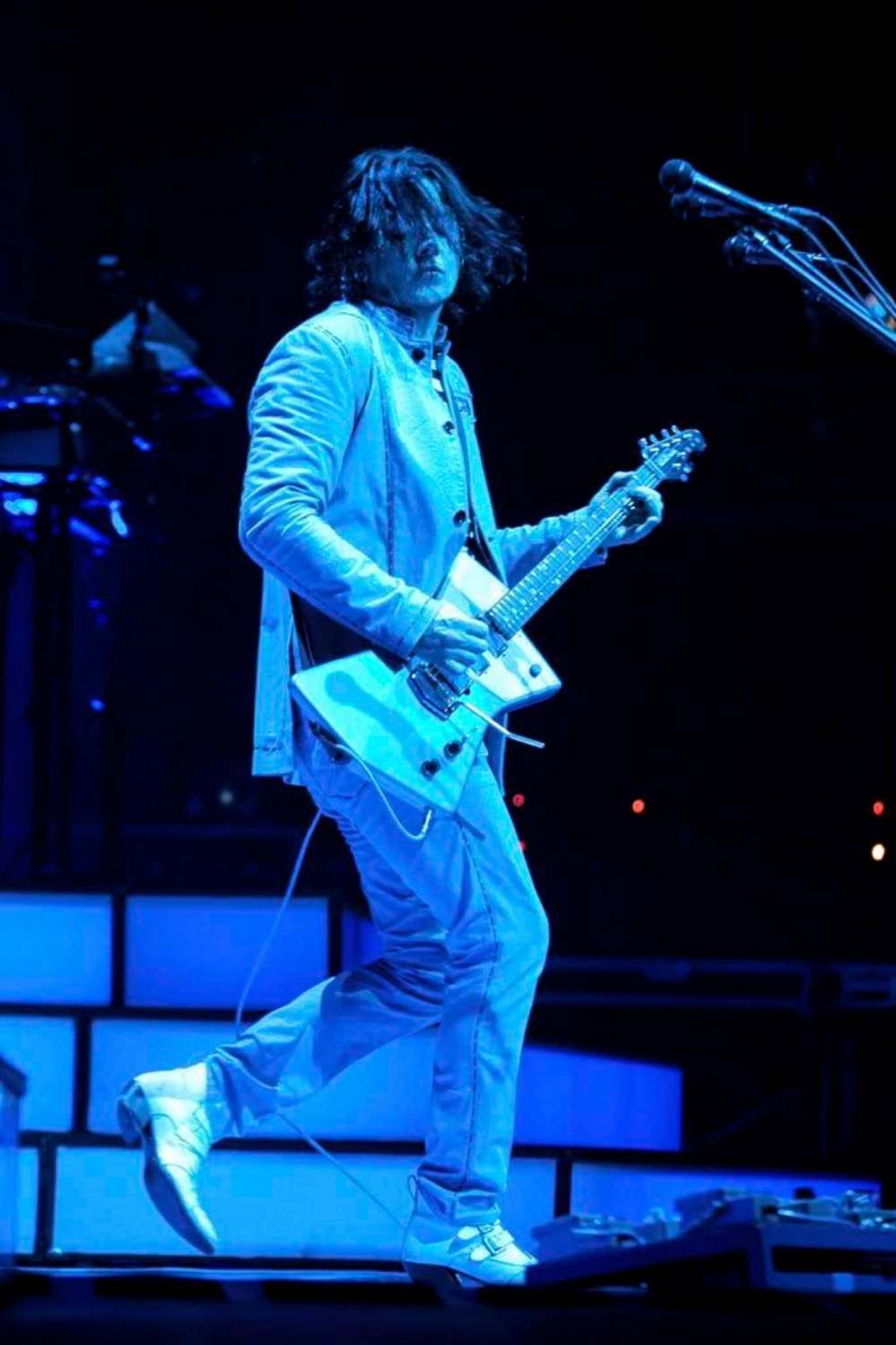
But so much of what makes live music so powerful — that human connection — would be lost. Jack White’s recent concert at Bell MTS Place felt like the opposite of a hologram tour, a return to what the live concert experience is about: a temporary community of like-minded people gathering to share and be present for a one-night-only experience.
It happens, and then it’s over. It lives in your memory.
Besides, our musical heroes have already been immortalized via technology a lot more primitive than laser projection.

We have the records, the tapes, the CDs, the digital files. Artists don’t live forever, but music can. The body of work doesn’t decay, so long as there are people who want to listen to it. The music is the legacy.
Perhaps the demand for hologram tours says something else about us — perishables with varying expiration dates, staring down the reality of our own mortality.
After all, holograms create a seductive illusion: a world where everything is perfect and nobody dies.
jen.zoratti@freepress.mb.ca
Twitter: @JenZoratti
Jen Zoratti is a columnist and feature writer working in the Arts & Life department, as well as the author of the weekly newsletter NEXT. A National Newspaper Award finalist for arts and entertainment writing, Jen is a graduate of the Creative Communications program at RRC Polytech and was a music writer before joining the Free Press in 2013. Read more about Jen.
Every piece of reporting Jen produces is reviewed by an editing team before it is posted online or published in print – part of the Free Press‘s tradition, since 1872, of producing reliable independent journalism. Read more about Free Press’s history and mandate, and learn how our newsroom operates.
Our newsroom depends on a growing audience of readers to power our journalism. If you are not a paid reader, please consider becoming a subscriber.
Our newsroom depends on its audience of readers to power our journalism. Thank you for your support.
Jen Zoratti is a columnist and feature writer working in the Arts & Life department, as well as the author of the weekly newsletter NEXT. A National Newspaper Award finalist for arts and entertainment writing, Jen is a graduate of the Creative Communications program at RRC Polytech and was a music writer before joining the Free Press in 2013. Read more about Jen.
Every piece of reporting Jen produces is reviewed by an editing team before it is posted online or published in print – part of the Free Press‘s tradition, since 1872, of producing reliable independent journalism. Read more about Free Press’s history and mandate, and learn how our newsroom operates.
Our newsroom depends on a growing audience of readers to power our journalism. If you are not a paid reader, please consider becoming a subscriber.
Our newsroom depends on its audience of readers to power our journalism. Thank you for your support.
Related Articles
Hologram tours remove magic from music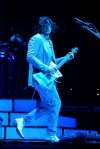
Advertisement Advertise With Us
Advertisement Advertise With Us