They really were The Wonder Years
Young stars of fondly remembered TV series experienced what characters were going through
Advertisement
Read this article for free:
or
Already have an account? Log in here »
To continue reading, please subscribe:

Digital Subscription
One year of digital access for only $205*
- Enjoy unlimited reading on winnipegfreepress.com
- Read the E-Edition, our digital replica newspaper
- Access News Break, our award-winning app
- Play interactive puzzles
*First annual payment billed as $205.00 + GST for one year. This annual subscription will automatically renew at $233.00 + GST every 52 weeks (10% off the regular annual price of $259.35). Offer available to new and qualified returning subscribers only. Cancel any time.
To continue reading, please subscribe:
Add Free Press access to your Brandon Sun subscription for only an additional
$1 for the first 4 weeks*
- Enjoy unlimited reading on winnipegfreepress.com
- Read the E-Edition, our digital replica newspaper
- Access News Break, our award-winning app
- Play interactive puzzles
*Your next Brandon Sun subscription payment will increase by $1.00 and you will be charged $17.95 plus GST for four weeks. After four weeks, your payment will increase to $24.95 plus GST every four weeks.
Read unlimited articles for free today:
or
Already have an account? Log in here »
Hey there, time traveller!
This article was published 16/10/2014 (4354 days ago), so information in it may no longer be current.
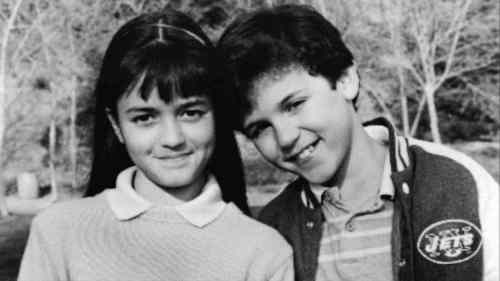
When adolescents Kevin Arnold and Winnie Cooper had their first kiss in the pilot episode of the Emmy-winning ABC series The Wonder Years, it also marked the first time that Fred Savage and Danica McKellar, who played those roles, had kissed anyone romantically.
“I was totally nervous,” recalled the 39-year-old McKellar, a bestselling author, mathematician and advocate for math education.
And that’s probably one reason why they did six takes to get that tender moment just perfect.
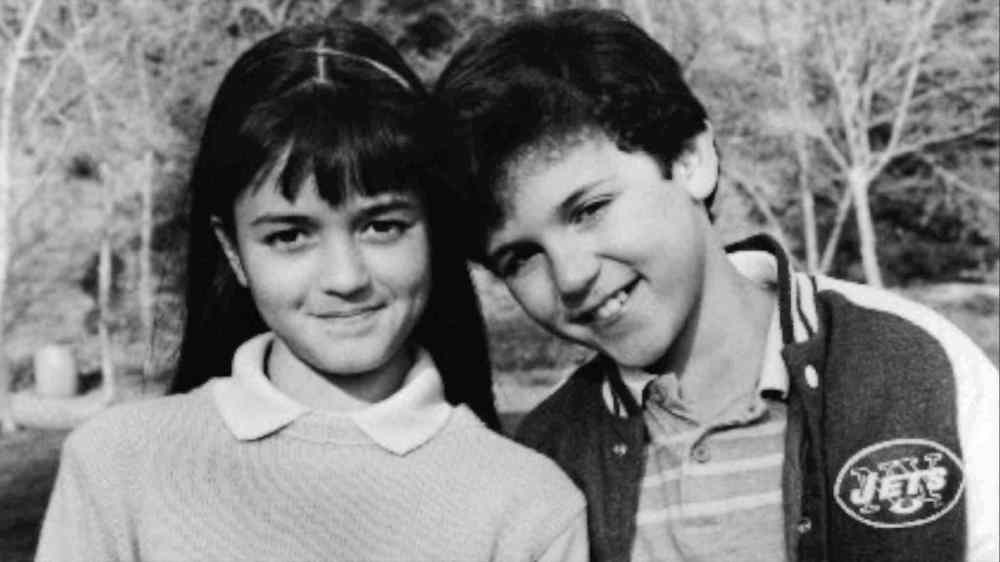
“It’s pretty extraordinary how life can imitate art sometimes,” said the 38-year-old Savage, a Directors Guild of America Award-nominated TV director. “There were so many instances over the years we were experiencing in real life what the characters went through in the show.”
The Wonder Years premièred Jan. 31, 1988, in the coveted time slot directly after the Super Bowl. (The Washington Redskins trounced the Denver Broncos, 42-10.)
Unlike most popular family sitcoms of the decade such as The Cosby Show and Family Ties, the comedy wasn’t shot in front of a studio audience. There was no laugh track. The Wonder Years was more a memory play featuring an unseen narrator (Daniel Stern) looking back on his adolescence and teenage years in the late 1960s through the early 1970s.
The show captivated audiences and critics alike and earned consistently high ratings during its six-season run.
“The youthful attitudes, perceptions and values expressed here are universal and timeless, for at its essence, The Wonder Years’ is a simple story about a kid, his friends and his family,” wrote L.A. Times TV critic Howard Rosenberg in 1989. “It’s the only series about kids that seems to have been designed and written by people who actually were kids.”
Though only six episodes aired in its first season, The Wonder Years took the prime-time Emmy for outstanding comedy series. And Savage, then 13, became the youngest performer ever to earn an Emmy nomination for lead actor in a comedy series. The show won several other accolades, including the Peabody Award for “pushing boundaries of the sitcom format and using new modes of storytelling.”
Because of music rights issues — the series is filled with songs from the era — including Joe Cocker’s rendition of the Beatles’ With a Little Help From My Friends and the Rolling Stones’ Ruby Tuesday — The Wonder Years hadn’t been available on DVD until this month. StarVista Entertainment has just released a two-disc set of the first season and a 26 DVD-set of the entire 115 episodes, including 23 hours of bonus features.
Jeff Peisch, vice-president of entertainment programming and marketing for StarVista, said he was “blown away by how well the shows stand up.”
“One of the things that occurred to me in looking at it is that it takes seriously the thoughts and emotions of young kids. So many TV series, up until (The Wonder Years), young kids were characters, but the show was really from the point of view of adults.”
The series, noted McKellar, really “validated kids’ emotions. You got to see how big those emotions were for a child.”
Each episode focused on some aspect of Kevin’s life, such as his family — his understanding mother, Norma (Alley Mills); his often gruff father, Jack (Dan Lauria); his bullying older brother, Wayne (Jason Hervey); and his flower child sister, Karen (Olivia d’Abo) — his adventures with best friend Paul Pfeiffer (Josh Saviano) and, most especially, his relationship with his first love, Winnie.
The series, said Paley Center for Media curator Ron Simon, has “obviously lingered in the memory.” But he notes that the series is not as gentle as one remembers. “All the tension and contradictions of the late ’60s are there,” he said. “That’s why it was so artful.”
The Wonder Years was created by the husband-and-wife team of Neal Marlens and Carol Black, who had previously done the more traditional ABC sitcom Growing Pains. Though the series was not autobiographical, Marlens, 58, and Black, 56, had come to age during the same turbulent era as Kevin and Winnie.

The series, said Marlens, “probably would have been different and not as good had we not grown up in that period. I think having that advantage of just living through it as a kid coming of age gives you a certain perspective you can’t get any other way. That was just good luck for us. So many of our audience had come of age or had been a parent or a grandparent during that period and was familiar with it.”
Savage notes that The Wonder Years has taken on a whole new dimension for him now that he’s married and the father of three young children.
“I totally understand Norma’s heartbreak when she sees Kevin ride off in his two-wheeler for the first time,” said Savage. “I can completely relate to the struggles of Jack as he tries to balance family and work and not let the frustration of work spill over to his family. The show has so much dimension and depth.”
— Los Angeles Times