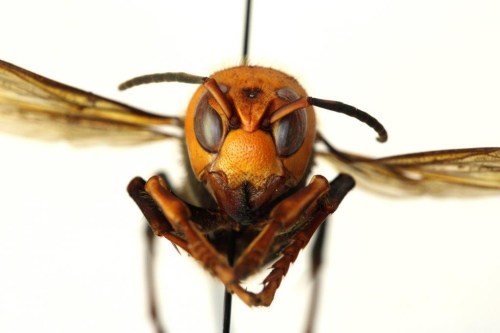
Slim chance of so-called murder hornets becoming established in Canada: experts
Advertisement
Read this article for free:
or
Already have an account? Log in here »
To continue reading, please subscribe:

Digital Subscription
One year of digital access for only $205*
- Enjoy unlimited reading on winnipegfreepress.com
- Read the E-Edition, our digital replica newspaper
- Access News Break, our award-winning app
- Play interactive puzzles
*First annual payment billed as $205.00 + GST for one year. This annual subscription will automatically renew at $233.00 + GST every 52 weeks (10% off the regular annual price of $259.35). Offer available to new and qualified returning subscribers only. Cancel any time.
To continue reading, please subscribe:
Add Free Press access to your Brandon Sun subscription for only an additional
$1 for the first 4 weeks*
- Enjoy unlimited reading on winnipegfreepress.com
- Read the E-Edition, our digital replica newspaper
- Access News Break, our award-winning app
- Play interactive puzzles
*Your next Brandon Sun subscription payment will increase by $1.00 and you will be charged $17.95 plus GST for four weeks. After four weeks, your payment will increase to $24.95 plus GST every four weeks.
Read unlimited articles for free today:
or
Already have an account? Log in here »
Hey there, time traveller!
This article was published 06/05/2020 (2346 days ago), so information in it may no longer be current.
Fire up the backyard BBQ without fear of a deadly sting. That hike in the forest or walk in the park should be just fine too.
There’s no need for Canadians to worry for their personal safety with the arrival of so-called “murder hornets” on the West Coast, experts say.
“They’re kind of a bully to other insects, but not to us,” said entomologist Justin Schmidt. “They don’t really attack us. It’d be really hard to get stung unless they get established, which I would say is a nil to zero chance.”
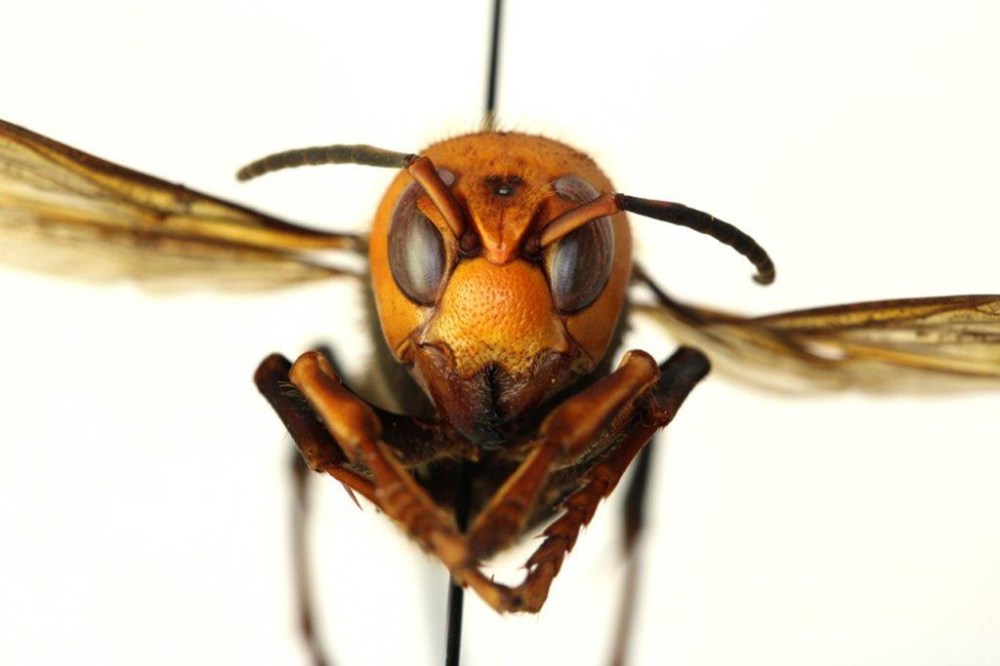
The insect — proper name: Asian giant hornet (Vespa mandarinia) — cuts an imposing figure.
As big as a man’s thumb, it boasts a wing span of up to seven centimetres, a large orange head, black eyes and a sting that could seriously injure or even kill a person.
However, despite the dubious nickname that has been pooh-poohed by experts, murder hornets are not exactly taking over on these shores. But if they do manage to re-emerge, they could be a real threat to honey bees.
Normally found in the forests and low mountains of eastern and southeast Asia, it remains unclear how they arrived in North America. Their moniker — perhaps better suited for a comic book title or rock band name — was coined in Japan.
Three Asian giant hornets were spotted in B.C. for the first time last August in the Nanaimo area, the province’s agriculture ministry said. The single nest was spotted and destroyed, but a specimen was found last November in White Rock, B.C., and two specimens were found in December at Blaine, Wash.
British Columbia classifies the Asian giant hornet as a “serious honey bee predator.” If it returns, it has the potential to impact that population.
“They have massive heads with these giant mandibles and they just chop them in half,” said Gard Otis, an adjunct professor at the University of Guelph specializing in bee behaviour and forest entomology. “They just cut their heads off, cut their bodies in half, and you end up with a slaughter on the ground in front of the hive.
“They kill all the adult bees and then they have (honey, larvae, pupae) that’s left over. It’s like they just stocked up the refrigerator for the next pandemic.”
Farmers in the southern B.C./northern Washington area depend on honey bees to pollinate crops such as apples, blueberries and cherries.
The Asian giant hornet is not currently a pest regulated at the federal level, so it falls under the mandate of the province, the Canadian Food Inspection Agency said Wednesday in an email.
B.C. issued an information bulletin in March asking residents near the border to be on the lookout. The province has also said it planned to place hornet traps near the border and distribute pest-alert notices to area residents.
There has not been a reported sighting so far this year.
“I don’t think really we need to worry too much about them,” said insect biology expert Peter Kevan, a professor emeritus at the University of Guelph. “I think that whoever gave them the name ‘murder hornet’ is just trying to get some hyperbole in the press.”
Mission accomplished.
The murder hornet story has gone viral in recent days as a North American audience — already on edge due to the COVID-19 pandemic — was seemingly given one more reason to worry.
The TMZ website helped pile on by posting a video of what appeared to be a giant hornet savagely snuffing the life of a mouse with repeated stings.
It was almost enough for one to swear off the Great Outdoors altogether, at least for this summer anyway. But fear not, experts say, as the Asian giant hornet isn’t interested in humans and last year’s sightings were very limited.
“It’s very large and it’s very defensive of its nests,” Kevan said from Cambridge, Ont. “If people leave it alone, it’ll leave them alone because really it’s a carnivore.”
The wooded habitat where it was spotted offers suitable nesting grounds. The hornet’s life cycle begins in April when queens emerge from hibernation, feed on sap and fruit, and look for underground dens.
They hunt insects and are generally not looking to engage with people, pets or large animals, the B.C. agriculture ministry said.
Disturbing a nest, however, will put them on the attack. And a sting packs a mighty wallop.
Schmidt, an adjunct scientist at the University of Arizona, created the Schmidt Sting Pain Index to rate the relative pain levels of different stings.
A mild sting from a fire ant scores a 1.0 while a high-end 4.0 is reserved for the likes of the aptly named bullet ant.
A 2.5 rating for a trap-jaw ant sting is comparable to having a rat trap snap a fingernail in half. Schmidt pegged the Asian giant hornet sting at a potent 3.0 or even a 3.5.
“It has 10 times the venom of a honey bee easily, probably 20 times the average yellowjacket,” he said from Tucson, Ariz. “So it’s got a lot of stuff there.”
Otis said he was stung in 2013 while doing research in Vietnam.
He recalled a sharp initial penetration in his big toe and a fierce blast of pain setting in about 30 seconds later.
“It was this incredible searing pain,” he said from Guelph, Ont. “I couldn’t put a shoe on for two or three days. I had to wear my sandal. I could barely sleep at night.
“I had to take more Tylenol than you’re ever supposed to take in a 24-hour period just to try to dull the pain. It was bad.”
If the Asian giant hornet does re-emerge here, questions remain about whether it would be inclined to travel east given the potential change in climate. In addition, a queen would need to be transported at a certain time of year, likely via truck, train or plane, and manage to survive the trip.
Many insects introduced to this foreign environment don’t have enough genetic diversity in the initial group of wasps to sustain their numbers, Otis said.

Schmidt agreed it was unlikely they would prosper in North America.
“They’re probably not going to get established, they’re just going to get eradicated,” Schmidt said. “Then we’ll be back to good old boring life as usual.”
This report by The Canadian Press was first published May 6, 2020.
– With files from The Associated Press.
Follow @GregoryStrongCP on Twitter.