Trade war hits local Passover feasts
Ban on U.S. booze keeping favourite kosher wine off seder tables

Advertisement
Read this article for free:
or
Already have an account? Log in here »
To continue reading, please subscribe:

Digital Subscription
One year of digital access for only $205*
- Enjoy unlimited reading on winnipegfreepress.com
- Read the E-Edition, our digital replica newspaper
- Access News Break, our award-winning app
- Play interactive puzzles
*First annual payment billed as $205.00 + GST for one year. This annual subscription will automatically renew at $233.00 + GST every 52 weeks (10% off the regular annual price of $259.35). Offer available to new and qualified returning subscribers only. Cancel any time.
To continue reading, please subscribe:
Add Free Press access to your Brandon Sun subscription for only an additional
$1 for the first 4 weeks*
- Enjoy unlimited reading on winnipegfreepress.com
- Read the E-Edition, our digital replica newspaper
- Access News Break, our award-winning app
- Play interactive puzzles
*Your next Brandon Sun subscription payment will increase by $1.00 and you will be charged $17.95 plus GST for four weeks. After four weeks, your payment will increase to $24.95 plus GST every four weeks.
Read unlimited articles for free today:
or
Already have an account? Log in here »
Hey there, time traveller!
This article was published 04/04/2025 (554 days ago), so information in it may no longer be current.
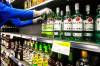
The removal of American booze from Liquor Mart shelves to fight U.S. President Donald Trump’s economic war is being felt in Manitoba, with a Jewish holiday tradition affected.
Manischewitz, an American-made Passover kosher wine, has long been a staple at many families’ holiday tables, said Jewish Federation of Winnipeg CEO Jeff Lieberman.
Passover is observed April 12-20 this year, celebrating the escape of the Israelites from Egyptian slavery.
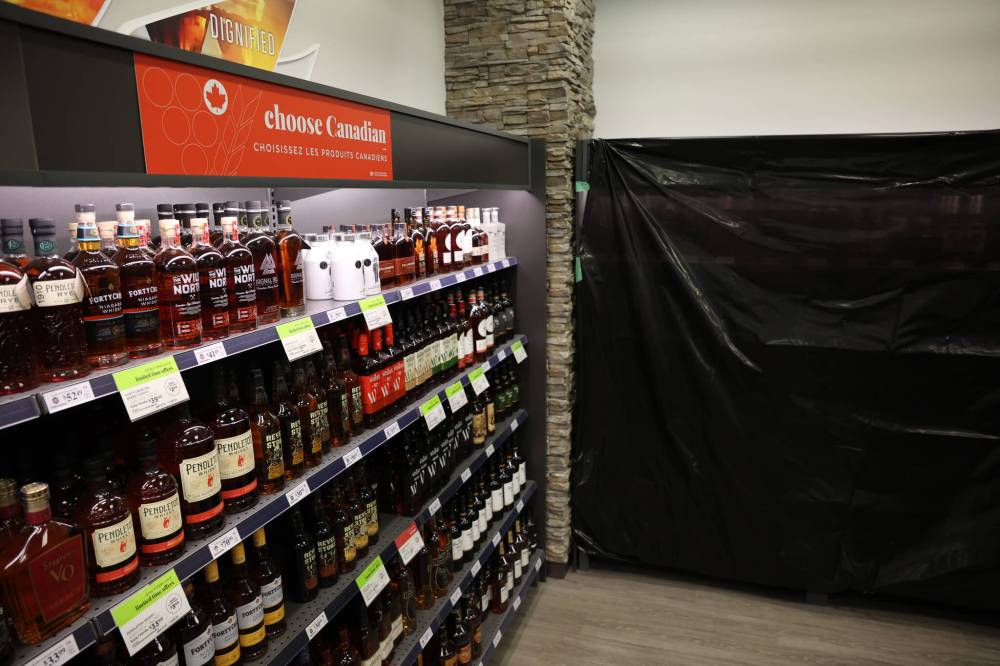
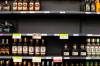
Canadian whisky is advertised at a Liquor Mart in March while black plastic covers the American whiskey section. (Tim Smith/The Brandon Sun files)
But a government directive for Manitoba Liquor and Lotteries to stop the sale of all American alcohol has left many Jewish Winnipeggers wanting for their traditional choice, said Lieberman.
He wrote to the Crown corporation several weeks ago asking for an exemption to allow the sale of the Manischewitz bottles it has left in storage ahead of Passover. He said he received a response from the government this week indicating officials are considering the request.
“With Passover coming up, there’s certainly a number of wines that are kosher for Passover available, but Manischewitz is a traditional wine that many people like to drink, and it’s less expensive than many of the other wines,” Lieberman said Friday.
“So, both tradition-wise and price-wise, it’s a wine of choice by many people that celebrate Passover.”
But Premier Wab Kinew, asked about the issue Thursday, said no exemption is coming, calling it an act of solidarity with other provinces that have also turfed American booze from shelves.
“From what I understand, there are substitutes — this might be a preferred brand. I understand, I apologize if that causes disappointment, but from what I understand, there are substitutes here,” he said, adding he hopes observers have a meaningful Passover.
“I hope that there’s still that ability to maintain solidarity with the broader initiative, to stand up for Canadian sovereignty and Canada’s economy.”
Liquor Marts are selling kosher wines produced in Israel.
Part of the tradition of a Passover seder (dinner) is to drink four cups of wine, Lieberman noted.
“People want to have a wine that’s kosher for Passover,” said Lieberman. “And Manischewitz is the traditional wine.”
Ruth Bonneville / Free Press
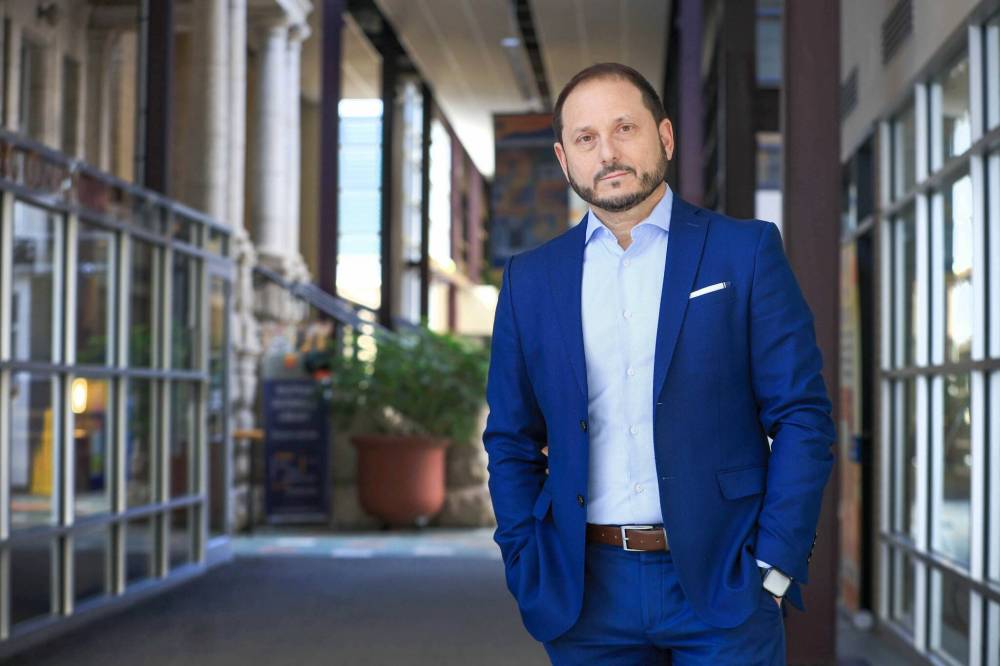
Gustavo Zentner, president of the Centre for Israel and Jewish Affairs, says filling demand for kosher products could be an economic opportunity for Manitoba.
He said he understands the reasoning behind barring American booze — with Trump implementing tariffs on Canada and other countries — but said Passover is a “very special occasion,” and the Crown corporation likely still has the product in storage that it could sell.
“Once the wine is gone, it’s gone, and you’d help people in our Jewish community,” he said.
Centre for Israel and Jewish Affairs vice-president for Manitoba and Saskatchewan Gustavo Zentner said he feels for people who want Manischewitz and other kosher products impacted by the trade war.
He called the ability to access kosher products a fundamental expression of freedom of religion, while emphasizing that the Jewish community stands with the federal and provincial governments’ responses to Trump’s tariffs.
“For Jews who observe… restricting oneself to kosher foods is mandatory, it’s not optional,” said Zentner, adding that kosher products are already significantly more expensive than equivalent non-kosher goods due to the certification process and existing import taxes.
“We do not have viable, sustainable kosher food-production solutions available in the country.”
He said about 90 per cent of kosher-certified products available in Canada is imported from the U.S. Most other kosher products in Canada come from Israel.
Kosher imports largely land in Ontario and Quebec before being distributed to the rest of Canada.
“The supply-and-demand network gets really tested in a short period of time,” he said, adding his national advocacy organization has been asking the federal government to work on the issue since the tariff threats began.
However, Zentner said, Manitoba is well-positioned to become a manufacturing hub for kosher-certified products, given the province’s strong existing agricultural and food-processing industries.
RUTH BONNEVILLE / FREE PRESS FILES
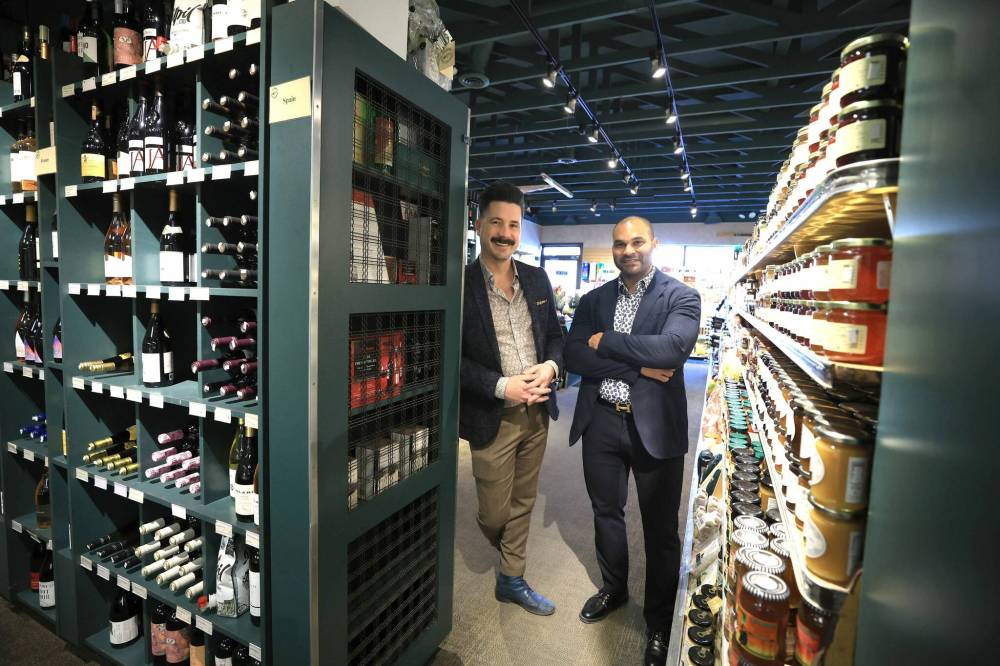
G.J. Andrews Food & Wine co-owner Blake Lelyk (left), with partner Nigel Dawes, said some customers are emphatic in refusing to buy American products.
“We could explore opportunities to develop kosher-certified products, not only for domestic Canadian consumption, but as an export market, primarily to the Midwest of the U.S.A,” he said.

“The highest concentration (of kosher manufacturers and consumers) is typically in the New York-New Jersey area.”
Blake Lelyk, co-owner of G.J. Andrews speciality food and wine store on Academy Road, said some customers are emphatically rejecting American wine. Others, however, have continued to purchase U.S. products the shop has in stock.
He said that once the store’s American wine stock has been sold, staff will suggest comparable products from other places.
Lelyk said the shop doesn’t currently have any kosher Passover wine, though staff have been looking into it ahead of the holiday next week.
erik.pindera@freepress.mb.ca
The Free Press is committed to covering faith in Manitoba through our Religion in the News project. This reporting continues because readers like you step forward to fund it.
Donate now to support our reporting on religion.
Your donation is eligible for a charitable tax receipt.
BECOME A FAITH JOURNALISM SUPPORTER
Erik Pindera is a reporter for the Free Press, mostly focusing on crime and justice. The born-and-bred Winnipegger attended Red River College Polytechnic, wrote for the community newspaper in Kenora, Ont. and reported on television and radio in Winnipeg before joining the Free Press in 2020. Read more about Erik.
Every piece of reporting Erik produces is reviewed by an editing team before it is posted online or published in print — part of the Free Press‘s tradition, since 1872, of producing reliable independent journalism. Read more about Free Press’s history and mandate, and learn how our newsroom operates.
Our newsroom depends on a growing audience of readers to power our journalism. If you are not a paid reader, please consider becoming a subscriber.
Our newsroom depends on its audience of readers to power our journalism. Thank you for your support.
The Free Press is committed to covering faith in Manitoba through our Religion in the News project. This reporting continues because readers like you step forward to fund it.
Donate now to support our reporting on religion.
Your donation is eligible for a charitable tax receipt.
BECOME A FAITH JOURNALISM SUPPORTER
Erik Pindera is a reporter for the Free Press, mostly focusing on crime and justice. The born-and-bred Winnipegger attended Red River College Polytechnic, wrote for the community newspaper in Kenora, Ont. and reported on television and radio in Winnipeg before joining the Free Press in 2020. Read more about Erik.
Every piece of reporting Erik produces is reviewed by an editing team before it is posted online or published in print — part of the Free Press‘s tradition, since 1872, of producing reliable independent journalism. Read more about Free Press’s history and mandate, and learn how our newsroom operates.
Our newsroom depends on a growing audience of readers to power our journalism. If you are not a paid reader, please consider becoming a subscriber.
Our newsroom depends on its audience of readers to power our journalism. Thank you for your support.
Related Articles
'Now what?': North American stock markets sink for second day on tariff fears









Advertisement Advertise With Us
Advertisement Advertise With Us
History
Updated on Friday, April 4, 2025 4:00 PM CDT: Updates with final version
Updated on Saturday, April 5, 2025 9:17 AM CDT: Adds photos
The Free Press acknowledges the financial support it receives from members of the city’s faith community, which makes our coverage of religion possible.