Middle East conflict could drive up costs across Canada’s supply chains: experts

Advertisement

Advertise with us

OTTAWA - Analysts are warning the conflict in the Middle East could drive up costs across Canada's supply chains and compound price pressures at the grocery store.

Read this article for free:


or

Already have an account? Log in here »

To continue reading, please subscribe:

Subscribe and receive a limited-edition Free Press branded hat or tote.

Digital Subscription

One year of digital access for only $205*

  • Enjoy unlimited reading on winnipegfreepress.com
  • Read the E-Edition, our digital replica newspaper
  • Access News Break, our award-winning app
  • Play interactive puzzles

*First annual payment billed as $205.00 + GST for one year. This annual subscription will automatically renew at $233.00 + GST every 52 weeks (10% off the regular annual price of $259.35). Offer available to new and qualified returning subscribers only. Cancel any time.

To continue reading, please subscribe:

Add Free Press access to your Brandon Sun subscription for only an additional

$1 for the first 4 weeks*

  • Enjoy unlimited reading on winnipegfreepress.com
  • Read the E-Edition, our digital replica newspaper
  • Access News Break, our award-winning app
  • Play interactive puzzles
Start now

*Your next Brandon Sun subscription payment will increase by $1.00 and you will be charged $17.95 plus GST for four weeks. After four weeks, your payment will increase to $24.95 plus GST every four weeks.

Hey there, time traveller!
This article was published 06/03/2026 (207 days ago), so information in it may no longer be current.

OTTAWA – Analysts are warning the conflict in the Middle East could drive up costs across Canada’s supply chains and compound price pressures at the grocery store.

Global oil prices have risen sharply in recent days as Israeli and U.S. attacks on Iran threaten to escalate into a wider conflict and turn the Strait of Hormuz — a critical channel for global energy shipments — into a choke point.

“Because 20 per cent of the world’s oil flows through the Strait of Hormuz, it’s having an effect on oil prices,” said Fraser Johnson, professor of operations management at Western University’s Ivey Business School.
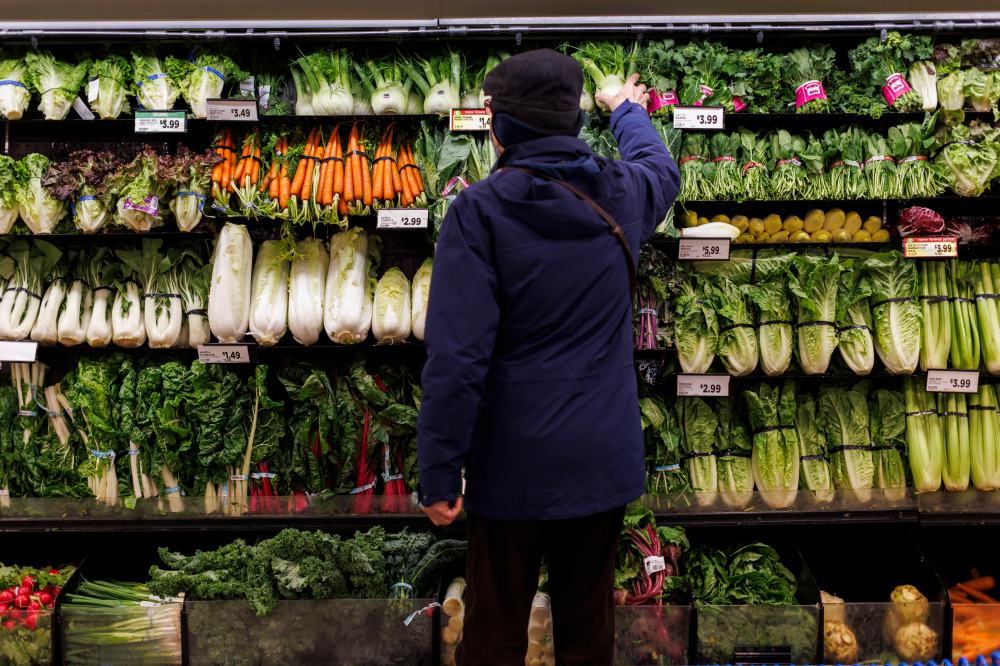
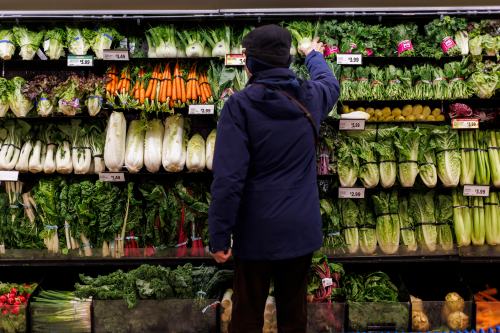
A customer shops for produce at a grocery store In Toronto on Friday, Feb. 2, 2024. THE CANADIAN PRESS/Cole Burston

“This is an old-fashioned supply and demand issue.”

While Canada doesn’t get oil or natural gas from the Gulf region, commodity prices are set globally and a supply constraint on one side of the world affects prices on the other.

TD Bank economist Marc Ercolao said in a note to clients Friday that the national average price of gasoline jumped 12 cents this week — an almost 10 per cent gain — “with further moves higher likely on the way.”

At National Bank, analyst Cameron Doerksen said in a research note that jet fuel prices were already on the rise before spiking this week. That could affect the summer vacation landscape in Canada, he warned.

“Fuel prices have been volatile in recent quarters, so prices could easily fall, but as it stands today fuel will be a cost headwind for airline profitability this summer,” he said.

Johnson said consumers could feel the jump in global energy prices beyond the gas pumps.

Rising oil prices eventually lead to higher freight rates, and those costs ultimately are passed on to consumers, he said.

Companies will have fuel surcharge clauses built into their contracts with suppliers, Johnson noted. He added it can take weeks, sometimes months, before those costs are realized.

If energy costs remain high over the coming weeks, Johnson said, Canadians will feel the pinch first at the grocery store — where the shorter shelf life for fresh food means a greater vulnerability to global shipping disruptions.

“Certainly, everybody can see the increases in gasoline prices, but I think it’ll ripple through the food supply chains in North America as well,” he said.

Food inflation has again become a sore spot in Canada just a few years after supply chain kinks in the wake of the COVID-19 pandemic sent grocery prices surging.

Statistics Canada said food inflation increased 7.2 per cent annually in January, in part due to the absence of last year’s federal “tax holiday” that waived the sales tax on dining out and some groceries.

Staples like beef and coffee are seeing double-digit price hikes, thanks to a combination of environmental disruption and higher import costs tied to the United States’ trade war.

Economists at Desjardins said in a report earlier this week that energy market volatility could pull annual inflation up by one or two ticks this year, though a lift in the loonie tied to stronger oil revenues could help offset some price hikes.

The prospect of higher freight rates came up Thursday during an earnings call for children’s toymaker Spin Master.

Company CFO Jonathan Roiter said there’s “no material impact” on the firm’s supply chain yet from the spike in oil prices.

“Of course, if this continues for an extended period of time, we will start seeing that. And there’s probably a three or four month lag in terms of our freight costs,” he said.

This report by The Canadian Press was first published March 6, 2026.

— with files from Tara Deschamps in Toronto and Chris Reynolds in Montreal

Report Error Submit a Tip

More Stories

Middle East conflict could drive up costs across Canada’s supply chains: experts

Craig Lord, The Canadian Press 4 minute read Preview

Middle East conflict could drive up costs across Canada’s supply chains: experts

Craig Lord, The Canadian Press 4 minute read Friday, Mar. 6, 2026

OTTAWA - Analysts are warning the conflict in the Middle East could drive up costs across Canada's supply chains and compound price pressures at the grocery store.

Global oil prices have risen sharply in recent days as Israeli and U.S. attacks on Iran threaten to escalate into a wider conflict and turn the Strait of Hormuz — a critical channel for global energy shipments — into a choke point.

"Because 20 per cent of the world's oil flows through the Strait of Hormuz, it's having an effect on oil prices," said Fraser Johnson, professor of operations management at Western University's Ivey Business School.

"This is an old-fashioned supply and demand issue."

Read
Friday, Mar. 6, 2026

Completely separating inmates unrealistic, inquest judge says in report on three Stony Mountain slayings

Erik Pindera 5 minute read Preview

Completely separating inmates unrealistic, inquest judge says in report on three Stony Mountain slayings

Erik Pindera 5 minute read 1:43 PM CDT

Nothing short of keeping inmates separated at all times could have prevented three unrelated prisoner-on-prisoner killings several years ago in Stony Mountain Institution’s maximum-security unit, an inquest judge has found.

Provincial court Judge Lindy Choy made the finding after overseeing an inquest earlier this year into the slayings of Adrian Fillion, 42, Michael Monney, 27, and Nolan Thomas, 26, all of which occurred at the hands of fellow maximum-security inmates in the federal prison just north of Winnipeg. The killings occurred when cells were unlocked, allowing inmates to briefly move around to other areas in the cell block.

“The overall impression I was left with from the (Stony Mountain Institution) witnesses was that management of inmates in a custodial facility is a very complex undertaking. There are clearly multiple levels of oversight involved in any decisions that are made and it is all done in a very structured manner,” Choy wrote in her report on the inquest, which was made public Tuesday.

“While maintaining complete physical distance between inmates at all times would have prevented the homicides from occurring, we know that from a social and psychological perspective, this is not generally realistic nor acceptable.”

Read
1:43 PM CDT

Uncaring hubby fell flat at first hurdle

Maureen Scurfield 4 minute read Yesterday at 2:00 AM CDT

DEAR MISS LONELYHEARTS: I re-rented my favourite summer cabin this fall because I’m trying to finish my thesis. My husband of just over a year was very annoyed with me for going on my own, but didn’t say much about it because I paid.

I thought we were both OK with this arrangement, until I got the flu up at the lake very badly and couldn’t keep anything down. I felt faint. I phoned him and he said he was at a party with the guys. I could hear music and girls laughing.

He wouldn’t come for me, so at 4 a.m. when I was getting even more sick and scared, I drove back to the city unannounced.

I went straight to my parents’ house and pretty much fell through the door. Mom said to me when she grabbed me: “This is not right. You could have died in the ditch. Where is your husband?”

Khan cites infighting, quits as Tory leader

Carol Sanders 5 minute read Preview

Khan cites infighting, quits as Tory leader

Carol Sanders 5 minute read Updated: 9:56 AM CDT

Manitoba’s Leader of the Opposition is stepping down.

Progressive Conservative Leader Obby Khan announced late Monday afternoon he is quitting caucus and will sit in the legislature as an independent MLA, effective today.

He cited internal party fighting for his decision.

The former Winnipeg Blue Bombers offensive lineman survived a caucus confidence vote Friday. He said there were 13 votes for him to remain and six against, with one person absent.

Read
Updated: 9:56 AM CDT

Province to acquire campground near former residential school

Morgan Modjeski 3 minute read Preview

Province to acquire campground near former residential school

Morgan Modjeski 3 minute read 6:00 AM CDT

A burial site for dozens of children who died while attending the Brandon Indian Residential School will be acquired by the province, the Free Press has learned.

Premier Wab Kinew will announce the province’s plan to protect Turtle Crossing Campground at a news conference in Brandon Wednesday to mark National Day for Truth and Reconciliation. The move is in partnership with the City of Brandon.

The graves of at least 56 children are located at the campground, the Sioux Valley Dakota Nation has said, pointing to a geophysical study conducted by an archaeology firm in 2018.

There have been longstanding concerns from Indigenous leaders and community members that people were camping on the resting place of children victimized by colonialism.

Read
6:00 AM CDT

Dealing now with increasing judicial dangers

Ben Wickstrom 5 minute read 2:00 AM CDT

For years, the Manitoba Association of Crown Attorneys (“MACA”) has been engaged in a dispute with the Manitoba government over the workload of its lawyers. That dispute is expected to come to a head at the end of November, when two weeks of grievance hearings are scheduled.

We remain hopeful that we can reach an agreement with our employer. But if we cannot, our union’s lawyers are prepared to make our case. As those hearings approach, we want to explain how we got here, what is at stake, and why this dispute matters beyond the working conditions of our members.

These problems are longstanding and predate the election of Manitoba’s current government. Our concern with the current government is not that it created these problems, but that it is now responsible for addressing them.

Despite the evidence before it, the government has not meaningfully addressed the workload concerns we have raised throughout its time in office.