Defending the Jewish identity
In a society as inclusive as ours, is assimilation inevitable?

Advertisement
Read this article for free:
or
Already have an account? Log in here »
To continue reading, please subscribe:

Digital Subscription
One year of digital access for only $205*
- Enjoy unlimited reading on winnipegfreepress.com
- Read the E-Edition, our digital replica newspaper
- Access News Break, our award-winning app
- Play interactive puzzles
*First annual payment billed as $205.00 + GST for one year. This annual subscription will automatically renew at $233.00 + GST every 52 weeks (10% off the regular annual price of $259.35). Offer available to new and qualified returning subscribers only. Cancel any time.
To continue reading, please subscribe:
Add Free Press access to your Brandon Sun subscription for only an additional
$1 for the first 4 weeks*
- Enjoy unlimited reading on winnipegfreepress.com
- Read the E-Edition, our digital replica newspaper
- Access News Break, our award-winning app
- Play interactive puzzles
*Your next Brandon Sun subscription payment will increase by $1.00 and you will be charged $17.95 plus GST for four weeks. After four weeks, your payment will increase to $24.95 plus GST every four weeks.
Read unlimited articles for free today:
or
Already have an account? Log in here »
Hey there, time traveller!
This article was published 06/11/2010 (5807 days ago), so information in it may no longer be current.
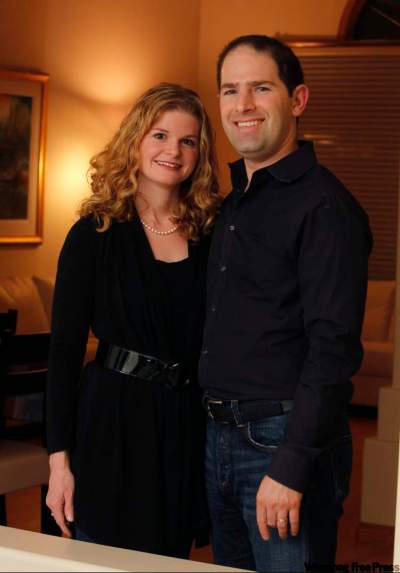
DR. David Hochman is a colon and rectal specialist and a surgeon at the Victoria General Hospital.
When Hochman graduated a few years ago he had job offers from across North America.
Along with his wife, Marisa, he chose Winnipeg to raise his young family because he is from here and it is where several generations of his family — and his wife’s family — are from.
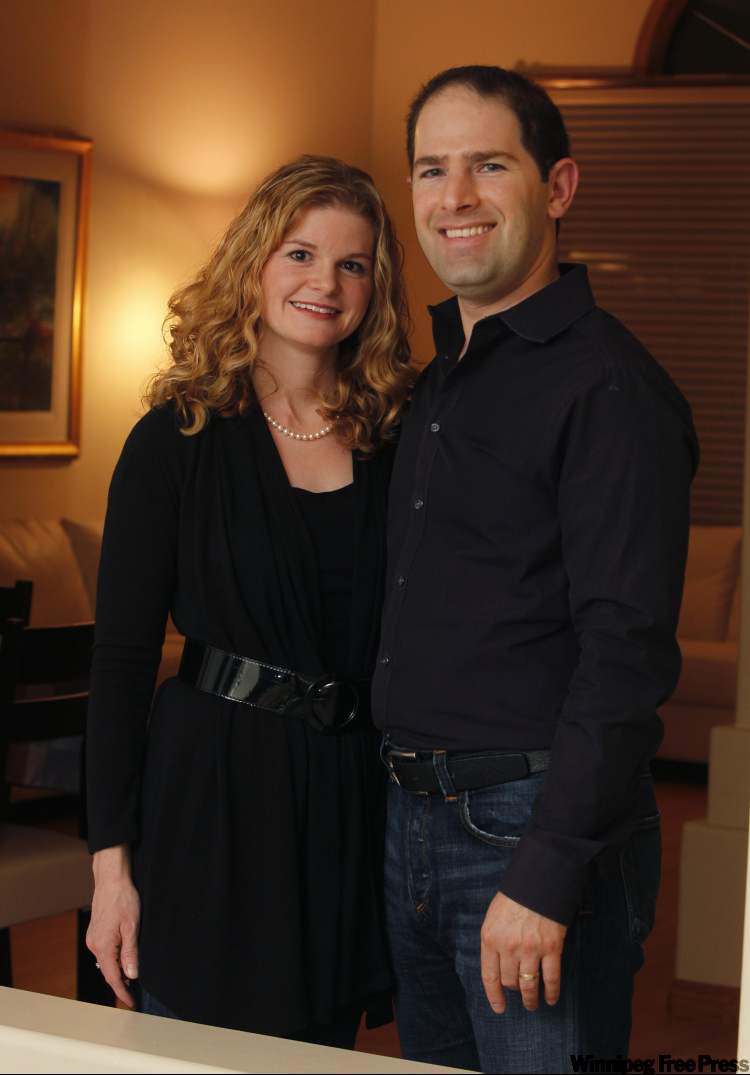
Hochman is also Jewish. And his return to Winnipeg is good news to the Jewish Federation of Winnipeg.
“Winnipeg doesn’t have the research power of other places, but it is an amazing city to raise your kids and live while doing what they call work,” Hochman said, the father of two boys, ages six and five, and an 18-month-old daughter.
“And there’s the Jewish community here too.
You get calls from your parents. And we want our children to be part of their grandparents’ lives.”
It is that pull back to Winnipeg that the Jewish Federation of Winnipeg is hoping to repeat many times over as it works to save their Jewish community from assimilation into the wider community.
And it’s also the goal of the federation’s current financial campaign that was launched recently.
Bob Freedman, chief executive officer of the JFW, said it’s the ultimate irony that the kindness and acceptance of Jewish people by Winnipeggers — and Canadians across he land — is doing to their community what the Holocaust couldn’t accomplish.
But Freedman said the Jewish community’s members are also doing it to themselves.
That’s why Freedman and the JFW is hoping its campaign, called Securing Our Future, will help stem the tide.
Freedman said the campaign will see this year’s, and several future year’s, Combined Jewish Appeal campaign encourage Jewish people to donate to the fund so it has enough money to connect and reconnect people to their Jewish community through subsidies, scholarships and funding programs.
“We don’t live on an island,” Freedman said.
“We live in an open, tolerant society that is Canada. But the bad news is we live in an open tolerant society that is Canada. We used to have exclusion which kept us together.
“What’s so bad about that? Well, nothing. But we are assimilating at a very fast pace. These are people not being connected at all.”
During the 1880s large numbers of Jewish people left Russia and came to Canada. By 1901, there were 1,164 Jewish people living in Winnipeg, the third largest population in the country after Montreal and Toronto.
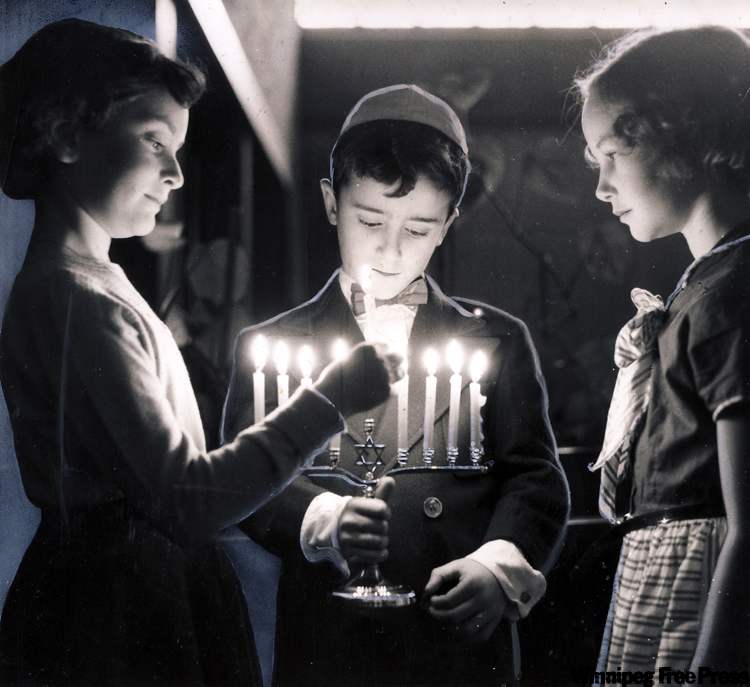
There are 14 million Jewish people in the world, with about seven million in Israel and seven million others spread around the globe.
By the 1960s in Winnipeg, the population was up to 19,500, but by the mid-1980s it was down to less than 15,000 before bottoming out at 13,000. It has since grown back to about 16,000, thanks in large part to Manitoba’s provincial nominee program.
But changes are affecting all facets of Jewish life.
More and more Jewish men and women marry outside their faith. More and more Jews choose not to marry at all. More Jews coming to Winnipeg are speaking English as an additional language.
Freedman said not only don’t they go to the Jewish summer camp at Winnipeg Beach when they are young, but both young and old don’t go to synagogues to worship.
“If we don’t do anything proactively, we’ll wake up one morning and find we have a community of Jews, but not a Jewish community,” he said.
“We think it is good for the wider interest. We believe having a vibrant Jewish community is good for the city.”
Howard Morry, who is chairing the campaign with his wife Hope, said it follows in the footsteps of the successful years-long campaign that led to the creation of the Asper Jewish Community Centre on Doncaster Street.
“Every 10 years or so we really look back at where things are going in the next 10 years,” Morry said.
“What we are trying to accomplish now is to really ensure we have a strong and vibrant Jewish community. We’re focused on ensuring the continuity of our community.
“The first thing you have to do is teach our kids. You have to have people connect at synagogue and the Rady Centre. We try to keep seniors connected and active.”
Jon Waldman, who works with the JFW, said the connectedness is also needed because Jewish people now come to Winnipeg from Afghanistan, Uruguay, Mexico and Bolivia, as well as from the former Soviet Union after living in Israel.
“Now we need to build up our Jewish community with them, so they know they are a Winnipegger and a Jew,” Waldman said.
Freedman said funds from the campaign will be used to support Jewish people taking part in Jewish programs.
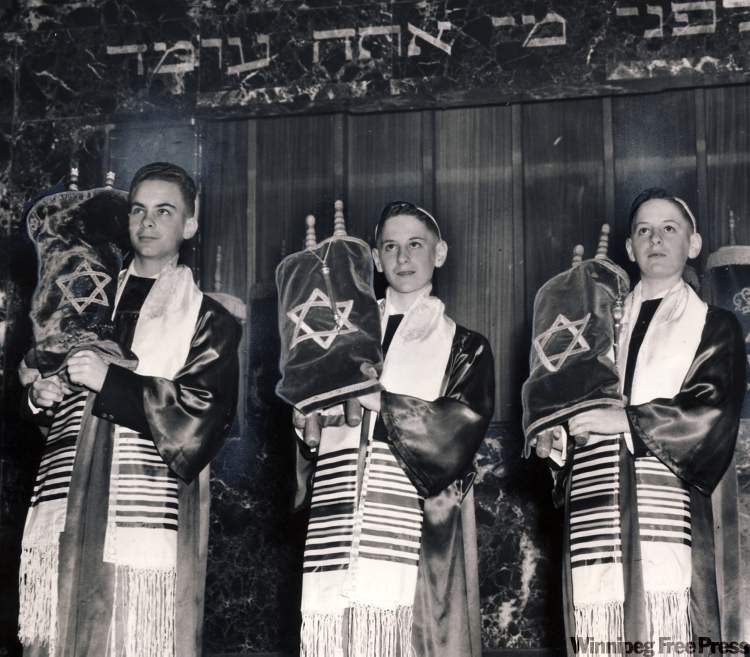
The JFW has statistics that show 40 per cent of their community is middle income while 14 per cent live below the poverty line and nine per cent make more than $100,000 per year.
But if you’re making $100,000 per year and you have a family with two working parents and two school-age children, it will cost about $26,000 per year to fully participate in Jewish life here.
“For the first time, we have to deal with affordability,” he said. “It is expensive for Jewish connectedness.
Camp, synagogue — it is expensive. But we need to encourage younger families to be more connected so we’re looking at scholarships. Even though we have a sliding scale for income, people still have to pay and it is a lot of money. But if we can lower it, it’s a demonstration we’re doing something and to help make it more connected.”
Freedman said Jewish communities across the country and around the world will be watching what Winnipeg is doing.
“For some communities, it is too late. Some will be successful, some won’t because they started too late.”

Freedman pointed to San Jose, California, where there are 60,000 people who identify themselves as Jews, yet the number of dollars in their charitable foundation and the work it is able to do is a far cry from the $60 million already invested with the Jewish Foundation of Manitoba.
“If you’re not connected, why support it financially?”
he said. But in the end, will the JFW’s effort work?
“There are no guarantees,” Freedman said. “But if we do nothing, that is a guarantee.”
kevin.rollason@freepress.mb.ca
Kevin Rollason
Reporter
Kevin Rollason was a general assignment reporter at the Free Press.
Our newsroom depends on a growing audience of readers to power our journalism. If you are not a paid reader, please consider becoming a subscriber.
Our newsroom depends on its audience of readers to power our journalism. Thank you for your support.
Kevin Rollason
Reporter
Kevin Rollason was a general assignment reporter at the Free Press.
Our newsroom depends on a growing audience of readers to power our journalism. If you are not a paid reader, please consider becoming a subscriber.
Our newsroom depends on its audience of readers to power our journalism. Thank you for your support.
Advertisement Advertise With Us
Advertisement Advertise With Us