CBC hockey commentator, daughter hope story helps
Advertisement
Read this article for free:
or
Already have an account? Log in here »
To continue reading, please subscribe:

Digital Subscription
One year of digital access for only $205*
- Enjoy unlimited reading on winnipegfreepress.com
- Read the E-Edition, our digital replica newspaper
- Access News Break, our award-winning app
- Play interactive puzzles
*First annual payment billed as $205.00 + GST for one year. This annual subscription will automatically renew at $233.00 + GST every 52 weeks (10% off the regular annual price of $259.35). Offer available to new and qualified returning subscribers only. Cancel any time.
To continue reading, please subscribe:
Add Free Press access to your Brandon Sun subscription for only an additional
$1 for the first 4 weeks*
- Enjoy unlimited reading on winnipegfreepress.com
- Read the E-Edition, our digital replica newspaper
- Access News Break, our award-winning app
- Play interactive puzzles
*Your next Brandon Sun subscription payment will increase by $1.00 and you will be charged $17.95 plus GST for four weeks. After four weeks, your payment will increase to $24.95 plus GST every four weeks.
Read unlimited articles for free today:
or
Already have an account? Log in here »
Hey there, time traveller!
This article was published 07/05/2013 (4866 days ago), so information in it may no longer be current.
From NHL goalie to broadcaster, Kelly Hrudey has been a longtime fixture in the hockey world, but it’s an experience far removed from the ice that he describes as his hardest and most rewarding work: supporting his youngest child in her battle with mental illness.
The Hockey Night in Canada commentator and his daughter, Kaitlin, are speaking out publicly about her anxiety disorder as part of Know Your Signs. Launched by the RBC Children’s Mental Health Project, the national campaign highlights early warning signs to identify possible indicators of childhood mental illness.
The pair hope that by sharing their story they can help children with mental illness know they aren’t alone in their struggle, and can also raise awareness for families of the warning signs — early indicators the father of three admitted he missed.
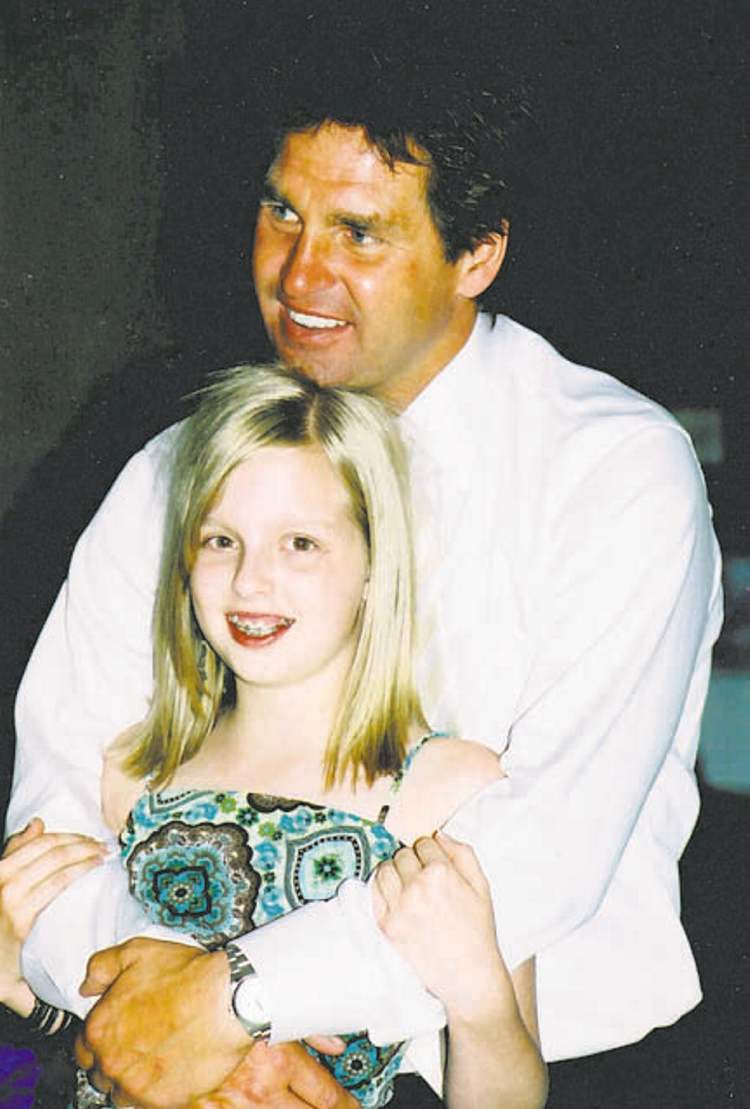
Kaitlin said there wasn’t any one specific trigger for her anxiety disorder, but rather a buildup over time to the point where “it became unmanageable.”
For a long time, she has had what she described as obsessive thoughts, mostly concerning disease.
“It’s just something that would get stuck in my head and I couldn’t get it out,” the 20-year-old Kaitlin said from Calgary in a phone interview with Kelly, who was in St. Louis for the NHL playoffs.
“Grade 7 for me was when I was 12, and that was the worst year for me…And just before that, the summer before, I just had a lot of obsessive thoughts I couldn’t get out of my head.
“There were lots of ways for me to try and cope with it, but it wasn’t the right way to cope. I would have these things I would do with my eyes. I would blink them all the time. And to me, that would make sure that I wouldn’t become blind because that was something I was scared of.”
At the time, Kelly recalled thinking that Kaitlin’s talk of going blind and the habit of randomly blinking her eyes was “really peculiar,” but dismissed it as a tic.
Kelly and his wife, Donna, started to notice signs that something was wrong when Kaitlin was 10 and 11 but admitted they were “pretty slow in picking up all of the clues.”
“There were a lot of things we noticed and questioned, but when she would give us an answer, she was very good at manipulating us or (being) deceitful because she was a caged animal. She wasn’t herself. And she was scared.”
Crippled by fears of contracting a disease, Kaitlin became increasingly attached to her parents and withdrawn from her regular routines.
“She was getting sick a lot. She had migraines, tons of migraines. I think sometimes four a week,” recalled Kelly.
“At the beginning of Grade 7, I didn’t go to school at all. I couldn’t get out of the car. I was always really into dance and I couldn’t go to dance class anymore. I never hung out with my friends,” recalled Kaitlin.
Kaitlin started to see Calgary child psychologist Kelly Moroz. Not knowing much about mental illness or the process of treatment, Kelly had initially thought they would be “through it in about a month.”
Carol Friedland, the wife of Kelly’s lawyer and former NHL agent Lloyd Friedland, had a PhD in clinical psychology. It was through speaking to her that Kelly had his first idea that they were “in this for the long haul.”
“It was something we’d have to battle for a long, long time. And Kait knows she’ll probably battle it her whole life,” said Kelly. “And that’s when we really dug in. And Kait, she wanted to get better.”
Moroz determined she had anxiety disorder and obsessive-compulsive disorder. After about four years working with the specialist, Kaitlin said she reached a point where she started to have more good days than bad.
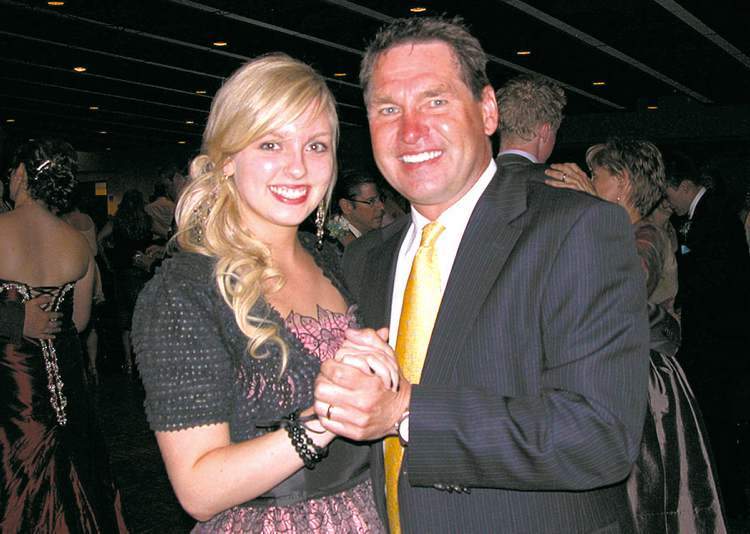
Obsessive thoughts would still creep in, but Moroz gave her the tools to cope. Kaitlin said he taught her how to rationalize her thoughts, distract herself to get thoughts out of her mind and, throughout the whole process, to focus on breathing and relaxation.
“I still would have the thought about not wanting to go to the sleepover, but he would teach me tools to get through the thought and get through the sleepover,” said Kaitlin.
“He helped me a lot and he still helps me a lot with my thoughts and trying to get through them — but he can’t take the thoughts away,” she added.
In the early stages, Kelly said Kaitlin needed considerable support, particularly with the breathing sessions, which both he and his wife did with her.
“It was very intensive,” said Kelly. “I learned how to do all of the breathing with Kaitlin. I know Donna did as well. I just had a really magical connection in terms of breathing, and so we would, in all likelihood, do it every day, multiple times every day, for the longest time.”
Kelly said while he and his wife were attentive parents, they “weren’t on the lookout” for signs of a mental illness in their child. He hopes that through the campaign he can help other parents to be mindful of the signs that they initially missed.
“There are other things that you look for and things that you hope you’re doing a good job in terms of parenting. But this totally blindsided us,” he said.
“And I can imagine there are a lot of other families out there that they’re not even aware of what their families might be going through because it’s hard for the child to share that.”
Kaitlin agreed.
“For me at the time, I didn’t really know what was going on with me. I couldn’t really describe it or explain it,” she said.
“It helps so much once my parents realized something was wrong so they could help me get better. I think the more that parents are aware of what the signs are, the better for everyone.”
— The Canadian Press
History
Updated on Tuesday, May 7, 2013 9:19 AM CDT: adds fact box