One-year vaccine anniversary brings ‘bittersweet’ memories for health-care workers
Advertisement
Read this article for free:
or
Already have an account? Log in here »
To continue reading, please subscribe:

Digital Subscription
One year of digital access for only $205*
- Enjoy unlimited reading on winnipegfreepress.com
- Read the E-Edition, our digital replica newspaper
- Access News Break, our award-winning app
- Play interactive puzzles
*First annual payment billed as $205.00 + GST for one year. This annual subscription will automatically renew at $233.00 + GST every 52 weeks (10% off the regular annual price of $259.35). Offer available to new and qualified returning subscribers only. Cancel any time.
To continue reading, please subscribe:
Add Free Press access to your Brandon Sun subscription for only an additional
$1 for the first 4 weeks*
- Enjoy unlimited reading on winnipegfreepress.com
- Read the E-Edition, our digital replica newspaper
- Access News Break, our award-winning app
- Play interactive puzzles
*Your next Brandon Sun subscription payment will increase by $1.00 and you will be charged $17.95 plus GST for four weeks. After four weeks, your payment will increase to $24.95 plus GST every four weeks.
Read unlimited articles for free today:
or
Already have an account? Log in here »
Hey there, time traveller!
This article was published 14/12/2021 (1756 days ago), so information in it may no longer be current.
Sara Fung was overcome with emotion when the first COVID-19 vaccines started pouring into Canada last December, and again in March when she received her first dose.
As she felt the prick of the needle on her arm, the Hamilton-area nurse thought of the grandmother she lost to COVID-19 nearly a year earlier.
Pandemic restrictions kept Fung from properly grieving her grandmother’s death when the “glue of the family” died in a Toronto long-term care home in April 2020. Although the matriarch was 106 years old, Fung says she was healthy and lively, and likely to survive another couple of years.
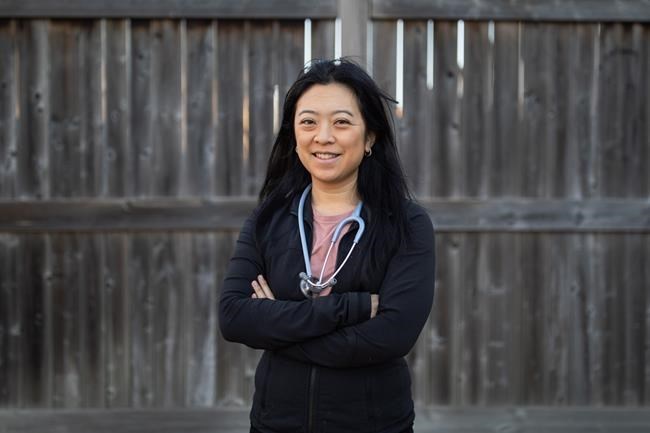
“I remember feeling so fortunate (when getting the vaccine). Really, it was a tribute to my grandmother,” Fung said, pausing to hold back tears during a virtual interview. “I was thinking: ‘if this had been available to her, I have no doubt she’d still be alive today.'”
Tuesday marks the one-year anniversary of the first COVID-19 vaccines administered in Canada, a milestone that offered hope for a new year after a dismal 2020.
Fung wasn’t among the high-risk groups prioritized in the early days of the rollout, but she and other Canadian health-care workers have been reflecting on the past year as their own vaccine anniversary approaches.
Fung, who serves as the co-lead of infection prevention and control at her workplace, said 2021 was a year of learning more about the virus, which continues to throw curveballs as new variants emerge.
“This year really just highlighted … that we can never really let our guard down because we don’t know what’s coming,” she said.
Another Hamilton-area nurse said receiving her first dose in March 2021 was a “bittersweet” experience.
Amie Archibald-Varley, who co-hosts the Gritty Nurse podcast with Fung, had helped screen patients for COVID-19 early in the pandemic and was relieved to get the vaccine’s protection. But like Fung, she was flooded with difficult memories while sitting down for her jab.
Archibald-Varley was part of her hospital’s essential care partner program, where she helped set up virtual communications so relatives of those dying of COVID-19 could say goodbye to their loved ones.
“Watching how families interacted, that was hard,” she said. “A lot of their stories impacted me.”
Much less was known about COVID-19 in that stage of the pandemic, adding significant challenges for some health-care workers. Archibald-Varley remembers taking off her scrubs in the garage after screening shifts, and telling her children to keep their distance out of fear she would infect them.
Such measures were largely abandoned as scientists learned more through 2020, but many health-care workers continued to keep their distance in public and limit social contacts, even after being vaccinated.
Both Fung and Archibald-Varley said everyday life didn’t change much after their first doses — public health restrictions remained in place as most Canadians waited their turn in the vaccine line — but the arrival of jabs in large quantities in the spring and summer, coupled with decreasing cases after a rough third wave, gave both nurses hope that the pandemic would soon end.
Archibald-Varley got an extra jolt of buoyancy recently when her children — 10-year-old twin boys and a six-year-old daughter — received their first jabs.
“That was more rewarding than even myself getting a vaccination,” she said.
While vaccines signaled optimism, the threat of the Omicron variant has dimmed hope for some. Scientists are racing to learn how easily Omicron spreads, whether it causes severe illness, and how much it might evade vaccine coverage.
Dr. Lynora Saxinger, an infectious disease expert with the University of Alberta, feels a “qualified optimism” for 2022, expecting vaccines will still offer some protection.
“The fact this variant has emerged and is now found in so many countries, that tells us this virus has lots of tricks up its sleeve,” she said.
“But on the other hand, we have lots more tricks up our sleeves — new therapeutics, the ability to retool vaccines relatively quickly.”
Saxinger said she was inspired to see swarms of people line up to get vaccinated throughout 2021, vastly outnumbering those wary of the jabs.
She received her first shot in January and her second six weeks later, relieving the heavy sense of anxiety she’d been feeling throughout 2020.
“A lot of people in health care had been carrying this burden of, ‘I don’t want to get sick,'” Saxinger said, adding she didn’t want to leave co-workers short-staffed or bring the virus home to her family.
“After the second dose I just felt more comfortable. It was less stressful.”
Dr. Naheed Dosani, the health equity lead at Kensington Health in Toronto, described similar relief after getting vaccinated on New Year’s Eve.
He also felt a rush of gratitude for the speedy development of the new mRNA jabs.
“I was thinking about the power of human innovation, science, perseverance and dedication that allowed this vaccine to be created in such a short time, with immense human collaboration across countries, across continents,” he said.
“On one hand, it’s fluid in a syringe, but it embodies so many things that showcase why humans are amazing.”
Dosani said receiving his first dose on the last day of 2020 was especially symbolic, serving as a happy milestone to usher in the new year.
But the palliative care specialist also thought about populations disproportionately affected by COVID-19 when he got his jab, and he hopes one legacy of Canada’s pandemic experience will be a commitment to addressing health-care inequities.
“I was celebrating (getting vaccinated) but also being reflective of so many who suffered and so many who died as a result of the virus,” Dosani said. “That further continues to motivate me to work to support patients who are dealing with COVID-19 … but also to advocate for better policy across Canada.”
This report by The Canadian Press was first published Dec. 14, 2021.
Note to readers: This is a corrected story. A previous version said Fung’s grandmother was 100 years old. In fact, she was 106.