It’s the first drug shown to slow Alzheimer’s. Why is is it off to a slow start?
Advertisement
Read this article for free:
or
Already have an account? Log in here »
To continue reading, please subscribe:

Digital Subscription
One year of digital access for only $205*
- Enjoy unlimited reading on winnipegfreepress.com
- Read the E-Edition, our digital replica newspaper
- Access News Break, our award-winning app
- Play interactive puzzles
*First annual payment billed as $205.00 + GST for one year. This annual subscription will automatically renew at $233.00 + GST every 52 weeks (10% off the regular annual price of $259.35). Offer available to new and qualified returning subscribers only. Cancel any time.
To continue reading, please subscribe:
Add Free Press access to your Brandon Sun subscription for only an additional
$1 for the first 4 weeks*
- Enjoy unlimited reading on winnipegfreepress.com
- Read the E-Edition, our digital replica newspaper
- Access News Break, our award-winning app
- Play interactive puzzles
*Your next Brandon Sun subscription payment will increase by $1.00 and you will be charged $17.95 plus GST for four weeks. After four weeks, your payment will increase to $24.95 plus GST every four weeks.
Read unlimited articles for free today:
or
Already have an account? Log in here »
Hey there, time traveller!
This article was published 13/04/2024 (905 days ago), so information in it may no longer be current.
The first drug shown to slow Alzheimer’s disease hit the U.S. market over a year ago, but sales have lagged, major hospital systems have taken months to start using it and some insurers have rejected coverage.
Doctors also expect some patients will hesitate to take Leqembi due to its limited impact and potential side effects. They say it will take years to learn how best to deploy the drug and that work must be done to improve diagnosis.
“This is the start of a very exciting journey,” said Dr. Ambar Kulshreshtha, a suburban Atlanta family physician focused on dementia patients.
More than 6 million Americans, and millions more worldwide, have Alzheimer’s disease, the most common cause of dementia. There’s no cure, but Leqembi clears a sticky brain protein called amyloid that’s a key indicator of Alzheimer’s.
Studies showed that it can delay the progression of the disease by a few months when given to people with mild symptoms. Some experts say the delay may be too subtle for patients to notice.
The drug also can cause brain swelling and bleeding. Patients need regular brain scans to monitor for that.
The Food and Drug Administration gave Leqembi full approval last summer for patients with early stages of the disease. The federal Medicare program for people ages 65 and over covers Leqembi and the cost of scans needed to diagnose patients.
The drug’s maker, Japan’s Eisai, initially expected to have 10,000 patients taking the IV drug by the end of March. Company executives have since backed off that projection, though they say sales are growing.
Hospitals and health systems have needed more time than expected to set up their systems for delivering Leqembi, said Alexander Scott, an Eisai executive vice president.
“It’s not like we are adding a drug to an existing system,” he said. “They are building the system for the drug.”
The Cedars-Sinai health system in Los Angeles started administering the drug in early March. Getting there required months of meetings to iron out a plan to coordinate diagnosis, treatment and then monitoring for problems.
“We were very careful about it,” said Dr. Sarah Kremen, a behavioral neurologist.
Banner Health in Arizona also recently started using Leqembi at a couple specialty clinics in Phoenix, a spokeswoman said.
“This is a very phased and staged approach,” said Dr. Alireza Atri, a neurologist who has worked as a paid consultant for Eisai. “As we learn more, we’ll expand and extend it.”
The Mayo Clinic in Rochester, Minnesota, started using Leqembi in October but only for patients who live within a 100-mile radius so it can reach them quickly if they develop side effect symptoms. Doctors evaluate three to five patients every week for potential treatment, said Alzheimer’s expert Dr. Ron Petersen.
Health systems are still trying to understand how coverage for the drug, its infusions and the needed scans works so patients don’t get stuck with bills. That’s a significant variable for a drug that can cost more than $26,000 a year.
An Eisai spokeswoman said nearly three-quarters of commercial plans in the U.S. cover the drug outside Medicare.
But doctors are concerned that coverage still may be tough for some patients, especially those too young to qualify for Medicare.
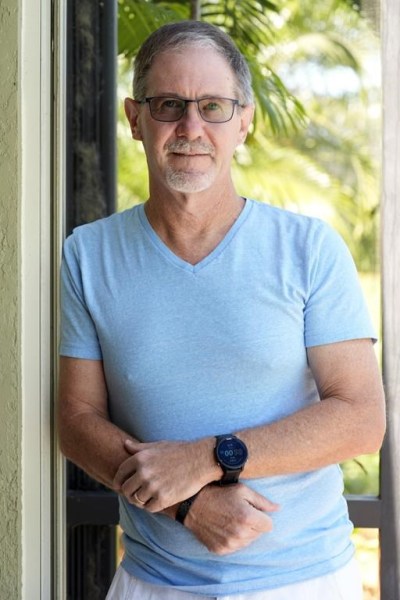
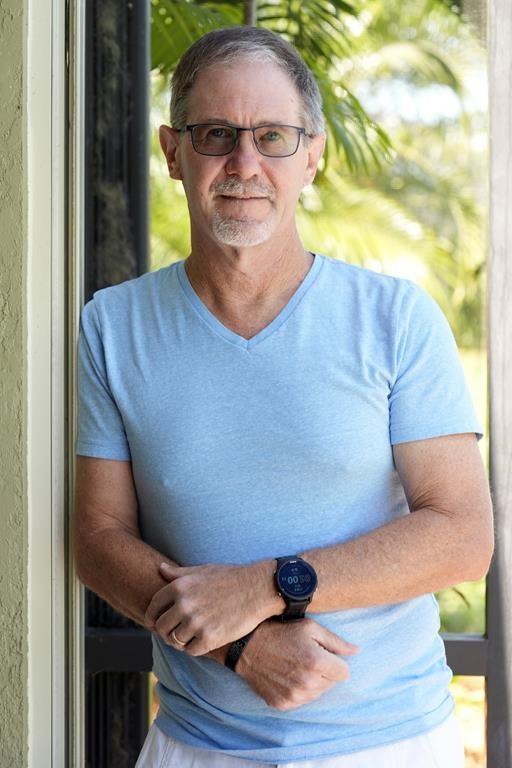
Insurance denials delayed Scott Berkheiser’s first Leqembi infusion a few months until last December. The 57-year-old Venice, Florida, resident said the drugmaker eventually agreed to give it to him for free while he makes co-payments for the infusions.
“It was a little crazy,” he said. “It seemed like it was kind of a game that must make sense for some monetary reason.”
Getting treatments started on time remains another challenge.
Texas Neurology had 60 patients screened as possible candidates for Leqembi and on a waitlist when the drug launched last year. Only eight eventually started treatment. The rest either declined to take it or had advanced beyond the mild phase of the disease when they were rescreened, CEO David Evans said.
“That window gets very short very quick,” he said.
Doctors say more must be done to quickly identify patients and get treatment started before the disease advances. But that’s a murky process.
If people mention memory trouble, doctors must rule out reversible causes like thyroid problems, vitamin deficiencies, medication issues or depression, Kulshreshtha said. Then memory tests for dementia can take a few visits.
Some patients may be ineligible for Leqembi because it would conflict with medication they already take to prevent strokes.
And then getting in to see a neurologist who prescribes the drug can take months.
Those who make it to the first infusion say the treatment process is manageable. Berkheiser says infusions have gone “like clockwork” since his delayed start.
He fits them in between his work as an engineer and training six days a week to compete in an Ironman triathlon.
Charles “Bum” Clegg recently finished his 13th Leqembi infusion. The Salem, Alabama, resident visits a treatment center only 15 minutes from his home.
Clegg and his wife, Carol, say he has had no side effects, and his short-term memory has improved.
“This drug gives you hope,” Carol said.
Treatment access may improve over time. The FDA is reviewing another potential treatment that targets amyloid protein, Eli Lilly and Co.’s donanemab. Eisai is planning to seek approval for an injectable version of Leqembi that would be easier to use. Blood tests may eventually speed up amyloid detection.
But researchers say there’s still a long road ahead. It’s not clear what causes Alzheimer’s disease, and many think combination treatments will be needed to stop it.
“We still have a lot to learn about Alzheimer’s,” said Dr. Eric Widera a geriatric specialist with the University of California San Francisco. “It’s complex, and it’s much more than amyloid.”
__
The Associated Press Health and Science Department receives support from the Howard Hughes Medical Institute’s Science and Educational Media Group and the Robert Wood Johnson Foundation. The AP is solely responsible for all content.