Ketamine therapy can help people with depression, but also poses risks: experts

Advertisement

Advertise with us

Ketamine can be a "life-saving" treatment for depression but also a major risk to patients with a history of addiction, Canadian psychiatrists say after U.S. authorities charged several people in connection with actor Matthew Perry's overdose death.

Read this article for free:


or

Already have an account? Log in here »

To continue reading, please subscribe:

Subscribe and receive a limited-edition Free Press branded hat or tote.

Digital Subscription

One year of digital access for only $205*

  • Enjoy unlimited reading on winnipegfreepress.com
  • Read the E-Edition, our digital replica newspaper
  • Access News Break, our award-winning app
  • Play interactive puzzles

*First annual payment billed as $205.00 + GST for one year. This annual subscription will automatically renew at $233.00 + GST every 52 weeks (10% off the regular annual price of $259.35). Offer available to new and qualified returning subscribers only. Cancel any time.

To continue reading, please subscribe:

Add Free Press access to your Brandon Sun subscription for only an additional

$1 for the first 4 weeks*

  • Enjoy unlimited reading on winnipegfreepress.com
  • Read the E-Edition, our digital replica newspaper
  • Access News Break, our award-winning app
  • Play interactive puzzles
Start now

*Your next Brandon Sun subscription payment will increase by $1.00 and you will be charged $17.95 plus GST for four weeks. After four weeks, your payment will increase to $24.95 plus GST every four weeks.

Hey there, time traveller!
This article was published 19/08/2024 (761 days ago), so information in it may no longer be current.

Ketamine can be a “life-saving” treatment for depression but also a major risk to patients with a history of addiction, Canadian psychiatrists say after U.S. authorities charged several people in connection with actor Matthew Perry’s overdose death.

Police and prosecutors in California allege that five people, including two doctors, supplied the former “Friends” star with dangerous amounts of ketamine before his death last October. The Ottawa-raised actor had been receiving legitimate ketamine infusion treatments for depression but turned to an illicit supply to obtain more doses, they said last week.

Dr. Rebecca Carriere, a psychiatrist who assesses patients for treatment at the Toronto Ketamine Clinic, said Perry should have never been offered the drug in the first place, given his struggles with alcohol and opioid abuse over the years.
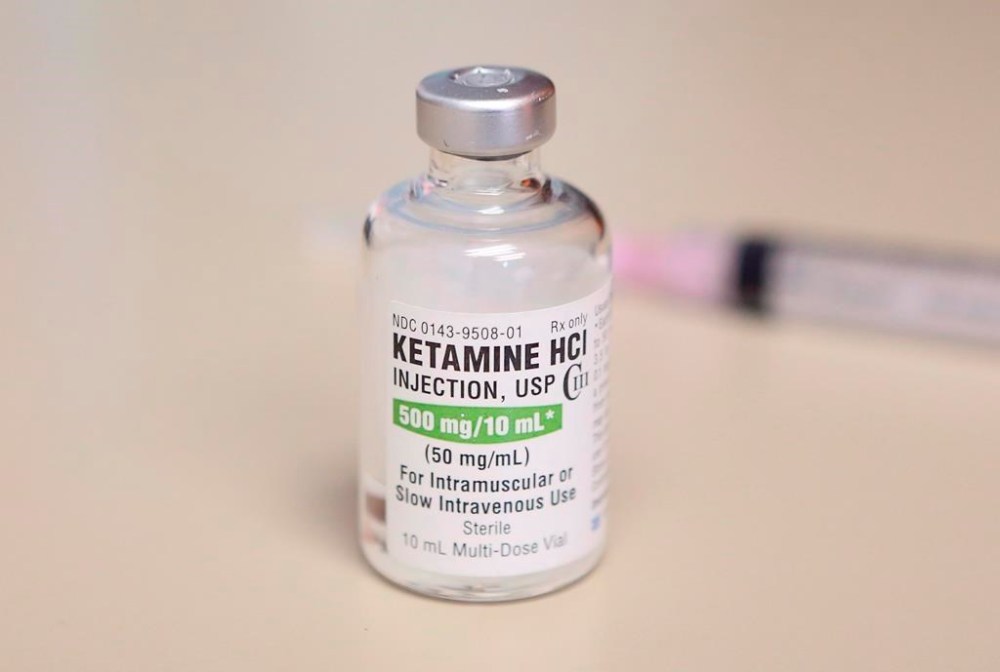
A vial of ketamine, which is normally stored in a locked cabinet, is shown in Chicago on July 25, 2018. Ketamine can be a
A vial of ketamine, which is normally stored in a locked cabinet, is shown in Chicago on July 25, 2018. Ketamine can be a "life-saving" treatment for depression but also a major risk to patients with a history of addiction, Canadian psychiatrists say after U.S. authorities charged several people in connection with actor Matthew Perry's overdose death. THE CANADIAN PRESS/AP, Teresa Crawford

“It highlights what we already know about ketamine – that there is a potential for addiction – that’s why it’s only administered in a clinical setting,” Carriere said in an interview.

At the Toronto Ketamine Clinic, “individuals like Matthew Perry typically would not be offered ketamine treatment because of his medical history with addiction,” she said.

“The other side of the conversation certainly has to be around benefits for individuals who have struggled very intensely for a long period of time with depression, trying multiple treatments and not getting any kind of benefit.”

Ketamine is an approved anesthetic for surgeries, but it’s also known as a party drug with hallucinogenic effects.

Its use in treatments for depression and anxiety has increased in recent years as more doctors and researchers explore the drug’s psychotherapeutic effects. While still an active area of research, ketamine appears to increase glutamate levels, which help regulate mood and cognition.

A ketamine-derived nasal spray called Spravato has been approved in both Canada and the U.S. for use in combination with an oral antidepressant to treat major depressive disorder in patients who did not respond well to other treatments.

However, Health Canada says on its website that it has not assessed the risks and benefits of off-label use of ketamine for the treatment of different mental health conditions.

Several clinical trials are currently underway to test ketamine therapy for depression and other disorders, according to Health Canada’s database.

That includes a trial launched two years ago at the Centre for Addiction and Mental Health in Toronto, which admitted about 30 patients. Data on its success is still being analyzed, a spokesperson for the centre said.

There are also a handful of clinics in Canada where patients can pay out-of-pocket for ketamine treatments. At Toronto Ketamine Clinic, six treatments that last about two hours each, plus three sessions with a psychiatrist, cost $4,500 and one-hour blocks of ketamine-assisted psychotherapy cost $235.

The clinic has seen approximately 300 patients since it opened in 2021. Carriere said its anesthesiologists administer ketamine through an intravenous drip and the drug is kept behind two locked doors.

“I think it highlights the safety issue,” said Carriere.

However, the benefits can be life-changing, she said, noting an estimated 70 per cent response rate.

“For those responding (to the treatment), it can be dramatic. I have seen individuals returning to work after having been on disability for depression for some time,” she said.

“People describe feeling a lifting up of their mood … they can experience joy again.”

A pilot that launched at Toronto’s St. Michael’s Hospital in 2021 has evolved into a regular program where patients with treatment-resistant depression receive two intravenous doses of ketamine per week for two to three weeks, said Dr. Venkat Bhat, director of the hospital’s interventional psychiatry program.

The ketamine treatment program receives eight to 10 referrals per week, with 40 to 50 per cent of patients showing improvement by the end of the standard treatment course, according to the hospital. The program covers the cost of treatment.

While antidepressants can take weeks to have any impact, the effects of ketamine can be evident within a couple of hours to a couple of days, Bhat said.

“That’s what’s made ketamine an important therapeutic modality. It can be life saving, but in strictly monitored and specific circumstances.”

Canadian Press health coverage receives support through a partnership with the Canadian Medical Association. CP is solely responsible for this content.

This report by The Canadian Press was first published Aug. 19, 2024.

Report Error Submit a Tip

More Stories

Siloam Mission, WFPS discussing on-site paramedic to reduce staggering number of emergency calls

Scott Billeck 4 minute read Preview

Siloam Mission, WFPS discussing on-site paramedic to reduce staggering number of emergency calls

Scott Billeck 4 minute read Yesterday at 2:00 AM CDT

Winnipeg’s fire-paramedic service and its largest homeless-serving organization are discussing what it would look like to station at least one paramedic at Siloam Mission, as emergency calls to the downtown facility surge.

The ongoing discussions come as Winnipeg Fire Paramedic Service crews were dispatched 1,771 times during the first eight months of the year to the two adjacent Siloam properties at 303 Stanley St. and 300 Princess St.

WFPS said most of the calls were related to overdoses or other consequences of substance use, with the total nearly double the 854 calls recorded over the same period last year. By comparison, there were 831 calls during the same span in 2024, and 591 in 2023.

“The number of emergency calls isn’t sustainable for us as a service, but it’s certainly not sustainable for them as an agency trying to provide services,” WFPS chief Ryan Sneath told the Free Press. “And they recognize that they’re impacting emergency services, not them specifically, but the site in a significant way.”

Read
Yesterday at 2:00 AM CDT

A life’s story: activist, educator, organizer knew the true meaning of community

Janine LeGal 7 minute read Preview

A life’s story: activist, educator, organizer knew the true meaning of community

Janine LeGal 7 minute read 3:00 AM CDT

Somewhere between a love for sharing stories and a love of community connections, Michael (Mike) Maunder lived his life. Giving voice to people and neighbourhoods was a passion for the natural-born community organizer.

An author, teacher and principal, Maunder lived in a one-bedroom apartment in West Broadway and devoted himself to community development, education and neighbourhood renewal.

He maintained a connection with Augustine United Church, whose commitment to social justice he appreciated, volunteered at the Sandy-Saulteaux Spiritual Centre, and found comfort in a Buddhist prayer community.

Maunder died on July 15 at the age of 80.

Read
3:00 AM CDT

Manitoba abandoning spring, fall clock changes

Carol Sanders 8 minute read Preview

Manitoba abandoning spring, fall clock changes

Carol Sanders 8 minute read Updated: Yesterday at 8:48 AM CDT

Time’s up for the time change in Manitoba.

Manitobans won’t be setting their clocks back an hour in November. The province has decided to permanently stay on daylight time after surveying residents on the twice annual clock adjustment.

“We heard from Manitobans loud and clear — no more changing the clocks in Manitoba,” Premier Wab Kinew said in a news release Thursday.

Most of the 72,000 votes submitted in an online EngageMB survey — 92 per cent — said they would like to see the practice end. The survey asked if they preferred earlier sunrises in winter with standard time or the later sunsets in summer with daylight time. More than half of survey participants (58 per cent) indicated a preference to stay on permanent daylight time; 34 per cent voted to eliminate the time change but stay on standard time.

Read
Updated: Yesterday at 8:48 AM CDT

Puzzles Palace

1 minute read Monday, Jul. 27, 2026

To solve our puzzles, please subscribe with this special offer: |

A quick look at where provinces and territories stand on time changes

The Canadian Press 2 minute read Preview

A quick look at where provinces and territories stand on time changes

The Canadian Press 2 minute read Updated: Yesterday at 6:28 AM CDT

WINNIPEG - Manitoba's government said Thursday the province will be sticking with daylight time year-round, making it the latest jurisdiction to move away from twice-annual time changes. Here's a look at where things stand across Canada:

British Columbia said in March that it was moving to permanent Pacific daylight time. The change also means that parts of northeastern B.C., which have been on mountain standard time year round, are now in alignment with the rest of the province.

Alberta also switched to permanent daylight time this year in what it calls Alberta time. The change means it now has the same time as Saskatchewan year round.

Saskatchewan has been on permanent central standard time since 1966.

Read
Updated: Yesterday at 6:28 AM CDT

Day 1 of Jets training camp in the books with pairings essentially cemented

Ken Wiebe 7 minute read Preview

Day 1 of Jets training camp in the books with pairings essentially cemented

Ken Wiebe 7 minute read Thursday, Sep. 17, 2026

Nearly six minutes into his question-and-answer session, Scott Arniel took a welcome detour from the news of the day.

After exhausting the discussion around the goalie who wasn’t in training camp, the head coach of the Winnipeg Jets finally got a query about the line combinations and defensive pairings that were unveiled in training camp.

And unlike past years, when exhibition games were more frequent and the training camp wasn’t this condensed, Arniel conceded these groupings were intentional and were likely staying together for some time.

The expansion to an 84-game regular season brings with it a reduction to four pre-season games and a much shorter training camp, which could limit the amount of experimentation that Arniel can do during the next two weeks.

Read
Thursday, Sep. 17, 2026