Coal mines on Alberta’s eastern slopes could push fishery ‘beyond recovery’: study
Advertisement
Read this article for free:
or
Already have an account? Log in here »
To continue reading, please subscribe:

Digital Subscription
One year of digital access for only $205*
- Enjoy unlimited reading on winnipegfreepress.com
- Read the E-Edition, our digital replica newspaper
- Access News Break, our award-winning app
- Play interactive puzzles
*First annual payment billed as $205.00 + GST for one year. This annual subscription will automatically renew at $233.00 + GST every 52 weeks (10% off the regular annual price of $259.35). Offer available to new and qualified returning subscribers only. Cancel any time.
To continue reading, please subscribe:
Add Free Press access to your Brandon Sun subscription for only an additional
$1 for the first 4 weeks*
- Enjoy unlimited reading on winnipegfreepress.com
- Read the E-Edition, our digital replica newspaper
- Access News Break, our award-winning app
- Play interactive puzzles
*Your next Brandon Sun subscription payment will increase by $1.00 and you will be charged $17.95 plus GST for four weeks. After four weeks, your payment will increase to $24.95 plus GST every four weeks.
Read unlimited articles for free today:
or
Already have an account? Log in here »
Hey there, time traveller!
This article was published 06/06/2025 (443 days ago), so information in it may no longer be current.
CALGARY – Old coal mines on the eastern slopes of the Alberta Rockies are leaching chemicals that are poisoning the fish downstream, says a new study by Alberta government scientists.
It also suggests any new coal developments could result in “population collapse” of fish species in a nearby lake.
The findings were made in a provincial government study posted online May 27. The paper is awaiting peer review. The scientists who authored it were not made available to speak to reporters.
The other authors not employed by the province did not respond to requests for comment.
Alberta has responded to the study with an advisory saying people should consider “limiting consumption” of three fish species drawn from Crowsnest Lake, a fishing spot downstream from the coal mines.
Those species were found to have dangerously high levels of selenium, a mineral found in coal-rich deposits, in their body tissue.
The authors write the study shows that “biological impacts of (mountaintop removal) coal mining can persist long after mining operations end.” They suggest that “any further coal mine development may well push the Crowsnest fishery beyond sustainability.”
The study comes after the Alberta Energy Regulator, or AER, granted an Australia-based coal company permission to start a controversial coal exploration on the eastern slopes. The project was initially rejected in 2021 when a panel ruled the likely environmental effects on fish and water quality outweighed potential economic benefits.
But the regulator said last month it’s possible there will be runoff from the nearby pit lake that Northback Holding Corp. is using. It ultimately concluded the project won’t have any effect on the water quality downstream.
The AER said that “out of an abundance of caution,” Northback will have to comply with a directive for managing drilling waste in response to concerns over selenium.
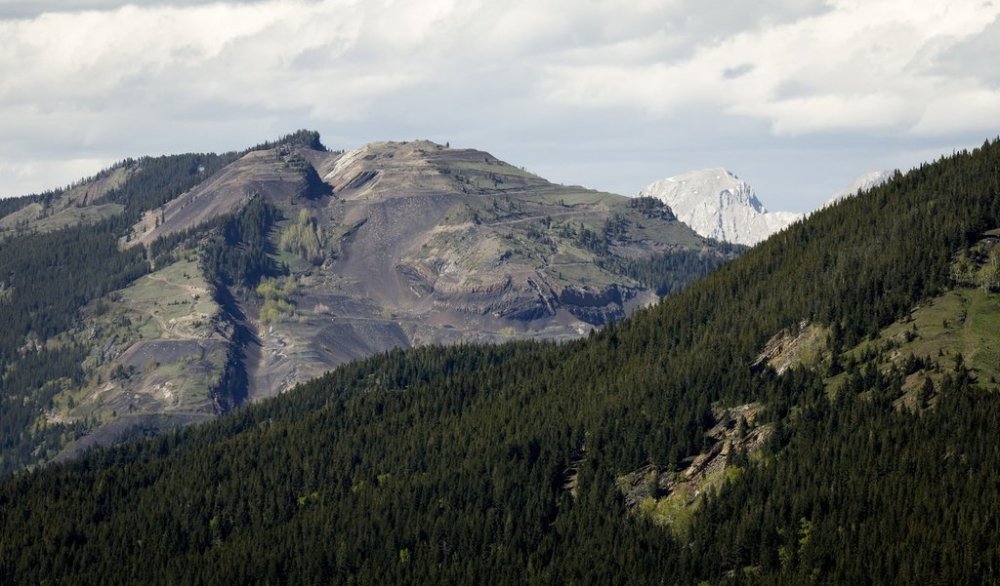
The new study measured selenium levels in fish from Crowsnest Lake, which is fed by creeks connected to Tent Mountain and Grassy Mountain – both former coal mine sites.
Alberta has a fish tissue selenium guideline of four micrograms per gram. The authors write that every single fish sample analyzed exceeded this value.
Average selenium concentrations were highest in Brown Trout, coming in at 18 micrograms per gram.
The authors write that the selenium levels could lead to “behavioural changes, physical symptoms … respiratory issues, reproductive issues and ultimately population collapse.” Accumulating fluid in body tissue or fin and tail damage are among other side effects.
Most people are exposed to healthy levels of selenium through grains and flours, but Health Canada says elevated consumption can lead to hair loss, decreased cognitive function and gastrointestinal disorders.
The high selenium concentrations can only be explained by “the incorporation of legacy coal mine pollution,” the authors write.
The study goes on to say selenium levels in fish in Crowsnest Lake are similar to those found in water bodies near Fernie, B.C., that resulted in Teck Mining Company, which owned and operated a nearby mine, being forced in 2021 by B.C. provincial court to pay a $60 million fine – the largest fine ever imposed under the Fisheries Act.
Fish populations in those mining-impacted streams were found in 2011 to have an average selenium concentration of 7.6 micrograms per gram. Nine years later, the adult westslope cutthroat population had suffered a 93 per cent decline, the study says.
The authors conclude that factors including the emergence of Whirling Disease, drought conditions, high fishing activity — and now high selenium levels in fish — make the Crowsnest Lake and River “an especially vulnerable system.”
“Any new development of coal mining along the eastern slopes may well push the Crowsnest fishery beyond recovery,” they write.
Colin Cooke, one of the authors, published a 2024 study that found a former coal mine in the Crowsnest River watershed was releasing selenium to fish at rates more than dozens of times higher than federal and provincial guidelines.
Cooke is a senior aquatic scientist with the Alberta government, according to LinkedIn.
Peter Doyle, CEO of Evolve Power Ltd., formerly Montem Resources Ltd., which previously sought to restart an old mine on Tent Mountain, said in an email that the company is complying with terms set out by the AER.
“As reflected in other work by the author, there are numerous contributors to water quality in the Crowsnest River valley, not related to Tent Mountain, including changes in upstream conditions, changes in weathering rates and other anthropogenic changes in the watershed,” Doyle wrote, referring to Cooke’s 2024 study.
That report notes those factors, among others, could be contributing to contaminant levels and concluded that coal mining activities in the Crowsnest River watershed “have been impacting ecosystems downstream for decades.”
Northback, in an email, wrote that Crowsnest Lake is unrelated to its Grassy Mountain project.
“However, with our own project, Northback is committed to adhering to the highest environmental standards and ensuring a safe water supply.”
Ryan Fournier, press secretary for Alberta’s environment ministry, deferred questions about monitoring and enforcement to the AER. He said the province is funding a series of studies and submitting them to peer-reviewed academic journals as the province revises its coal policy.
He also said the authors were not available to speak to media because they “are not trained spokespeople.”
The AER told The Canadian Press that it has directed Evolve Power, the Tent Mountain owner, to submit a “selenium management plan proposal” that targets reductions in selenium in mine-affected water.

Evolve was to submit that plan by July 31 of last year, but the AER said it granted the company an extension to March 31, 2026.
The energy regulator also said that while selenium levels are elevated, “there is no evidence of non-compliance on monitoring or selenium management requirements at this time.”
The province announced in December it would allow coal mining to take place in Alberta under certain conditions. However, it exempted Northback and Evolve Power’s projects from those rules because they were considered “advanced.”
Fisheries and Oceans Canada said in a statement that it doesn’t comment on provincial permitting decisions and it hasn’t been asked to review the local impacts to wildlife in the area.
This report by The Canadian Press was first published June 6, 2025.