After helping the US win the Cold War, the all-you-can-eat buffet is fading. Thanks, COVID
Advertisement
Read this article for free:
or
Already have an account? Log in here »
To continue reading, please subscribe:

Digital Subscription
One year of digital access for only $205*
- Enjoy unlimited reading on winnipegfreepress.com
- Read the E-Edition, our digital replica newspaper
- Access News Break, our award-winning app
- Play interactive puzzles
*First annual payment billed as $205.00 + GST for one year. This annual subscription will automatically renew at $233.00 + GST every 52 weeks (10% off the regular annual price of $259.35). Offer available to new and qualified returning subscribers only. Cancel any time.
To continue reading, please subscribe:
Add Free Press access to your Brandon Sun subscription for only an additional
$1 for the first 4 weeks*
- Enjoy unlimited reading on winnipegfreepress.com
- Read the E-Edition, our digital replica newspaper
- Access News Break, our award-winning app
- Play interactive puzzles
*Your next Brandon Sun subscription payment will increase by $1.00 and you will be charged $17.95 plus GST for four weeks. After four weeks, your payment will increase to $24.95 plus GST every four weeks.
Read unlimited articles for free today:
or
Already have an account? Log in here »
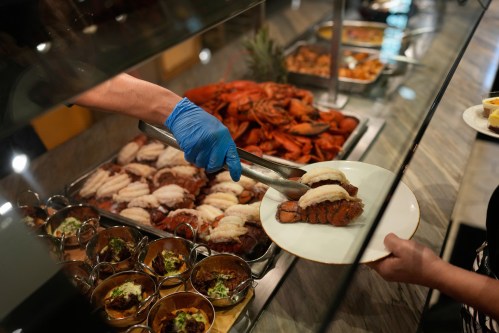
LAS VEGAS (AP) — On a cool fall evening after the end of World War II, Las Vegas watched “officialdom and ‘cafe society’ turn out for the opening of America’s first all-you-can-eat buffet,” a local paper wrote.
It was a big night in a small town that dreamed of hungry visitors. The glazed ham and prime rib in the El Rancho Vegas were signs that American food was changing.
The space race and arms race made Cold War headlines. The farms race was as important. Genetics, chemicals, and motorized equipment nearly tripled U.S. farm production between 1948 and 2017.
What to do with all that food?
The beginning
At least three Vegas legends claimed inventing the all-you-can-eat buffet. The best-known tale says promoter Herb McDonald put cheese and cold cuts on a bar one night. “Gamblers walking by said they were hungry, and the buffet was born,” read McDonald’s 2002 obituary.
Other casinos opened buffets for eating in between gambling, says Michael Green, a history professor at the University of Nevada, Las Vegas.
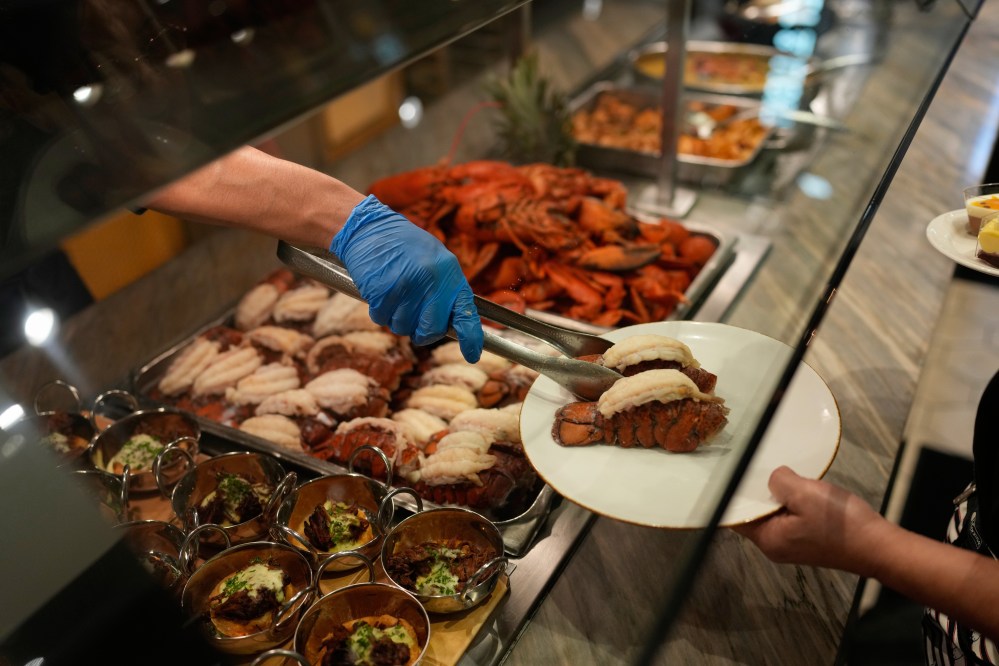
For one lump sum, people carried a plate past salads, meats, pastas and seafood, trying a bit of everything before going back for more. (That last part’s important.)
As the all-you-can-eat buffet became a hit, its origin story was disputed. Stories attributing the buffet to the El Rancho are dismissed by Vegas historian Jeffrey Carlson.
“It couldn’t have been that simple,” he says, citing another version that attributes it to the mob that helped found Las Vegas.
In “Neon Metropolis: How Las Vegas Started the Twenty-First Century,” Hal K. Rothman pins the buffet on mobster Davie Berman, who moved from Iowa in 1944 as Jewish gangsters snatched up local hotels and casinos.
Berman hired a chef to feed gamblers who laid lox, whitefish, herring and other Jewish brunch delicacies on a long table. “A Las Vegas tradition, the buffet, was born,” Rothman wrote.
The end?
However it all started, all-you-can-eat buffets spread across the republic to restaurants like Golden Corral and Ponderosa. Then they started losing out to casual dining outlets like Olive Garden or Chili’s, food industry expert Darren Tristano says.

Then, in 2020, COVID-19 dealt a blow that persists to this day. Suddenly, piles of food sitting out for everyone to grab weren’t quite as appealing.
Longtime Las Vegas food journalist Al Mancini, though, says buffets will always have a place there.
“There’s a visceral reaction to just loading up that tray,” he says. “People still love that, and I think they always will.”
___
Weissenstein contributed from New York. This story is part of a recurring series, “ American Objects,” marking the 250th anniversary of the United States. For more stories on the anniversary, click here.