Diverting intoxicated people from ER to recovery program ‘transformative’: study

Advertisement

Advertise with us

TORONTO - A new study suggests diverting intoxicated people from emergency rooms to a safe recovery space can help free up valuable health care resources and offer more suitable care.

Read this article for free:


or

Already have an account? Log in here »

To continue reading, please subscribe:

Subscribe and receive a limited-edition Free Press branded hat or tote.

Digital Subscription

One year of digital access for only $205*

  • Enjoy unlimited reading on winnipegfreepress.com
  • Read the E-Edition, our digital replica newspaper
  • Access News Break, our award-winning app
  • Play interactive puzzles

*First annual payment billed as $205.00 + GST for one year. This annual subscription will automatically renew at $233.00 + GST every 52 weeks (10% off the regular annual price of $259.35). Offer available to new and qualified returning subscribers only. Cancel any time.

To continue reading, please subscribe:

Add Free Press access to your Brandon Sun subscription for only an additional

$1 for the first 4 weeks*

  • Enjoy unlimited reading on winnipegfreepress.com
  • Read the E-Edition, our digital replica newspaper
  • Access News Break, our award-winning app
  • Play interactive puzzles
Start now

*Your next Brandon Sun subscription payment will increase by $1.00 and you will be charged $17.95 plus GST for four weeks. After four weeks, your payment will increase to $24.95 plus GST every four weeks.

TORONTO – A new study suggests diverting intoxicated people from emergency rooms to a safe recovery space can help free up valuable health care resources and offer more suitable care.

The study, published in the Canadian Journal of Public Health this week, evaluated the first two years of a non-medical Stabilization and Connection Centre in Toronto launched in 2022.

The centre was created to redirect people who are intoxicated by alcohol or opioids and don’t require medical attention from the ER to a 10-bed facility with support workers. 
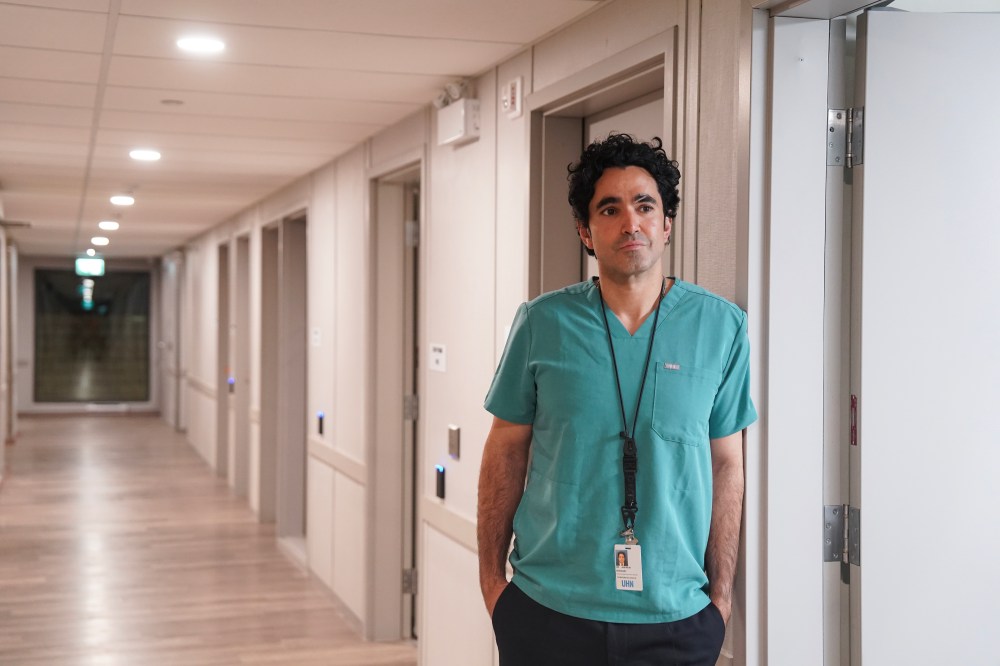
Dr. Andrew Boozary, of UHN, is photographed at the site of a new Social Medicine Housing Initiative in Toronto on Wednesday, October 2, 2024. THE CANADIAN PRESS/Chris Young

The University Health Network program partners with The Neighbourhood Group Community Services and Parkdale Queen West Community Health Centre, who staff the site.

The study said paramedics were on site for a mean of about seven minutes, compared to more than 34 minutes at two nearby ERs. 

One of the centre’s founders Dr. Andrew Boozary said that means paramedics were back on the streets much faster. 

Less than seven per cent of patients were transferred to hospital from the stabilization centre, which Boozary said shows this approach is safe and catching the people who need it. 

More than half of the centre’s 4,500 visits were among people who were homeless. Many were referred to homeless services and substance use care by staff at the site. 

“The status quo wasn’t working for the way the system was responding to many of the alcohol intoxication and opioid overdoses, especially for people who are experiencing homelessness,” Boozary said. 

Dr. Kate Hayman, medical director of the emergency department at Toronto General Hospital, said the impact of diverting patients who are medically stable from the ER is “transformative.” 

“Every person who had an admission to the SCC would have been a patient admitted to our ED,” Hayman said. 

That amounts to about six less people per day in the ER who each would have spent four or five hours there, she said. 

“It enabled us to provide more focused care for people who maybe have more severe overdoses, as well as people with other kinds of emergencies, strokes, heart attacks,” Hayman said. 

The study also found the length of stay at the stabilization centre was significantly longer, with a mean of more than 10 hours, compared to just over 4 1/2 hours in the ER. 

Florencia Leston, director of community health services at the Neighbourhood Group, said that longer stay is by design. 

Patients can spend up to 24 hours at the centre, where they can sleep, shower and eat. There are harm reduction and personal support workers on staff, along with a physician-on-call.

Leston said a lot of clients would typically spend hours on a stretcher sleeping in the emergency department. 

“Here they have a different opportunity,” she said.  

“They are able to actually build some sort of rapport that allows them to start even being curious in changing some of their circumstances. And I think that that’s one of the most valuable things that we are able to actually do in the SCC.”

Leston said she hopes to open admission to more hospitals in future to broaden the community the centre can support. 

This report by The Canadian Press was first published Sept. 16, 2026. 

Canadian Press health coverage receives support through a partnership with the Canadian Medical Association. CP is solely responsible for this content.

Note to readers:This is a corrected story. A previous version incorrectly stated that the mean length of stay in the ER was just over 8 1/2 hours, when in fact it was just over 4 1/2 hours.


Report Error Submit a Tip

More Stories

Today’s horoscope

Georgia Nicols 4 minute read Preview

Today’s horoscope

Georgia Nicols 4 minute read Yesterday at 2:00 AM CDT

MOON ALERT: Avoid shopping (except food and gas) or important decisions until noon today. After that, the moon moves from Scorpio into Sagittarius.

ARIES (March 21-April 19)

Your idealism is aroused, perhaps because you feel sympathy for the suffering of someone far away. Because you are proactive by nature, you might do something to help in any way you can. Pay attention to what you say and do. Expect detours.

TAURUS (April 20-May 20)

Read
Yesterday at 2:00 AM CDT

Food literacy curriculum on the menu

Maggie Macintosh 5 minute read Preview

Food literacy curriculum on the menu

Maggie Macintosh 5 minute read Yesterday at 2:01 AM CDT

Manitoba has a new recipe for health class and “food literacy” is a key ingredient.

The in-class portion of phys-ed has historically involved lessons about puberty, the risks of consuming drugs and dissecting Canada’s food guide.

A new pilot program asks teachers to expand their nutrition units and include in-depth discussions about how everything from diet culture to food insecurity affects eating habits.

“This is really moving beyond a conception of food as only fuel, where you just boil down food to its calories, its vitamins,” said Sarah Elvins, a food historian at the University of Manitoba who researches popular culture and marketing.

Read
Yesterday at 2:01 AM CDT

Rain causing poor harvest conditions for farmers

Connor McDowell 5 minute read Preview

Rain causing poor harvest conditions for farmers

Connor McDowell 5 minute read 2:00 AM CDT

BRANDON — Farmers are dealing with poor harvest conditions owing to the high amount of rain this month.

Brandon had received 74.7 millimetres of rain by Sept. 15, a spokesperson for Environment and Climate Change Canada said Wednesday. The amount is equal to 173 per cent of average rainfall for Brandon.

The wet conditions are causing crop loss and delays in harvesting, several Westman farmers said this week.

“At this point, it (could be) six figures of loss. And that all happens in days,” Cassandra Lepp, a Rivers-area wheat and canola farmer, said. “We have good crops out there, and they are disappearing.”

Read
2:00 AM CDT

Sex sounds in stereo a sad score for singleton

Maureen Scurfield 5 minute read 2:00 AM CDT

DEAR MISS LONELYHEARTS: I just moved into a big old house with two buddies who curl and play hockey with me. They have girlfriends, but I don’t.

I thought they’d be staying at their girlfriends’ places on nights they were “sleeping” together, but oh no!

So now I get to listen to the duelling sex noises of two couples, on weekends and some weeknights as well.

Do I have any rights here? I really don’t want to admit defeat and move back in with my parents, when feels like I just moved out. But it’s really uncomfortable to be the only guy with no sex life in this household, and then having to hear it, while it’s happening.

Federal Court awards OCN $27M, 62 years after construction of hydro dam

Nicole Buffie 5 minute read Preview

Federal Court awards OCN $27M, 62 years after construction of hydro dam

Nicole Buffie 5 minute read Updated: Yesterday at 12:02 PM CDT

The Federal Court has ordered Ottawa pay Opaskwayak Cree Nation $27 million over damages suffered due to the construction of the Grand Rapids hydro dam in the 1960s.

In a decision dated Sept. 3, Federal Court Justice Sébastien Grammond says the federal government had a fiduciary duty to protect the community from the impacts of the dam.

“When the Crown exercises a discretionary power over an Indigenous interest, it has a fiduciary duty and it must exercise the discretion in the best interests of the Indigenous group,” the ruling said. “Canada breached its fiduciary duty to OCN because it approved the (project) without ensuring that the impacts of the Grand Rapids dam on OCN’s traditional way of life were mitigated or compensated.”

The First Nation took the federal government to court in February over impacts on the community after the dam, located about 145 kilometres southeast of Opaskwayak Cree Nation, was installed on the Saskatchewan River in 1964. The case was heard over 14 days in a judge-alone trial in Winnipeg.

Read
Updated: Yesterday at 12:02 PM CDT

Diverting intoxicated people from ER to recovery program ‘transformative’: study

Hannah Alberga, The Canadian Press 4 minute read Preview

Diverting intoxicated people from ER to recovery program ‘transformative’: study

Hannah Alberga, The Canadian Press 4 minute read Updated: 8:24 AM CDT

TORONTO - A new study suggests diverting intoxicated people from emergency rooms to a safe recovery space can help free up valuable health care resources and offer more suitable care.

The study, published in the Canadian Journal of Public Health this week, evaluated the first two years of a non-medical Stabilization and Connection Centre in Toronto launched in 2022.

The centre was created to redirect people who are intoxicated by alcohol or opioids and don't require medical attention from the ER to a 10-bed facility with support workers. 

The University Health Network program partners with The Neighbourhood Group Community Services and Parkdale Queen West Community Health Centre, who staff the site.

Read
Updated: 8:24 AM CDT