Book explores Jewish summer camp phenomenon
Advertisement
Read this article for free:
or
Already have an account? Log in here »
To continue reading, please subscribe:

Digital Subscription
One year of digital access for only $205*
- Enjoy unlimited reading on winnipegfreepress.com
- Read the E-Edition, our digital replica newspaper
- Access News Break, our award-winning app
- Play interactive puzzles
*First annual payment billed as $205.00 + GST for one year. This annual subscription will automatically renew at $233.00 + GST every 52 weeks (10% off the regular annual price of $259.35). Offer available to new and qualified returning subscribers only. Cancel any time.
To continue reading, please subscribe:
Add Free Press access to your Brandon Sun subscription for only an additional
$1 for the first 4 weeks*
- Enjoy unlimited reading on winnipegfreepress.com
- Read the E-Edition, our digital replica newspaper
- Access News Break, our award-winning app
- Play interactive puzzles
*Your next Brandon Sun subscription payment will increase by $1.00 and you will be charged $17.95 plus GST for four weeks. After four weeks, your payment will increase to $24.95 plus GST every four weeks.
Read unlimited articles for free today:
or
Already have an account? Log in here »
Hey there, time traveller!
This article was published 02/09/2023 (1124 days ago), so information in it may no longer be current.
The flags were neatly folded and tucked away, the arts and crafts supplies shelved, and the cabin windows shuttered, as another overnight summer camping season came to a close in late August.
Overnight youth summer camps have been a staple of summer holidays in North America since the late 19th century, and have in the ensuing decades proved themselves an invaluable vehicle for helping kids shape their sense of identity while also developing a sense of community and belonging.
Here in Manitoba, Camp Massad has been especially adept at creating that sense of belonging among its campers and staff; so much so that any Winnipeg Jewish community members who ever attended Massad — even if it was 50 years ago and they haven’t set foot on the campsite since — still proudly identify themselves as Massadniks.
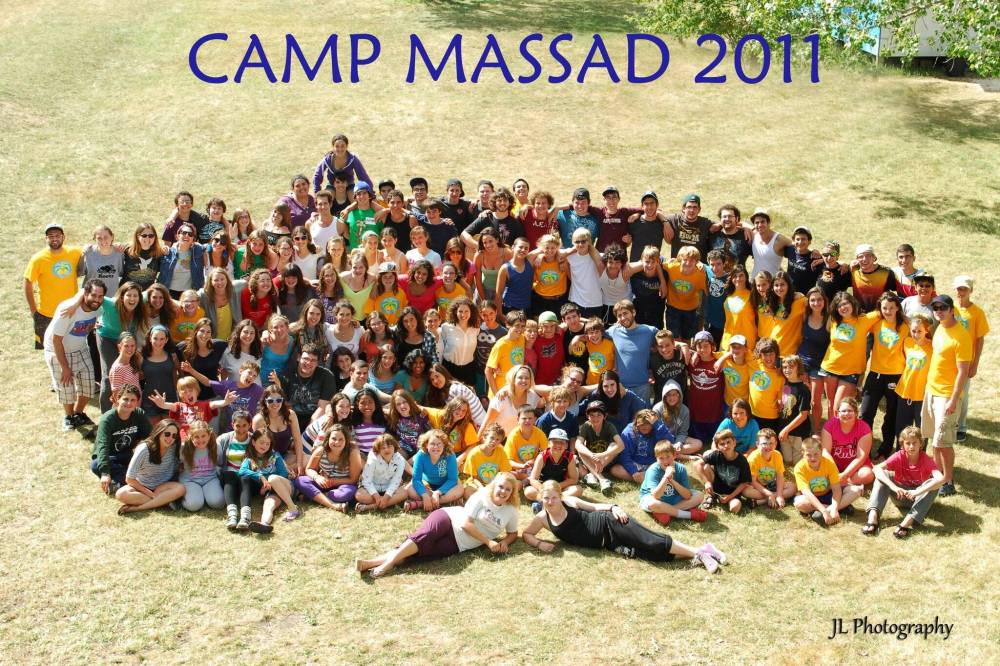
The history of Jewish summer camps, and the power and potential of Jewish summer camps, is the topic of a new book that has been wending its way among camp alumni these past few months. The book, The Jews of Summer — Summer Camp and Jewish Culture in Postwar America by New York-based academic Sandra Fox, examines the origins of the Jewish summer camp phenomena in general, the founding ideologies of the various camps, and the role that Jewish camps have played in shaping Jewish identity.
The Jewish summer camps, Fox writes, “came about because Jews were often blocked out of other vacation options, either rejected due to anti-Semitism and nativism or finding the camps unaccommodating to their religious and cultural needs.”
The camps were, she elaborates, both a way to counteract anti-Jewish hatred and Jewish assimilation, which began to be a concern to Jewish leaders, particularly in the post-Second World War era.
As early as 1934, according to Fox, the Directory of Summer Camps, published by the Jewish Communal Organization, listed 88 summer camps in the U.S. and Canada. Hundreds more were established in the years that followed.
Depending on who established the camps, who funded them, and who ran them, those Jewish overnight camps were all Jewish in different ways. While they all offered kids opportunities to escape the clamour and crowds of the city, commune with nature, play sports, swim, and sleep under the stars, the camps embraced different ideas about what it meant to be Jewish and how that Judaism should be expressed.
There were camps affiliated with the reform and conservative movements, and camps that were religiously orthodox, requiring their campers to pause all activity three times a day in order to pray. There were socialist camps, communist camps, labour Zionist camps, kosher camps, non-kosher camps, and camps that were deemed philanthropic, created, as they were, specifically for the children of immigrants and the underprivileged. Some of the camps, such as Manitoba’s Camp Massad, founded in 1953, were Hebrew-speaking, while others turned to Yiddish as the working language of the summer.
“As an expression of their zeal,” Fox writes, “Jewish camping emerged over time as diverse as American Jewry itself, with camps serving local Jewish communities, ideological movements, and, eventually, every movement of Judaism.”
And yet in spite of the camps dissimilar affiliations, ideologies, and ideas about Judaism, they shared the same ultimate goal, and that was to give Jewish kids the opportunity to meet and mingle with other Jewish kids. That meeting and mingling, it was hoped but not necessarily articulated, would invariably lead to camp romances, and those romances, in turn, would lead to Jewish marriages and Jewish babies. In other words, the camps were considered a way to preserve Jewish life and ensure a Jewish future.
“For many Jewish educators, producing educational, immersive, and affective Jewish camp experiences in the Holocaust’s aftermath was a matter of cultural life or death, of continuity or discontinuity,” Fox writes.

Fox does not provide statistics regarding how many Jewish kids met their future Jewish life partners at summer camp, but the anecdotal evidence on which she relies — and if Camp Massad can be considered a microcosm of the larger Jewish summer camp world — suggests that those numbers are significant.
More than a 100 years after the first Jewish camp opened in the U.S., and 90 years since the first Jewish camp in Canada — Ontario’s Camp Winnebagoe — swung open its gates, thousands of Jewish youth across North America still choose to spend their summers at sleepover camps. While many of the camps remain committed to their founding principles, unique programming, and ingrained traditions, many more have adapted to changing times.
Zionist camps are now more likely to view their founding ideology with a much more critical lens than they did a generation ago; some of the more religiously observant camps now invite girls to lead the daily prayers; and several of the camps, that for decades designated cabins and activities as either for boys or for girls, now offer access to all-gender cabins and washrooms and promote the use of non-gender language. Other camps have abandoned politics and expressions of religion altogether.
Whether they are progressive or traditional, reform or orthodox, English-speaking or Hebrew-speaking, or focused on theatre, sports, activism, or just plain old fun, the camps are still a safe place for young people to explore and embrace their Jewish identity. There have been challenges and changes for Jewish summer camps over the years, but they remain as influential and intrinsic a part of Jewish community life in 2023 as they were a century ago.
swchisvin@gmail.com
The Free Press is committed to covering faith in Manitoba through our Religion in the News project. This reporting continues because readers like you step forward to fund it.
Donate now to support our reporting on religion.
Your donation is eligible for a charitable tax receipt.
BECOME A FAITH JOURNALISM SUPPORTER
The Free Press acknowledges the financial support it receives from members of the city’s faith community, which makes our coverage of religion possible.