Israel returns to war in Gaza with wider aims and almost no constraints
Advertisement
Read this article for free:
or
Already have an account? Log in here »
To continue reading, please subscribe:

Digital Subscription
One year of digital access for only $205*
- Enjoy unlimited reading on winnipegfreepress.com
- Read the E-Edition, our digital replica newspaper
- Access News Break, our award-winning app
- Play interactive puzzles
*First annual payment billed as $205.00 + GST for one year. This annual subscription will automatically renew at $233.00 + GST every 52 weeks (10% off the regular annual price of $259.35). Offer available to new and qualified returning subscribers only. Cancel any time.
To continue reading, please subscribe:
Add Free Press access to your Brandon Sun subscription for only an additional
$1 for the first 4 weeks*
- Enjoy unlimited reading on winnipegfreepress.com
- Read the E-Edition, our digital replica newspaper
- Access News Break, our award-winning app
- Play interactive puzzles
*Your next Brandon Sun subscription payment will increase by $1.00 and you will be charged $17.95 plus GST for four weeks. After four weeks, your payment will increase to $24.95 plus GST every four weeks.
Read unlimited articles for free today:
or
Already have an account? Log in here »
Hey there, time traveller!
This article was published 21/03/2025 (562 days ago), so information in it may no longer be current.
Israel’s renewed military offensive in the Gaza Strip threatens to be even deadlier and more destructive than the last, as it pursues wider aims with far fewer constraints.
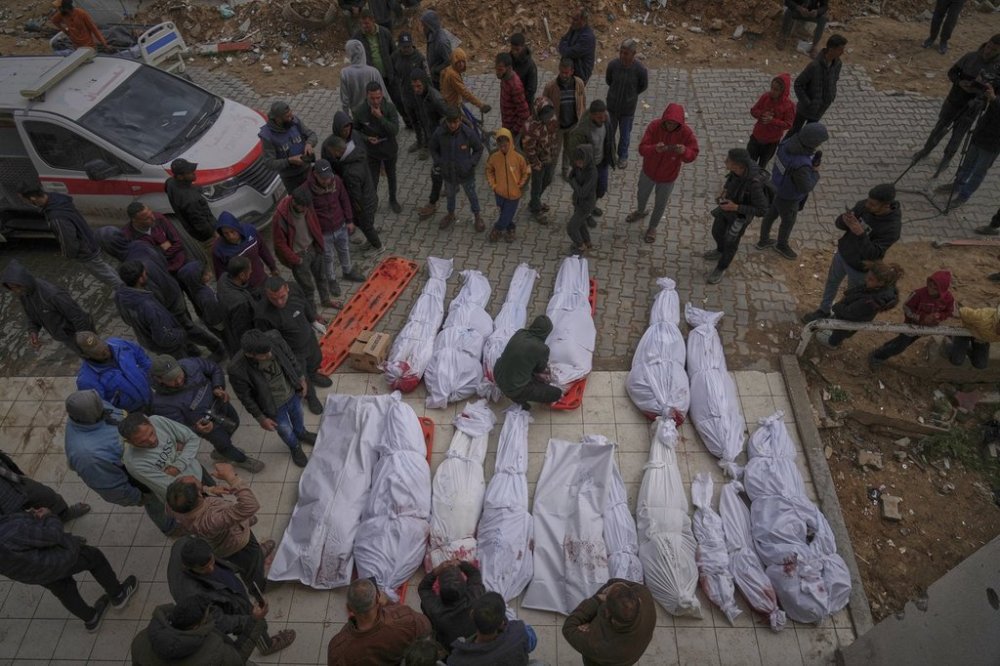
Israel resumed the war with a surprise bombardment early Tuesday that killed hundreds of Palestinians, ending the ceasefire and vowing even more devastation if Hamas doesn’t release its remaining hostages and leave the territory.
President Donald Trump has expressed full support for the renewed offensive and suggested last month that Gaza’s 2 million Palestinians be resettled in other countries. Iran-backed militant groups allied with Hamas are in disarray.
Israeli Prime Minister Benjamin Netanyahu’s coalition is stronger than ever, and there are fewer hostages inside Gaza than at any point since Hamas ignited the war with its Oct. 7, 2023, attack, which gives Israel’s military more freedom to act.
It all suggests that the war’s next phase could be more brutal than the last, in which tens of thousands of Palestinians were killed, the vast majority of the population was displaced and much of Gaza was bombed to rubble.
“If all the Israeli hostages are not released and Hamas is not expelled from Gaza. Israel will act with an intensity that you have not seen,” Defense Minister Israel Katz said Wednesday.
“Return the hostages and expel Hamas, and other options will open up for you, including going to other places in the world for those who wish. The alternative is complete destruction and devastation.”
Even less US pressure to spare civilians
The Biden administration provided crucial military and diplomatic support to Israel throughout the first 15 months of the war.
But it also tried to limit civilian casualties. In the early days of the war, Biden persuaded Israel to lift a complete siege on Gaza and repeatedly urged it to allow in more humanitarian aid, with mixed results. He opposed Israel’s offensive in southern Gaza last May and suspended a weapons shipment in protest, only to see Israel proceed anyway. Biden also worked with Egypt and Qatar to broker the ceasefire through more than a year of negotiations, with Trump’s team pushing it over the finish line.
The Trump administration appears to have set no restrictions. It hasn’t criticized Israel’s decision to once again seal off Gaza, to unilaterally withdrawal from the ceasefire agreement that Trump took credit for, or to carry out strikes that have killed hundreds of men, women and children.
Israel says it only targets fighters and must dismantle Hamas to prevent a repeat of the Oct. 7 attack, when Palestinian militants killed roughly 1,200 people, mostly civilians, and took 251 hostages.
The Biden administration voiced doubt about those aims, saying months ago that Hamas was no longer able to carry out such an attack.
The offensive killed more than 48,000 Palestinians before the January ceasefire, according to Gaza’s Health Ministry. It does not distinguish between militants and civilians in its count but says more than half of the dead were women and children.
Trump has suggested Gaza be depopulated
Trump appeared to lose interest in the ceasefire weeks ago, when he said it should be canceled if Hamas didn’t immediately release all the hostages.
A short-lived White House attempt to negotiate directly with Hamas was abandoned after it angered Israel. Trump’s Mideast envoy, Steve Witkoff, then blamed Hamas for the demise of the truce because it didn’t accept proposals to immediately release hostages.
Hamas has said it will only release the remaining hostages — its only bargaining chip — in exchange for more Palestinian prisoners, a lasting ceasefire and an Israeli withdrawal from Gaza, as called for in the ceasefire agreement.
Trump, meanwhile, has suggested that Gaza’s entire population be transferred to other countries so that the U.S. can take ownership of the territory and rebuild it for others.
Palestinians say they don’t want to leave their homeland, and Arab countries roundly rejected the proposal. Human rights experts said it would likely violate international law.
Israel has embraced the proposal and said it is drawing up plans to implement it.
Netanyahu’s government is stronger than ever
Netanyahu came under heavy pressure from families and supporters of the hostages to stick with the truce in order to bring their loved ones home. For months, thousands of protesters have regularly gathered in downtown Jerusalem and Tel Aviv, blocked major highways and scuffled with police.
In restarting the war, though, Netanyahu brushed them aside and strengthened his hard-line coalition.
Israel’s far-right national security minister, Itamar Ben-Gvir, who resigned to protest the ceasefire, returned to the government shortly after Tuesday’s strikes. He and Bezalel Smotrich, another far-right ally of Netanyahu, want to continue the war, depopulate Gaza through what they refer to as voluntary migration, and rebuild Jewish settlements there that Israel removed two decades ago.
Netanyahu has also fired or forced out several top officials who had appeared more open to a hostage deal.
Hamas and its allies are in disarray
Hamas still rules Gaza, but most of its top leaders have been killed and its military capabilities have been vastly depleted. Israel says it has killed some 20,000 militants — without providing evidence.
In its first attack since Israel ended the ceasefire, Hamas fired three rockets on Thursday that set off air raid sirens in Tel Aviv, without causing casualties.
Lebanon’s Hezbollah, which traded fire with Israel throughout much of the war, was forced to accept a truce last fall after Israel’s air and ground war killed most of its top leadership and left much of southern Lebanon in ruins. The overthrow of Syrian President Bashar Assad removed a key ally and further diminished the militant group.
Iran, which supports Hamas and Hezbollah, and which directly traded fire with Israel twice last year, appears unlikely to intervene. Israel said it inflicted heavy damage on Iran’s air defenses in a wave of retaliatory strikes last fall, and Trump has threatened U.S. military action if Iran doesn’t negotiate a new agreement on its nuclear program.
The Iran-backed Houthi rebels in Yemen have resumed long-range missile fire against Israel, which has rarely caused casualties or serious damage. The U.S., meanwhile, launched a new wave of strikes on the Houthis, which could further limit their capabilities.
International criticism could be more muted
The first phase of the war sparked worldwide protests, some criticism from European leaders and action at the United Nations. Israel was accused of genocide at the International Court of Justice, and the International Criminal Court issued an arrest warrant for Netanayahu.

This time could be different.
The Trump administration has detained foreign-born pro-Palestinian student activists and others, and threatened to pull billions of dollars in federal funding from universities accused of tolerating antisemitism, making a repeat of last year’s U.S. campus protests unlikely. Europe is already locked in high-stakes disputes with Trump over aid to Ukraine and American tariffs, and appears unlikely to push back on the Middle East.
The U.S. and Israel have adamantly rejected the actions by both international courts, accusing them of bias. Trump signed an executive order in early February imposing sanctions on the ICC, of which neither the United States nor Israel are members.
___
Follow AP’s war coverage at https://apnews.com/hub/israel-hamas-war
Related Articles
Trump intel officials testify on threat from drug cartels as Dems press them on leak of attack plans
Advertisement Advertise With Us
Advertisement Advertise With Us
The Free Press acknowledges the financial support it receives from members of the city’s faith community, which makes our coverage of religion possible.