Chief Peguis family Bibles enter Manitoba Museum

Advertisement
Read this article for free:
or
Already have an account? Log in here »
To continue reading, please subscribe:

Digital Subscription
One year of digital access for only $205*
- Enjoy unlimited reading on winnipegfreepress.com
- Read the E-Edition, our digital replica newspaper
- Access News Break, our award-winning app
- Play interactive puzzles
*First annual payment billed as $205.00 + GST for one year. This annual subscription will automatically renew at $233.00 + GST every 52 weeks (10% off the regular annual price of $259.35). Offer available to new and qualified returning subscribers only. Cancel any time.
To continue reading, please subscribe:
Add Free Press access to your Brandon Sun subscription for only an additional
$1 for the first 4 weeks*
- Enjoy unlimited reading on winnipegfreepress.com
- Read the E-Edition, our digital replica newspaper
- Access News Break, our award-winning app
- Play interactive puzzles
*Your next Brandon Sun subscription payment will increase by $1.00 and you will be charged $17.95 plus GST for four weeks. After four weeks, your payment will increase to $24.95 plus GST every four weeks.
Read unlimited articles for free today:
or
Already have an account? Log in here »
Hey there, time traveller!
This article was published 12/04/2021 (1988 days ago), so information in it may no longer be current.
A family heirloom Bible that belonged to Chief Peguis has found a new home at the Manitoba Museum.
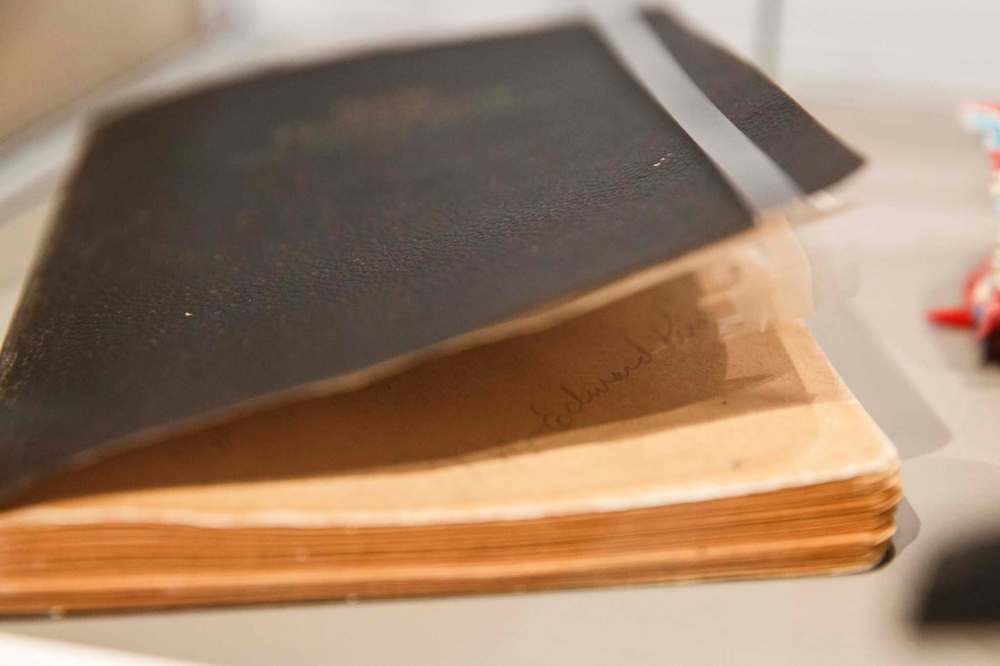
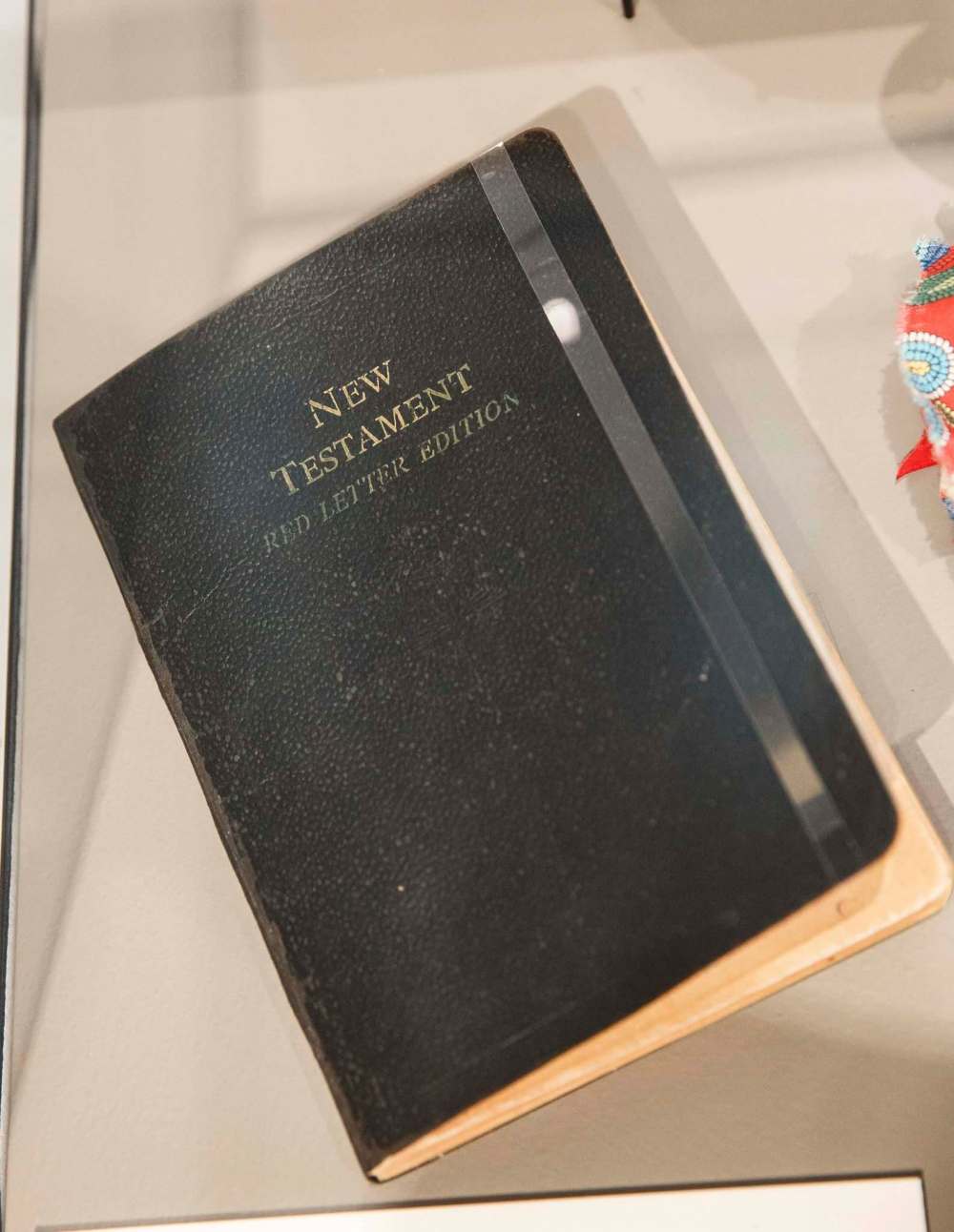
The tome, together with a second Bible owned by Peguis’ son, Chief Henry Edward Prince, was donated by Kyle Mason, a seventh-generation descendant of the famed Manitoba Indigenous leader.
“They’ve been in our family for generations,” said the 42-year-old Winnipegger. “We have been their protectors and keepers.”
Before Kyle was entrusted with the Bibles, they were looked after by his father, Raymond, 74, a residential school survivor.
“I don’t know why I was chosen to protect them,” said Raymond, who received the books in 1965, when he was baptized.
“I’m darn lucky I didn’t lose them considering I moved around a lot,” he said, adding: “They meant a lot to me.”
Raymond, author of the recent book Spirit of the Grassroots People: Seeking Justice for Indigenous Survivors of Canada’s Colonial Education System, entrusted the Bibles to his son when he was a teenager.
For a long time, Kyle kept them in a nightstand in his home, before putting them in a safe in the basement.
Unfortunately, he didn’t realize that wasn’t the best place to keep such items and they became musty.
Three years ago, an anonymous donor offered to pay to have the Bibles restored.
Now he is “glad they are safe and secure at the museum, where they can tell the story of our people and their interaction with Christianity for years to come.”
Seeing the Bibles in the Winnipeg-based museum “gives me great pride,” Kyle said, adding he is looking forward to passing them down to his son, Elijah, 7, to protect when he is older.
For Kyle, the Bibles tell of the “complicated and tragic history Indigenous peoples, and my family, have had with Christianity.”
On the one hand, they signify “how many members of the Peguis First Nation have a connection to Christianity, using its teachings to live a good life, and living and working together with the settlers in the past.”
On the other, they remind of “the horrors of things like the residential school system, and how the Bible was used by Christians against Indigenous peoples,” he added.
Today both Kyle and his father appreciate the difference between the institutional church and the teachings of Jesus.
“Those teachings are still important to us,” said Kyle, noting he now follows a mix of Christian and traditional Indigenous teachings.

The history of the Bible owned by Chief Peguis is not known, but it is believed he received it sometime after converting to Christianity in 1838. That Bible is being kept in safe storage, while the Bible owned by his son, which dates to 1904, is on display in the museum’s new Prairies Gallery.
Maureen Matthews, curator of cultural anthropology, said the Bibles are “a very important part of First Nations history in Manitoba. We are honoured to have them here.”
Chief Peguis, who was known as a friend to the first European settlers in the province, signed the Peguis Selkirk Treaty in 1817, the first treaty in Western Canada.
His association with Christianity is commemorated in Winnipeg by two stained glass windows at St. John’s Cathedral, considered the birthplace of Anglicanism in Western Canada, and through a statue in Kildonan Park, which shows Peguis clutching a Bible.
faith@freepress.mb.ca
The Free Press is committed to covering faith in Manitoba through our Religion in the News project. This reporting continues because readers like you step forward to fund it.
Donate now to support our reporting on religion.
Your donation is eligible for a charitable tax receipt.
BECOME A FAITH JOURNALISM SUPPORTER
Our newsroom depends on a growing audience of readers to power our journalism. If you are not a paid reader, please consider becoming a subscriber.
Our newsroom depends on its audience of readers to power our journalism. Thank you for your support.
The Free Press is committed to covering faith in Manitoba through our Religion in the News project. This reporting continues because readers like you step forward to fund it.
Donate now to support our reporting on religion.
Your donation is eligible for a charitable tax receipt.
BECOME A FAITH JOURNALISM SUPPORTER
Our newsroom depends on a growing audience of readers to power our journalism. If you are not a paid reader, please consider becoming a subscriber.
Our newsroom depends on its audience of readers to power our journalism. Thank you for your support.
Advertisement Advertise With Us
Advertisement Advertise With Us
History
Updated on Monday, April 12, 2021 6:18 AM CDT: Adds photo
The Free Press acknowledges the financial support it receives from members of the city’s faith community, which makes our coverage of religion possible.