Tale of survival to mark International Holocaust Remembrance Day

Advertisement
Read this article for free:
or
Already have an account? Log in here »
To continue reading, please subscribe:

Digital Subscription
One year of digital access for only $205*
- Enjoy unlimited reading on winnipegfreepress.com
- Read the E-Edition, our digital replica newspaper
- Access News Break, our award-winning app
- Play interactive puzzles
*First annual payment billed as $205.00 + GST for one year. This annual subscription will automatically renew at $233.00 + GST every 52 weeks (10% off the regular annual price of $259.35). Offer available to new and qualified returning subscribers only. Cancel any time.
To continue reading, please subscribe:
Add Free Press access to your Brandon Sun subscription for only an additional
$1 for the first 4 weeks*
- Enjoy unlimited reading on winnipegfreepress.com
- Read the E-Edition, our digital replica newspaper
- Access News Break, our award-winning app
- Play interactive puzzles
*Your next Brandon Sun subscription payment will increase by $1.00 and you will be charged $17.95 plus GST for four weeks. After four weeks, your payment will increase to $24.95 plus GST every four weeks.
Read unlimited articles for free today:
or
Already have an account? Log in here »
Hey there, time traveller!
This article was published 26/01/2021 (2072 days ago), so information in it may no longer be current.
Stefan Carter was a 14-year-old Jewish boy in Poland the last time he saw his mother alive.
On that sunny September day in 1942, Stefan and his mother, Janina, were ordered by the Nazis to leave their workplace and assemble at the Umschlagplatz, or collection point, in the Warsaw Ghetto.
With a nod of his head, an SS soldier sent Stefan — who was tall for his age — back to the factory. “They thought I would be good for labour,” he said.
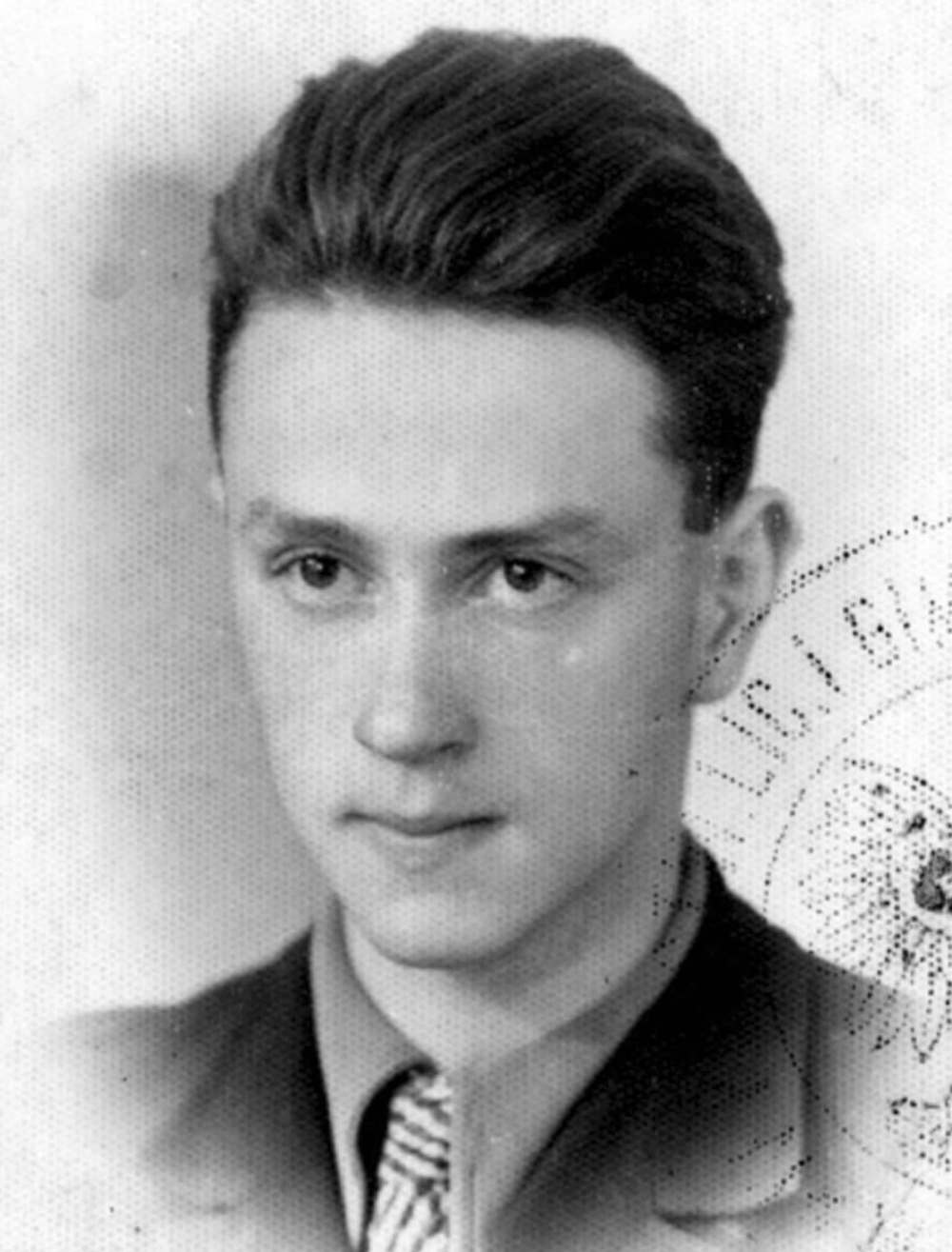
His mother was sent to a train at a nearby railway siding and, ultimately, to her death at the Treblinka concentration camp.
“She was sick,” said Carter, 92, now a retired doctor in Winnipeg. “She may have died on the train on the way, or in the camp. I don’t know.”
For Carter, those memories from long ago are still fresh in his mind, as is his escape from the ghetto.
“It was a miracle,” he said of how relatives managed to smuggle him out and arranged for him to be hidden in the homes of Polish Christians.
Through false papers and learning Christian prayers, the teenager was able to stay alive until the end of the war.
“I don’t know to this day how it happened,” he said. “Maybe it involved bribes, I don’t know.”
On Wednesday, Carter will be the featured speaker as the Winnipeg-based Canadian Museum for Human Rights marks International Holocaust Remembrance Day.
The online event, co-sponsored by the Jewish Heritage Centre of Western Canada, will mark the 80th anniversary of the sealing of the ghetto and the murder of more than 300,000 Jews who were imprisoned there.
The event will also include a screening of the film Memories of the Warsaw Ghetto, based on the childhood experiences of Eugene Bergman, who was deafened when a Nazi soldier hit him on the head with a rifle butt.
In 1948, at the age of 20, Carter emigrated to Canada, settling in Winnipeg, where he studied medicine and became a renowned vascular specialist. He was also a professor in the Max Rady Faculty of Medicine for more than 40 years, and participated in Manitoba’s first open-heart surgery in 1959.
Looking back, Carter remembers that terrible time in the ghetto and his time avoiding capture by the Nazis. “It was a traumatic experience,” he said.
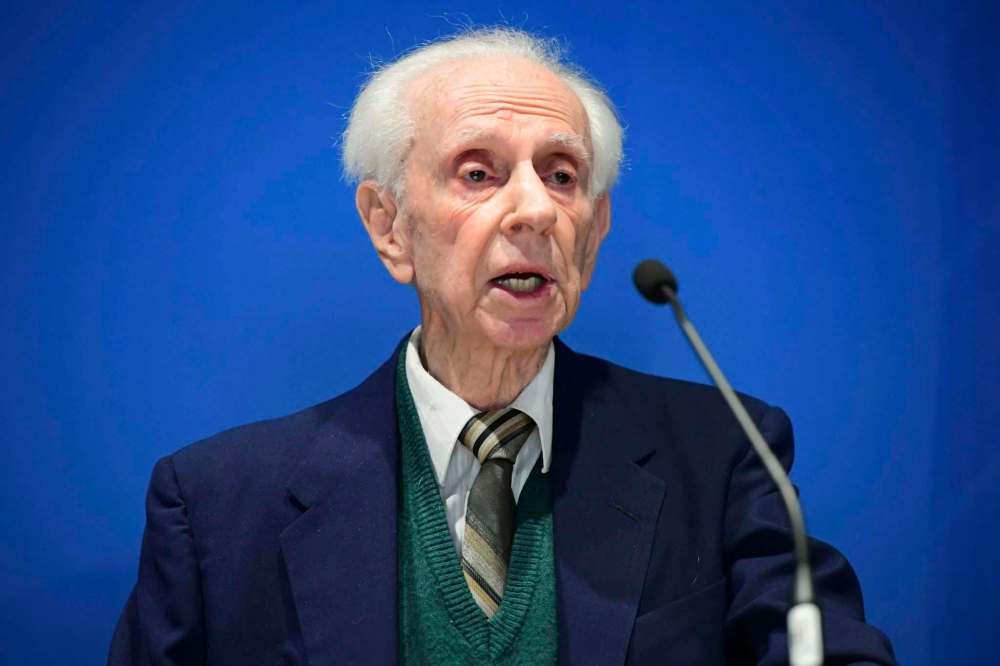
Unlike some other survivors, some of whom have still nightmares “to this day,” Carter said he was “able to put it behind me and move on.”
In his retirement, he spends his time sharing about that experience and warning about the dangers of anti-Semitism and Holocaust denial and distortion.

“We have to constantly keep talking about it,” Carter said. “The stories of survivors have to be told over and over again.
“Within each of us is the potential for good and evil. Either can’t be brought out,” he said. To prevent future Holocausts, people need to “nurture the good” inside of them.
The event, which starts at noon, will conclude with a question-and-answer period facilitated by Daniel Stone, professor emeritus of history at the University of Winnipeg. Online ASL interpretation will be provided.
For more information and to register, visit http://wfp.to/DSQ.
faith@freepress.mb.ca
The Free Press is committed to covering faith in Manitoba through our Religion in the News project. This reporting continues because readers like you step forward to fund it.
Donate now to support our reporting on religion.
Your donation is eligible for a charitable tax receipt.
BECOME A FAITH JOURNALISM SUPPORTER
Our newsroom depends on a growing audience of readers to power our journalism. If you are not a paid reader, please consider becoming a subscriber.
Our newsroom depends on its audience of readers to power our journalism. Thank you for your support.
The Free Press is committed to covering faith in Manitoba through our Religion in the News project. This reporting continues because readers like you step forward to fund it.
Donate now to support our reporting on religion.
Your donation is eligible for a charitable tax receipt.
BECOME A FAITH JOURNALISM SUPPORTER
Our newsroom depends on a growing audience of readers to power our journalism. If you are not a paid reader, please consider becoming a subscriber.
Our newsroom depends on its audience of readers to power our journalism. Thank you for your support.
Advertisement Advertise With Us
Advertisement Advertise With Us
History
Updated on Wednesday, January 27, 2021 6:08 AM CST: Corrects spelling, adds link
The Free Press acknowledges the financial support it receives from members of the city’s faith community, which makes our coverage of religion possible.