Funding killed for Wisconsin’s largest conservation project

Advertisement

Advertise with us

MADISON, Wis. (AP) — Republicans on the Legislature's budget committee voted Tuesday to kill funding for the largest land conservation project in Wisconsin history, a move that came following concerns about the $15 million purchase of 56,000 acres of forest land that would have been open to both logging and recreational use.

Read this article for free:


or

Already have an account? Log in here »

To continue reading, please subscribe:

Subscribe and receive a limited-edition Free Press branded hat or tote.

Digital Subscription

One year of digital access for only $205*

  • Enjoy unlimited reading on winnipegfreepress.com
  • Read the E-Edition, our digital replica newspaper
  • Access News Break, our award-winning app
  • Play interactive puzzles

*First annual payment billed as $205.00 + GST for one year. This annual subscription will automatically renew at $233.00 + GST every 52 weeks (10% off the regular annual price of $259.35). Offer available to new and qualified returning subscribers only. Cancel any time.

To continue reading, please subscribe:

Add Free Press access to your Brandon Sun subscription for only an additional

$1 for the first 4 weeks*

  • Enjoy unlimited reading on winnipegfreepress.com
  • Read the E-Edition, our digital replica newspaper
  • Access News Break, our award-winning app
  • Play interactive puzzles
Start now

*Your next Brandon Sun subscription payment will increase by $1.00 and you will be charged $17.95 plus GST for four weeks. After four weeks, your payment will increase to $24.95 plus GST every four weeks.

Hey there, time traveller!
This article was published 18/04/2023 (1271 days ago), so information in it may no longer be current.

MADISON, Wis. (AP) — Republicans on the Legislature’s budget committee voted Tuesday to kill funding for the largest land conservation project in Wisconsin history, a move that came following concerns about the $15 million purchase of 56,000 acres of forest land that would have been open to both logging and recreational use.

Republican lawmakers objected in November to using $4 million from the state’s Knowles-Nelson Stewardship Program to help finance the purchase of the property east of Rhinelander in northern Wisconsin known as the Pelican River Forest. The rest of the funding for the conservation easement would come from a federal grant.

Efforts to address lawmakers’ concerns since objections were raised were unsuccessful, Sen. Mary Felzkowski, one of the Republicans who objected to the project, said Tuesday. She was among the 12 Republicans on the Legislature’s Joint Finance Committee who voted to kill the project, while all four Democrats voted to fund it.

Felzkowski raised concerns about what effect it would have on northern Wisconsin’s economy to remove that much land from future potential development. Republicans have long raised concerns about taking blocks of private land off the tax rolls through the state’s stewardship program.

“Enough is enough,” Felzkowski said Tuesday.

Felzkowski faulted advocates of the project for not having conversations about concerns raised by snowmobilers, local communities and others who would be affected by the project. Felzkowski accused the state Natural Resources Board of voting to approve the project despite concerns raised by local communities that wanted some of the land available for future development.

Republican Rep. Mark Born, co-chair of the budget committee, said the state Department of Natural Resources “should be ashamed for what they did on this.” He accused the agency of attempting to “shove this down the throat of locals” and pretending like there were no concerns about the project.

A spokesperson for the agency did not immediately respond to a request for comment in reaction to the committee’s actions and Born’s accusations.

Under the committee’s process, lawmakers can object to funding a project in secret. The objection triggers a meeting to review the project, but projects can be left in limbo and effectively killed with long delays before a meeting is called.

Felzkowski previously came forward as one of those who objected, and on Tuesday committee co-chair Sen. Howard Marklein said he was another.

Democratic Rep. Evan Goyke said he was thankful for the discussion about the project in open, calling it “a little bit of sunshine.”

But Born discounted that, saying concerns about the project have been publicly reported for months.

“This wasn’t like I needed to have some secret code to find this information,” he said.

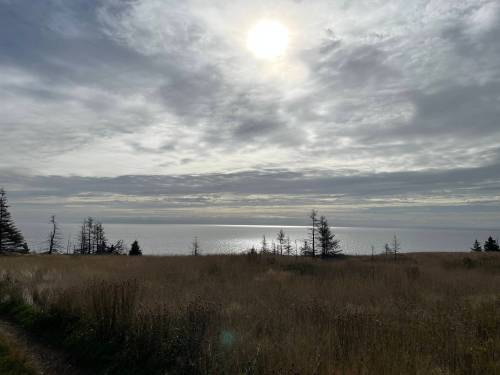
The Conservation Fund, a Virginia-based national land conservation group, bought the land that includes 16 parcels located mostly east of Rhinelander in Oneida County, but also in Forest and Langlade counties. The land straddles the Great Lakes and Mississippi River watersheds and is a link between the Oneida County Forest and Chequamegon-Nicolet National Forest.

The Conservation Fund said at the time it bought the land in 2021 that it will protect wildlife habitat while continuing sustainable timber harvesting as well as recreational uses such as hunting and fishing.

Under the state’s purchase plan, the land would have been left in an undeveloped state with public access for hunting, fishing, trapping and motorized recreation, such as snowmobiles and four-wheelers.

State officials have previously raised the possibility of launching a fundraising campaign or seeking landowner donations to come up with enough money to match the $10 million federal grant. The Conservation Fund has also said it may sell the property if the state DNR can’t secure funding for the project.

Clint Miller, central midwest regional director at The Conservation Fund, said the decision not to fund the project was disappointing, but pledged to continue working with the state to complete it.

Report Error Submit a Tip

More Stories

Protein crests current appetite wave

Laura Rance-Unger 4 minute read Preview

Protein crests current appetite wave

Laura Rance-Unger 4 minute read 2:01 AM CDT

Holiday feasts often reflect the latest fads and trends influencing how we eat.

This Thanksgiving’s table is likely to feature more Canadian content than it might otherwise as a point of national pride.

In the recent past, the carb-free craze has made cauliflower a substitute for the mashed potatoes on some family spreads. Some have gone meatless, while others have added more. Still others offer gluten-free, dairy-free or fat-free alternatives.

Nowadays, it seems consumers can’t get enough protein. Desmond Sobool, deputy chief economist Farm Credit Canada, told a recent economic update for the agri-food sector there are two converging influences in play.

Read
2:01 AM CDT

Longtime voice of the Blue and Gold marks major milestone

David Sanderson 8 minute read Preview

Longtime voice of the Blue and Gold marks major milestone

David Sanderson 8 minute read Yesterday at 12:52 PM CDT

Bob McGregor made his debut as the Winnipeg Blue Bombers’ public-address announcer on June 7, 1997, during a pre-season game at Winnipeg Stadium between the hometown Blue Bombers and their western rivals, the Calgary Stampeders.

McGregor will be behind the microphone again this Saturday, detailing the action on the field in addition to leading a boisterous Princess Auto Stadium crowd through what has become his signature call, “And that is another Winnipeg Blue Bombers first down!”

The Bombers’ final home date of the 2026 regular season will mark a major milestone for McGregor, and the former newscaster feels it’s only fitting the same two teams as 10,717 days ago — the Bombers and Stampeders — will be the ones butting helmets.

“I knew at the start of the season I was closing in on 300 games as the PA guy, only it wasn’t until I went through the schedule that I realized my 300th would be Winnipeg-Calgary, which struck me as kind of cool,” McGregor says, seated in a St. James breakfast nook, dressed in dark trousers and a blue-and-gold Blue Bombers golf shirt.

Read
Yesterday at 12:52 PM CDT

Funding killed for Wisconsin’s largest conservation project

Scott Bauer, The Associated Press 4 minute read Tuesday, Apr. 18, 2023

MADISON, Wis. (AP) — Republicans on the Legislature's budget committee voted Tuesday to kill funding for the largest land conservation project in Wisconsin history, a move that came following concerns about the $15 million purchase of 56,000 acres of forest land that would have been open to both logging and recreational use.

Republican lawmakers objected in November to using $4 million from the state's Knowles-Nelson Stewardship Program to help finance the purchase of the property east of Rhinelander in northern Wisconsin known as the Pelican River Forest. The rest of the funding for the conservation easement would come from a federal grant.

Efforts to address lawmakers' concerns since objections were raised were unsuccessful, Sen. Mary Felzkowski, one of the Republicans who objected to the project, said Tuesday. She was among the 12 Republicans on the Legislature's Joint Finance Committee who voted to kill the project, while all four Democrats voted to fund it.

Felzkowski raised concerns about what effect it would have on northern Wisconsin's economy to remove that much land from future potential development. Republicans have long raised concerns about taking blocks of private land off the tax rolls through the state's stewardship program.

Musk’s meddlesome trolling

Editorial 4 minute read Preview

Musk’s meddlesome trolling

Editorial 4 minute read 2:01 AM CDT

It seems obvious the world’s first trillionaire thought he was helping separatists within the Canadian federation when he encouraged three provinces — Alberta, Saskatchewan and Quebec — to leave Canada.

Unfortunately for Elon Musk, a man suffering from a profound deficit of self-awareness, his comments may only help those who want to keep the country together.

Musk entered the national unity debate on Wednesday, two days after the pro-independence Parti Quebecois was returned to power in Quebec with a minority mandate. The PQ has promised to hold a third referendum on separation at some point in its current term.

Musk — who has a Canadian mother and attended university in Ontario — took to X, the social media platform formerly known as Twitter (which he owns) and encouraged Quebec to forge ahead with plans to separate. He said Alberta — which will hold a vote this fall on whether to hold a binding referendum on separation — and Saskatchewan should follow suit.

Read
2:01 AM CDT

Alberta’s gopher museum closed until further notice as owners find new facility

Daniela Germano, The Canadian Press 3 minute read Preview

Alberta’s gopher museum closed until further notice as owners find new facility

Daniela Germano, The Canadian Press 3 minute read Updated: Yesterday at 12:54 PM CDT

A quirky Alberta roadside attraction that has delighted travellers for decades with its stuffed rodents in tiny costumes is closed until further notice.

The World Famous Gopher Hole Museum, located in Torrington, a hamlet about 120 kilometres north of Calgary, made the announcement online earlier this week.

Laural Kurta, museum director, said she was forced to close the doors because the two historical buildings that house the exhibits need to be replaced.

"We have done every patch repair, staple, spackle, everything we could possibly do, and it is just at its end," Kurta said in an interview Tuesday.

Read
Updated: Yesterday at 12:54 PM CDT

Nature doesn’t waste its time

Russell Wangersky 6 minute read Preview

Nature doesn’t waste its time

Russell Wangersky 6 minute read 2:01 AM CDT

Sixteen months in and the black burn from a forest fire somehow transitions from the foreground to the background. I’m not sure if it actually softens, if it really changes, or if is just that your eyes, now used to the background, start seeing less of it.

One thing’s for certain: nature doesn’t waste any time taking its opportunities. In the sheltered ground behind where the shed over our Newfoundland root cellar used to be, a forest of sorrel has arisen, its dark-green leaves with their distinctive double horns at their base crowding in tight amongst each other.

It’s no surprise: sorrel is new beginnings, often the first plant I see recultivating abandoned gardens or disturbed ground and I’m happy to have it around always. Its distinctive lemony bite is a fine addition to salads, though we’re not likely to choose it from that particular root cellar patch. Not with the way the asphalt roof shingles burned right around there. I shovelled up the heavy pats of congealed black tar last spring, right after the fire, bringing them up from inside the cellar in big plastic buckets to send to safe disposal. But there’s probably plenty of tar still in the ground and out of sight — hardly an appetizing thought.

From other areas, maybe we will eventually sample sorrel: it depends on how close they were to the house or shed or anything else that burned. And so very much burned. The province has said gardens are safe from contamination by fire-retardant chemicals as nothing has shown up in tests. But we know what way the wind was blowing — what burned, and where, is always part of the equation. It’s a strange calculation to make: I’m just glad our house wasn’t heated with fuel oil, was too old to contain asbestos, and didn’t have indoor plumbing for decades.

Read
2:01 AM CDT