Indonesia’s youth clean up trash from waterways, but more permanent solutions are still elusive
Advertisement
Read this article for free:
or
Already have an account? Log in here »
To continue reading, please subscribe:

Digital Subscription
One year of digital access for only $205*
- Enjoy unlimited reading on winnipegfreepress.com
- Read the E-Edition, our digital replica newspaper
- Access News Break, our award-winning app
- Play interactive puzzles
*First annual payment billed as $205.00 + GST for one year. This annual subscription will automatically renew at $233.00 + GST every 52 weeks (10% off the regular annual price of $259.35). Offer available to new and qualified returning subscribers only. Cancel any time.
To continue reading, please subscribe:
Add Free Press access to your Brandon Sun subscription for only an additional
$1 for the first 4 weeks*
- Enjoy unlimited reading on winnipegfreepress.com
- Read the E-Edition, our digital replica newspaper
- Access News Break, our award-winning app
- Play interactive puzzles
*Your next Brandon Sun subscription payment will increase by $1.00 and you will be charged $17.95 plus GST for four weeks. After four weeks, your payment will increase to $24.95 plus GST every four weeks.
Read unlimited articles for free today:
or
Already have an account? Log in here »
Hey there, time traveller!
This article was published 07/12/2023 (1033 days ago), so information in it may no longer be current.
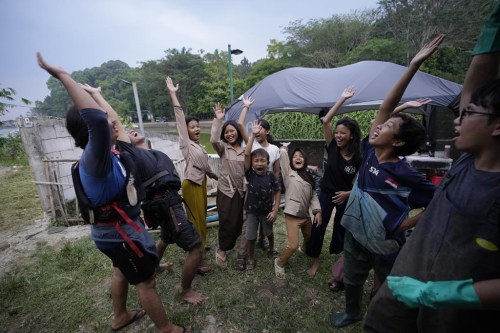
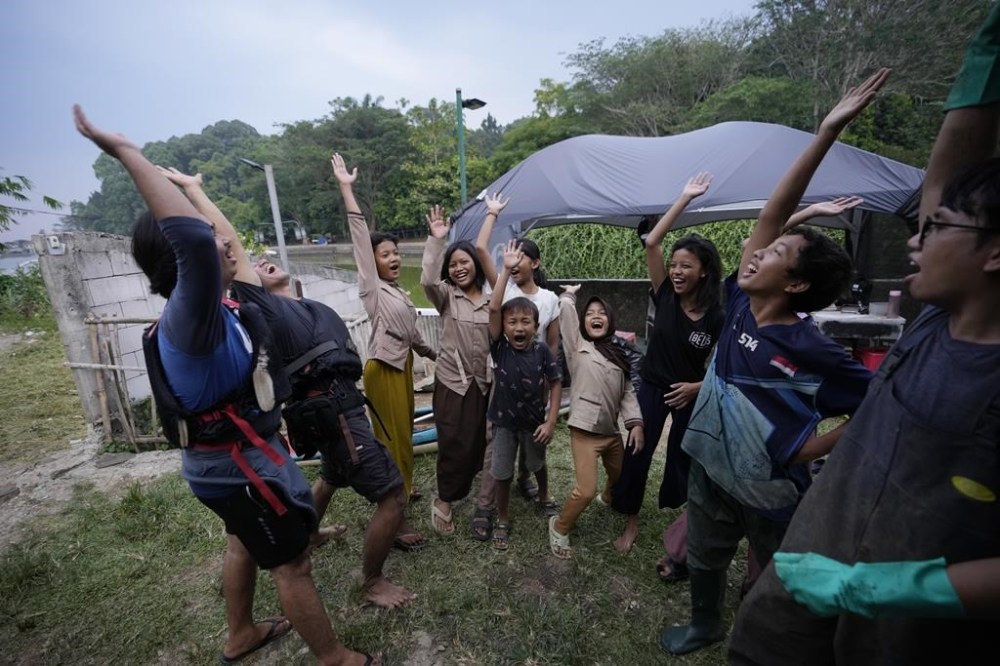
BOGOR, Indonesia (AP) — At a lake in the West Javan city of Bogor, children and teenagers paddle toward piles of floating trash, pick it up and store it in their kayaks, before passing it to friends sorting it onshore.
The group of around 20 youngsters started off as a team of one, a decade ago, when Giri Marhara decided to start cleaning up the lake. He was just 16 years old at the time, and already had a penchant for wanting to clean up his environment — from his classroom to his neighborhood.
Young people like Marhara have been at the forefront of environmental and climate change movements in recent years: initiatives like school strikes for climate action, protests at United Nations climate talks and around the world, and local clean ups have often been youth-led. When it comes to waste picking, experts say it’s a stop-gap solution, and the larger problem of creating too much waste needs to be addressed. But the relatively small-scale efforts in Indonesia have resonated with younger people, attracting support and attention.
“For me, cleaning up is catharsis, cleaning up is refreshing,” said Marhara, who would often be asked by children playing nearby if they could help with the clean ups. “I don’t want to miss the opportunity to educate kids that this is something that’s positive, something that you should probably try making a habit too,” Marhara said, so he encouraged them to help.
They formed a group last year, called the Situ Gede Cleanliness Warrior, named after the lake. They paddle or kayak across the lake, pick up trash, and identify what can be recycled. A local kayaking group lend their boats to Marhara’s initiative, and members take turns between paddling across the lake or sorting trash shoreside into what can recycled or reused and what will need to be disposed.
Over 10 years, Marhara and his friends have collected more than 2,700 kilograms (5,900 pounds) of trash in and around the Situ Gede lake through various initiatives.
But the country’s trash problem is far bigger than what the group can take out of waterways.
Indonesia produced more than 35 million tons of waste last year, according to Indonesia’s Environmental and Forestry Ministry. It estimates that 35% of waste in the country is unmanaged. Garbage on roadsides, in waterways and natural environments is a common sight.
Waste is also responsible for around 3% of global greenhouse gas emissions, according to the World Resources Institute. Much of that comes from food waste, that, if left to decompose in landfills, can emit methane, a planet-warming gas that is around 80 times more potent than carbon dioxide in the short term.
The trash problem has also raised health concerns: Plastic waste, for example, gets broken down into tiny pieces called microplastics, which can enter the human body. Some studies suggest it can impact the endocrine, nervous and immune systems, and can carry an increased risk of cancers.
“The implications are very serious and need to be addressed,” said Abdul Ghofar, an urban and pollution specialist at The Indonesian Forum for the Environment. “There are environmental losses, as well as the health losses, and of course there are economic losses” because of the cost of restoring environments.
There are alternatives to landfill or littering for some waste products: food waste can be composted, and some other types of waste, like certain types of plastic, can be reused or recycled. But environmentalists also say the world needs to make less waste in the first place, as much of it ends up in landfill or in the world’s oceans.
“We should be encouraged to find out where the source of the pollution comes from and how to stop it,” said Ghofar. “The term among environmentalist is to close the tap, or turn off the tap. This pollution will never end if the source of the pollution is not closed.”
But as waste taps stay on, youth-led clean ups can still make an impact, even if it’s just for small areas or communities. It’s something Trisna Rengganis has witnessed in his neighborhood in Depok, on the outskirts of Jakarta.
The group Ciliwung Depok Community works with neighborhoods around greater Jakarta on conservation efforts like cleaning up rivers and riverbanks.
Rengganis, who volunteers with the group, said that there’s a stigma toward those who say the Ciliwung river has a trash problem, even though many residents throw garbage into the water and there’s no good waste management system in the area.
But since the cleanup efforts, children from nearby areas have started to visit and play by the river again, a rare sight in the big city, Rengganis said. Seeing children back at Ciliwung’s banks reminds him of his childhood, he said.
“They feel comfortable and safe,” at the river, Rengganis said. “I hope, on other sides of Ciliwung — the upstream or the downstream areas — they can do the same thing.”
Rengganis hopes the momentum to clean up the river and address the region’s trash problem continues, so that future generations can also enjoy the area.

Marhara believes that kind of lasting change will need a culture shift that will persist even if waste production is curtailed.
“I am trying to counter the behavior that is causing trash to be out there in the environment,” he said, saying the country has a “littering culture.”
“I think that the only way to counter that culture is by developing a counterculture,” a clean up culture, he said.
___
Associated Press climate and environmental coverage receives support from several private foundations. See more about AP’s climate initiative here. The AP is solely responsible for all content.