Climate change imperils drought-stricken Morocco’s cereal farmers and its food supply

Advertisement

Advertise with us

KENITRA, Morocco (AP) — Golden fields of wheat no longer produce the bounty they once did in Morocco. A six-year drought has imperiled the country's entire agriculture sector, including farmers who grow cereals and grains used to feed humans and livestock.

Read this article for free:


or

Already have an account? Log in here »

To continue reading, please subscribe:

Subscribe and receive a limited-edition Free Press branded hat or tote.

Digital Subscription

One year of digital access for only $205*

  • Enjoy unlimited reading on winnipegfreepress.com
  • Read the E-Edition, our digital replica newspaper
  • Access News Break, our award-winning app
  • Play interactive puzzles

*First annual payment billed as $205.00 + GST for one year. This annual subscription will automatically renew at $233.00 + GST every 52 weeks (10% off the regular annual price of $259.35). Offer available to new and qualified returning subscribers only. Cancel any time.

To continue reading, please subscribe:

Add Free Press access to your Brandon Sun subscription for only an additional

$1 for the first 4 weeks*

  • Enjoy unlimited reading on winnipegfreepress.com
  • Read the E-Edition, our digital replica newspaper
  • Access News Break, our award-winning app
  • Play interactive puzzles
Start now

*Your next Brandon Sun subscription payment will increase by $1.00 and you will be charged $17.95 plus GST for four weeks. After four weeks, your payment will increase to $24.95 plus GST every four weeks.

Hey there, time traveller!
This article was published 23/07/2024 (804 days ago), so information in it may no longer be current.

KENITRA, Morocco (AP) — Golden fields of wheat no longer produce the bounty they once did in Morocco. A six-year drought has imperiled the country’s entire agriculture sector, including farmers who grow cereals and grains used to feed humans and livestock.

The North African nation projects this year’s harvest will be smaller than last year in both volume and acreage, putting farmers out of work and requiring more imports and government subsidies to prevent the price of staples like flour from rising for everyday consumers.

“In the past, we used to have a bounty — a lot of wheat. But during the last seven or eight years, the harvest has been very low because of the drought,” said Al Housni Belhoussni, a small-scale farmer who has long tilled fields outside of the city of Kenitra.
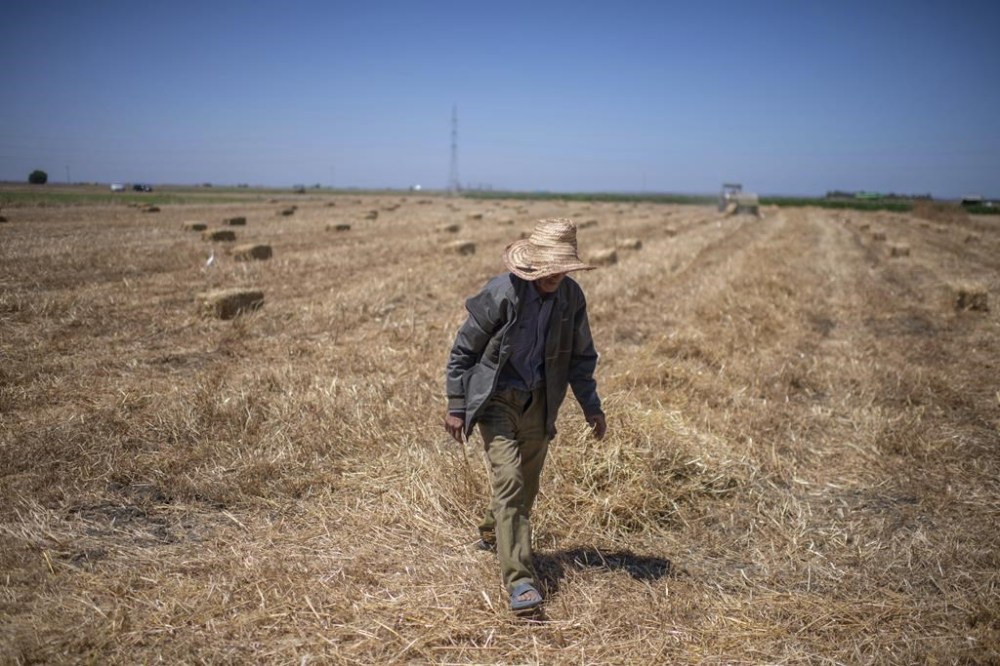
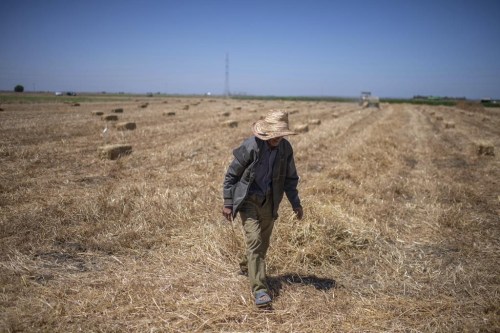
A farmer works in a wheat field on the outskirts of Kenitra, Morocco, Friday, June 21, 2024. Golden fields of wheat no longer produce the bounty they once did in Morocco. A six-year drought has imperiled the country's entire agriculture sector, including farmers who grow cereals and grains used to feed humans and animals. (AP Photo)

Belhoussni’s plight is familiar to grain farmers throughout the world confronting a hotter and drier future. Climate change is imperiling the food supply and, in regions like North Africa, shrinking the annual yields of cereals that dominate diets around the world — wheat, rice, maize and barley.

The region is one of the most vulnerable in the world to climate change. Delays to annual rains and inconsistent weather patterns have pushed the growing season later in the year and made planning difficult for farmers.

In Morocco, where cereals account for most of the farmed land and agriculture employs the majority of workers in rural regions, the drought is wreaking havoc and touching off major changes that will transform the makeup of the economy. It has forced some to leave their fields fallow. It has also made the areas they do elect to cultivate less productive, producing far fewer sacks of wheat to sell than they once did.

In response, the government has announced restrictions on water use in urban areas — including on public baths and car washes — and in rural ones, where water going to farms has been rationed.

“The late rains during the autumn season affected the agriculture campaign. This year, only the spring rains, especially during the month of March, managed to rescue the crops,” said Abdelkrim Naaman, the chairman of Nalsya. The organization has advised farmers on seeding, irrigation and drought mitigation as less rain falls and less water flows through Morocco’s rivers.

The Agriculture Ministry estimates that this year’s wheat harvest will yield roughly 3.4 million tons (3.1 billion kilograms), far less than last year’s 6.1 million tons (5.5 billion kilograms) — a yield that was still considered low. The amount of land seeded has dramatically shrunk as well, from 14,170 square miles (36,700 square kilometers) to 9,540 square miles (24,700 square kilometers).

Such a drop constitutes a crisis, said Driss Aissaoui, an analyst and former member of the Moroccan Ministry for Agriculture.

“When we say crisis, this means that you have to import more,” he said. “We are in a country where drought has become a structural issue.”

Leaning more on imports means the government will have to continue subsidizing prices to ensure households and livestock farmers can afford dietary staples for their families and flocks, said Rachid Benali, the chairman of the farming lobby COMADER.

The country imported nearly 2.5 million tons of common wheat between January and June. However, such a solution may have an expiration date, particularly because Morocco’s primary source of wheat, France, is facing shrinking harvests as well.
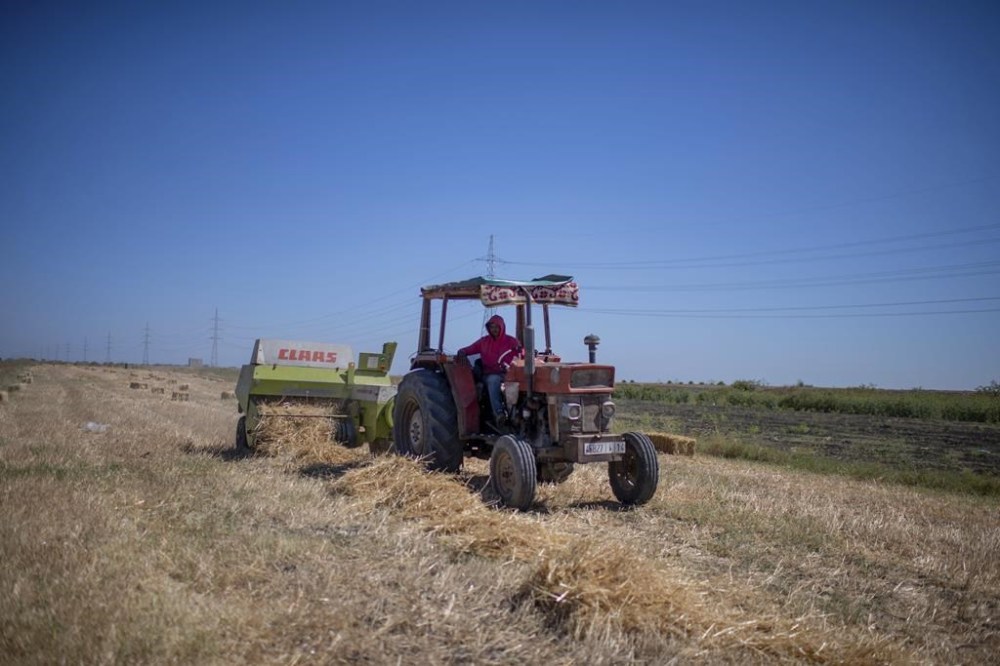
A farmer works in a wheat field on the outskirts of Kenitra, Morocco, Friday, June 21, 2024. (AP Photo)

The United Nations’ Food and Agriculture Organization ranked Morocco as the world’s sixth-largest wheat importer this year, between Turkey and Bangladesh, which both have much bigger populations.

“Morocco has known droughts like this and in some cases known droughts that las longer than 10 years. But the problem, this time especially, is climate change,” Benali said.

__

Hassan Alaoui contributed reporting from Rabat and Kenitra, Morocco.

__

This story has been updated to clarify that the annual yields of the main cereal crops are falling in North Africa, but not globally.


Report Error Submit a Tip

More Stories

Winnipeggers witness unveiling of Japanese Canadian monument in B.C.

Morgan Modjeski 6 minute read Preview

Winnipeggers witness unveiling of Japanese Canadian monument in B.C.

Morgan Modjeski 6 minute read Saturday, Oct. 3, 2026

As Miki Stewart gathered with her family at the Japanese Cultural Association of Manitoba on Saturday afternoon, she was thinking of her parents, Yoshimaru and Yoshi Abe.

Both Stewart, 80, and her sister Yumi Falk, 81, alongside an older brother, were born in the Tashme internment camp in British Columbia. They were among more than 2,600 Japanese Canadians who were forcefully removed and interned at the camp following the bombing of Pearl Harbour and Canada’s declaration of war on Japan in 1941.

“They didn’t talk much about how they suffered,” Stewart said of her parents. “But they did.”

She was amongst a group of more than 150 people who gathered at the association’s McPhillips headquarters on Saturday afternoon to watch the unveiling of the Japanese Canadian Monument in Victoria B.C.

Read
Saturday, Oct. 3, 2026

Mayoral hopefuls trade accusations

Maggie Macintosh 4 minute read Preview

Mayoral hopefuls trade accusations

Maggie Macintosh 4 minute read Yesterday at 7:51 PM CDT

Two mayoral hopefuls traded accusations about meddling in each other’s campaigns as the incumbent rallied supporters for his re-election bid on the eve of advanced polls opening across Winnipeg.

A social media post made by Mike Vogiatzakis, one of 12 nominees in the Oct. 28 race for the top job at city hall, caught the attention of rivals Sunday.

The funeral director took to Facebook midday to criticize Kevin Klein — a competitor he said he thought of “as a friend” until the former Tory cabinet minister made a U-turn after pledging to back the Vogiatzakis campaign.

“Good speaker? Yes. Good looking guy? Sure. Someone I trust now? Absolutely not,” he wrote in a lengthy post.

Read
Yesterday at 7:51 PM CDT

Stevenson set for first Jets start against Penguins

Ken Wiebe 5 minute read Preview

Stevenson set for first Jets start against Penguins

Ken Wiebe 5 minute read Yesterday at 6:55 PM CDT

DETROIT — Clay Stevenson, the stage is yours.

As the Winnipeg Jets wrap up a two-game road trip on Monday against the Pittsburgh Penguins, the newest member of the team will be between the pipes after Stuart Skinner got the call in the first two outings of the campaign.

There will be an element of familiarity for Stevenson, as PPG Paints Arena is where he made his first NHL appearance with the Washington Capitals on April 17, 2025.

“There is some comfortability in that building,” said Stevenson, who made 33 saves in a 5-2 loss to the Penguins in that NHL debut. “It’s always a great challenge to play against (Sidney) Crosby and (Evgeni) Malkin and those guys. It’s an honour to get into the crease anytime.”

Read
Yesterday at 6:55 PM CDT

Keeping the lights on

Hal Turner 4 minute read 2:00 AM CDT

Manitobans are hardy. We live, work and play in one of the harshest winter climates in the world.

Climate change imperils drought-stricken Morocco’s cereal farmers and its food supply

Sam Metz, The Associated Press 4 minute read Preview

Climate change imperils drought-stricken Morocco’s cereal farmers and its food supply

Sam Metz, The Associated Press 4 minute read Tuesday, Jul. 23, 2024

KENITRA, Morocco (AP) — Golden fields of wheat no longer produce the bounty they once did in Morocco. A six-year drought has imperiled the country's entire agriculture sector, including farmers who grow cereals and grains used to feed humans and livestock.

The North African nation projects this year's harvest will be smaller than last year in both volume and acreage, putting farmers out of work and requiring more imports and government subsidies to prevent the price of staples like flour from rising for everyday consumers.

“In the past, we used to have a bounty — a lot of wheat. But during the last seven or eight years, the harvest has been very low because of the drought," said Al Housni Belhoussni, a small-scale farmer who has long tilled fields outside of the city of Kenitra.

Belhoussni's plight is familiar to grain farmers throughout the world confronting a hotter and drier future. Climate change is imperiling the food supply and, in regions like North Africa, shrinking the annual yields of cereals that dominate diets around the world — wheat, rice, maize and barley.

Read
Tuesday, Jul. 23, 2024

Six high school hockey programs ceased operations following new Hockey Manitoba policy

Joshua Frey-Sam 7 minute read Preview

Six high school hockey programs ceased operations following new Hockey Manitoba policy

Joshua Frey-Sam 7 minute read Friday, Oct. 2, 2026

She lived the best of both worlds.

For the last three years, the 17-year-old wore a sweater for two different hockey programs — her high school team and AAA club in the Manitoba Female Hockey League — and was preparing to flourish in both colours again this winter.

Recently, however, the blue-liner was disappointed to learn she is no longer eligible to play her Grade 12 season with her school owing to a new policy imposed by Hockey Manitoba that bans players from participating in the Manitoba Women’s High School Hockey League if they are rostered on a U18 AAA team.

The rule applies to all athletes who play for both Winnipeg-based and rural AAA teams.

Read
Friday, Oct. 2, 2026