Forest and park service worker cuts leave wildland firefighting crews short-staffed
Advertisement
Read this article for free:
or
Already have an account? Log in here »
To continue reading, please subscribe:

Digital Subscription
One year of digital access for only $205*
- Enjoy unlimited reading on winnipegfreepress.com
- Read the E-Edition, our digital replica newspaper
- Access News Break, our award-winning app
- Play interactive puzzles
*First annual payment billed as $205.00 + GST for one year. This annual subscription will automatically renew at $233.00 + GST every 52 weeks (10% off the regular annual price of $259.35). Offer available to new and qualified returning subscribers only. Cancel any time.
To continue reading, please subscribe:
Add Free Press access to your Brandon Sun subscription for only an additional
$1 for the first 4 weeks*
- Enjoy unlimited reading on winnipegfreepress.com
- Read the E-Edition, our digital replica newspaper
- Access News Break, our award-winning app
- Play interactive puzzles
*Your next Brandon Sun subscription payment will increase by $1.00 and you will be charged $17.95 plus GST for four weeks. After four weeks, your payment will increase to $24.95 plus GST every four weeks.
Read unlimited articles for free today:
or
Already have an account? Log in here »
Hey there, time traveller!
This article was published 08/05/2025 (508 days ago), so information in it may no longer be current.
SEATTLE (AP) — Trump administration funding cuts and a loss of federal workers who help support wildland firefighting continues to make planning for the upcoming wildfire season a challenge, according to forest and fire officials in Washington state and Oregon.
The biggest issue they’re facing is a lack of communication from the federal government as the West faces “a pretty significant wildland fire season,” Washington State Forester George Geissler said Thursday during a press conference hosted by Democratic Sens. Patty Murray of Washington and Jeff Merkley of Oregon.
“This is the time when we make certain that we have the aviation we need, when we have the personnel we need and that all of our systems check out and are ready to go when the alarm bell rings,” he said. “Without knowing what our partners are doing or not having a clear understanding of what actions are being taken, we struggle with missing the third leg of the stool that we have.”
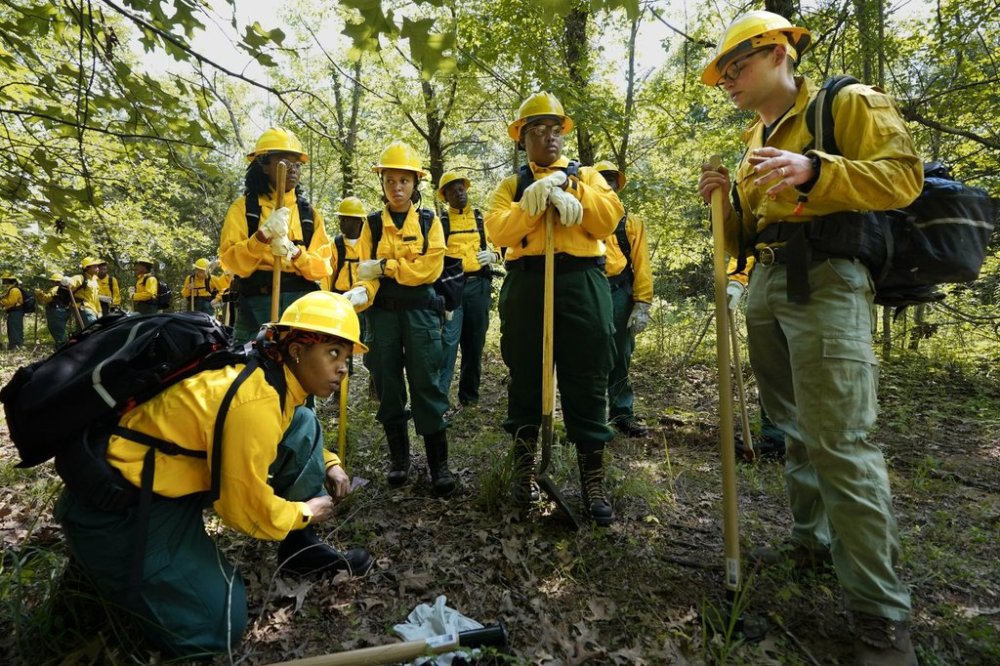
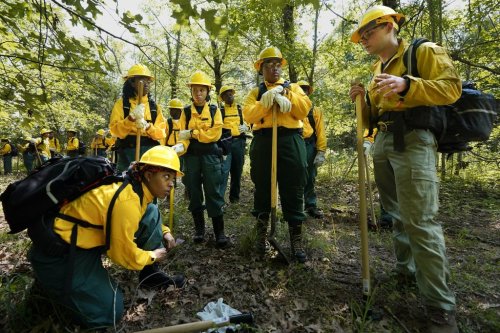
The Forest Service workforce was cut in February during Elon Musk’s push to reduce federal spending, and at least 1,000 National Park Service workers were let go. A court order to rehire fired workers, along with a public outcry brought many workers back to their jobs, but Murray and fire officials say it wasn’t enough. Plus, the lost of experienced, trained workers set the process back.
“We’re hearing that don’t worry, we are going to hire frontline people,” Murray said. “You just let a whole bunch of frontline people go.”
A spokesperson with the Department of Interior, which oversees National Parks and other public lands, said “funding is not in jeopardy.” They’re supporting firefighting efforts by increasing pay for federal and tribal wildland firefighters across the U.S.
The administration has refused to release the exact number of fired and rehired workers, but numbers are coming in from individual forests, she said.
“I’ve heard of at least 35 people at Mt. Baker-Snoqualmie National Forest, 46 at Okanagan-Wenatchee, 21 at Colville, 15 at Gifford-Pinchot, and more at the Columbia River Gorge National Scenic Area, Olympic National Forest and Methow Valley,” she said. “Here’s the thing, nearly every single Forest Service employee supports fire operations in some capacity.”
Fire Chief Leonard Johnson, with the McLane Black Fire Department in Washington state, said they may line up aviation support and heavy equipment, but it takes trained firefighters to put the fires out.
“We have a high reliance on that workforce out there,” he said. “Not only at the local level, at the state level, but at the federal level to make our wildfire season successful to deal with those large fires. People are the critical component in all of this.”
Merkley said Trump’s budget proposal cuts forest and watershed management programs that improve forest conditions, eliminates a collaborative forest landscape restoration program and slashes 2,000 National Forest positions, on top of the thousands who left through early retirement, buyouts and layoffs.
Most of those workers may not have the title “firefighter” but they all hold Red Cards – which shows they have special training to provide essential frontline support to firefighting crews, Murray said.
“In fact, around three quarters of forest service workers are trained in wild land firefighting,” she said. “They provide crucial surge capacity when a crisis strikes.”
Trail maintenance crews ensure the paths are clear for firefighting personnel and equipment, Murray said. Biologists conduct testing to make decisions about prescribed burns and fuel reduction planning.
“We are here today to pull the fire alarm, and we’re gonna set off some sirens,” she said. “We’re going to keep focused on this, and we are gonna keep pushing back. There is just too much at stake to do anything less.”