Canada’s ‘exceptional’ drought hints at future climate, need for action: experts
Advertisement
Read this article for free:
or
Already have an account? Log in here »
To continue reading, please subscribe:

Digital Subscription
One year of digital access for only $205*
- Enjoy unlimited reading on winnipegfreepress.com
- Read the E-Edition, our digital replica newspaper
- Access News Break, our award-winning app
- Play interactive puzzles
*First annual payment billed as $205.00 + GST for one year. This annual subscription will automatically renew at $233.00 + GST every 52 weeks (10% off the regular annual price of $259.35). Offer available to new and qualified returning subscribers only. Cancel any time.
To continue reading, please subscribe:
Add Free Press access to your Brandon Sun subscription for only an additional
$1 for the first 4 weeks*
- Enjoy unlimited reading on winnipegfreepress.com
- Read the E-Edition, our digital replica newspaper
- Access News Break, our award-winning app
- Play interactive puzzles
*Your next Brandon Sun subscription payment will increase by $1.00 and you will be charged $17.95 plus GST for four weeks. After four weeks, your payment will increase to $24.95 plus GST every four weeks.
Read unlimited articles for free today:
or
Already have an account? Log in here »
Hey there, time traveller!
This article was published 20/08/2025 (406 days ago), so information in it may no longer be current.
Canada must prepare for more seasons marked by severe drought, experts say as this summer’s bone-dry conditions tormented farmers, strained municipal water supply and fuelled one of the worst wildfire seasons on record.
Seventy-one per cent of the country was either abnormally dry or under drought conditions as of the end of July, according to the federal government’s drought monitor released last week.
Drought-stricken communities across the country have urged residents to cut back on water and some have instituted outright bans on most outdoor water activities to help preserve their drinking water.
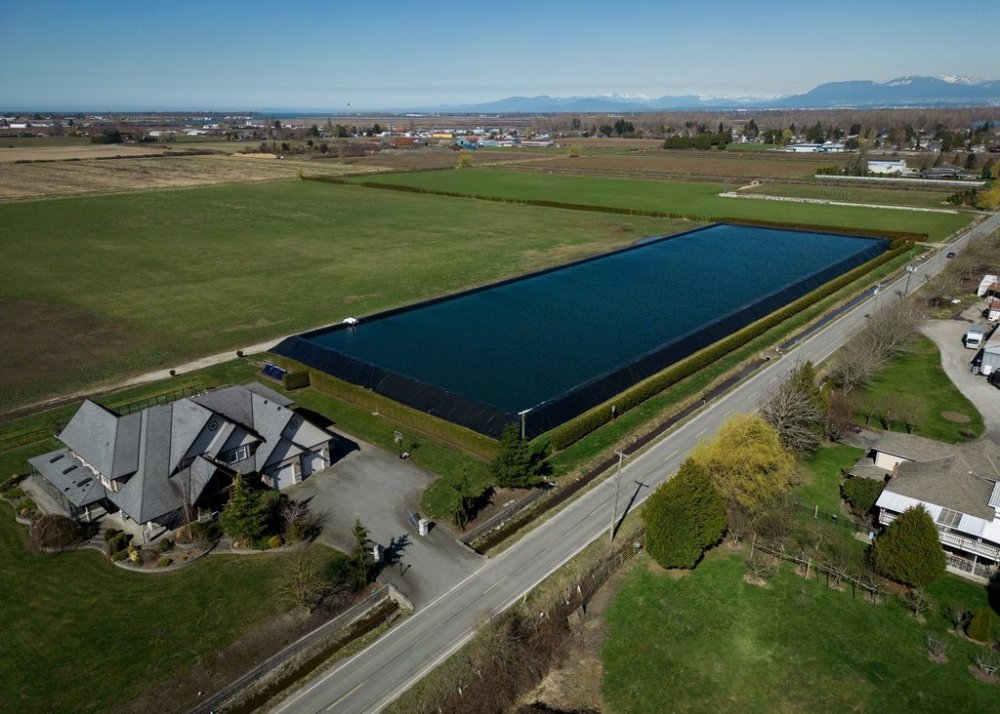
What has stood out about this year is just how widespread those drought conditions have become, said John Pomeroy, one of Canada’s leading hydrologists. The only other year in recent memory when drought was so widespread was 2023, he said.
“It’s a coast-to-coast-to-coast drought. So that’s quite exceptional,” said Pomeroy, the director of the Global Water Futures Observatories project at the University of Saskatchewan. He called the “bone-dry” conditions in typically wet Newfoundland and Nova Scotia “mind-boggling.”
As climate change, driven by the burning of fossil fuels, is expected to increase the likelihood and severity of drought, experts say Canada needs to accelerate the transition to clean energy while also increasing the country’s resilience to these extremes.
“This year is a sign, a signal of the types of conditions we will experience more frequently and that we need to be prepared for moving forward,” said Ryan Ness, the director of adaptation research at the Canadian Climate Institute think tank.
“Water efficiency is going to be critical — making the best use out of the water that we have rather than, say, spraying it away to water lawns in urban areas.”
Canada is home to 20 per cent of the world’s freshwater but less than half of it is naturally renewed through the hydrological cycle. It’s otherwise tied up in glaciers and underground aquifers, or large lakes where replenishment is slow.
More than half of the renewable freshwater, meanwhile, flows north to the Arctic Ocean and Hudson Bay, putting it out of reach to the vast majority of Canada’s population. What remains, while still abundant, is “heavily used and often overly stressed,” the federal government says.
Climate change is adding to that stress, studies show. The threat of drought is likely to increase across many regions of the country, including the already drought-prone Prairies and interior British Columbia. It’s also expected to lead to earlier and faster snowmelt, drying out basins that depend on that water.
“Canada is often seen as a land of endless water, with countless lakes, rivers and water. But we should be careful,” said University of Ottawa’s Hossein Bonakdari, who has studied climate change and drought risks.
Beyond the tap, this year’s drought impacts are being felt in Canada’s farm fields, its forests, and its depleted hydropower stations.
Dry conditions have contributed to Canada’s second-worst wildfire season on record, dating back to the early 1970s. The fires have burned through an area slightly larger than New Brunswick.
In Manitoba, where large swathes of the province are under extreme drought, the major hydro utility says its system inflows are the lowest recorded in the past 40 years for this time of year.
Manitoba Hydro says it can meet its energy demand under the lowest-recorded drought conditions, but it’s too early to say how another year of drought may impact its finances. Last year, citing drought conditions, the provincial Crown corporation reported a $157-million loss in part because there was less of its energy to export and it had to import power to meet its requirements.
In the fields, while most of the Prairies’ spring-planted crops are forecasted by Agriculture Canada to have solid yields this year, the drought has been ruinous in some hard-hit areas.
Some rural municipalities have declared agricultural disasters and famers have had to sell their herds or haul in water to satiate thirsty livestock in some drought-stricken areas, said David Lee, the manager of the federal government’s National Agriculture Climate Information Service.
While some of those areas have seen conditions improve since the end of July, many of the crops are already too far along for recent rainfall to make a difference, he said.
“It took a long time to get there; it’s going to take a long time to go back out,” Lee said of places afflicted by multi-year drought, such as northern Saskatchewan.
There are many ways Canada can become more resilient to drought, said Ness, the adaptation director at the Canadian Climate Institute.
Governments should support farmers to develop drought plans and incorporate water-efficient agriculture, he said. Communities should be adopting more wildfire prevention design guidelines. Wetlands must be protected, he said.
Canada is also seeing a surge in energy-intensive artificial intelligence data centres that use significant amounts of waters for cooling. The recent drought conditions highlight the importance of carefully considering water availability in large industrial and infrastructure investment decisions, said Ness.

Yet, “the most important thing that we need to do to mitigate this growing drought risk is reduce greenhouse gas emissions,” he said.
“We need to get on top of it as soon as possible by both preparing and adapting but also ultimately cutting off those emissions that are continuing to make the problem worse.”
Droughts can also worsen the impacts of extreme rainfall when it eventually hits, said Pomeroy, the hydrologist. Drought kills off vegetation and dries out soil, leading to less water absorption and more runoff, he said.
“So that is unfortunately what they should already be thinking about preparing for in Eastern Canada, now is what comes next,” said Pomeroy.
This report by The Canadian Press was first published Aug. 20, 2025.
Advertisement Advertise With Us
Advertisement Advertise With Us