Canada’s carbon tax conundrum continues as Supreme Court reserves judgment in cases

Advertisement

Advertise with us

OTTAWA - The Supreme Court of Canada reserved judgment on the national carbon tax Wednesday.

Read this article for free:


or

Already have an account? Log in here »

To continue reading, please subscribe:

Subscribe and receive a limited-edition Free Press branded hat or tote.

Digital Subscription

One year of digital access for only $205*

  • Enjoy unlimited reading on winnipegfreepress.com
  • Read the E-Edition, our digital replica newspaper
  • Access News Break, our award-winning app
  • Play interactive puzzles

*First annual payment billed as $205.00 + GST for one year. This annual subscription will automatically renew at $233.00 + GST every 52 weeks (10% off the regular annual price of $259.35). Offer available to new and qualified returning subscribers only. Cancel any time.

To continue reading, please subscribe:

Add Free Press access to your Brandon Sun subscription for only an additional

$1 for the first 4 weeks*

  • Enjoy unlimited reading on winnipegfreepress.com
  • Read the E-Edition, our digital replica newspaper
  • Access News Break, our award-winning app
  • Play interactive puzzles
Start now

*Your next Brandon Sun subscription payment will increase by $1.00 and you will be charged $17.95 plus GST for four weeks. After four weeks, your payment will increase to $24.95 plus GST every four weeks.

Hey there, time traveller!
This article was published 23/09/2020 (2206 days ago), so information in it may no longer be current.

OTTAWA – The Supreme Court of Canada reserved judgment on the national carbon tax Wednesday.

After two days of hearings and presentations from more than two dozen interested parties, the court adjourned without yet deciding whether the carbon price is constitutional.

A decision could take several more months.
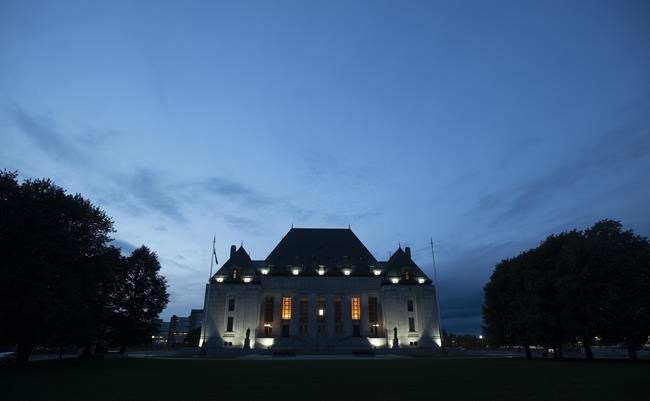
The Supreme Court of Canada is seen at sunset in Ottawa on September 1, 2020. THE CANADIAN PRESS/Adrian Wyld

The hearings brought together three separate appeals related to the federal government’s Greenhouse Gas Pollution Pricing Act, which sets minimum standards for carbon pricing and imposes a federal system on provinces that don’t have an equivalent version of their own.

Appeals courts in Saskatchewan and Ontario ruled in 2019 that the federal carbon tax legislation was constitutional, but in February of this year, the Alberta Court of Appeal said it was not.

Those provinces argued the law leaks into provincial jurisdiction during the first day of hearings Tuesday, while the federal government and British Columbia both defended the law as being in the national interest.

On Wednesday, the court heard from Quebec, New Brunswick and Manitoba, which all argued the law should be struck down. Quebec was one of the first provinces to have a carbon pricing scheme, with its cap-and-trade program, that started in 2013.

Nevertheless, lawyer Jean-Vincent Lacroix told the Supreme Court Quebec strongly feels like Ottawa should not get to decide if provinces have acceptable systems.

Manitoba and New Brunswick both had the federal tax imposed on them in 2019, but that changed for New Brunswick earlier this year after it implemented a provincial program. Premier Blaine Higgs said last fall he would adjust New Brunswick’s policy after the federal election, where a majority of New Brunswick voters cast ballots for parties that backed a carbon tax.

Both provinces argued in court that they should be in control of greenhouse gas policies. Manitoba lawyer Michael Conner said the reason provinces have their own jurisdiction is that there is not a one-size fits all policy that would work, and that carbon pricing will have a different impact depending on where it is applied.

A lengthy list of environmental experts and advocates pleaded with the court to recognize the seriousness of climate change and the necessity of having a national response to it.

Stewart Elgie, speaking in court on behalf of the Ecofiscal Commission, said the court has many times before ruled in Ottawa’s favour when it came to national policies to manage pollution that crosses provincial borders, including water pollution and clean air.

New Brunswick lawyer Rachelle Standing likened it to how provinces had their own ways of trying to address the COVID-19 pandemic, such as New Brunswick’s decision to close its borders to outsiders.

That prompted Justice Rosalie Abella to ask her how she thought New Brunswick could possibly close its borders to greenhouse gas emissions.

Most justices expressed confidence that the science on climate change as a crisis is clear but some expressed concerns the federal law might be too broad.

The carbon tax is a central pillar of the Liberal’s climate change agenda, accounting for as much as 40 per cent of the emissions cuts it has planned for in order to reach its goals under the Paris climate change agreement.

Ontario and Saskatchewan’s appeals were to be heard in March but were delayed by COVID-19, which allowed enough time for the Alberta case to be added to the mix.

This is the first in-person hearing the court has had since COVID-19 shut things down in March. The justices sat in two rows, further apart than usual, with clear shields erected between them.

On Wednesday, several of the interveners presented their arguments by video link.

This report by The Canadian Press was first published Sept. 23, 2020.

Report Error Submit a Tip

More Stories

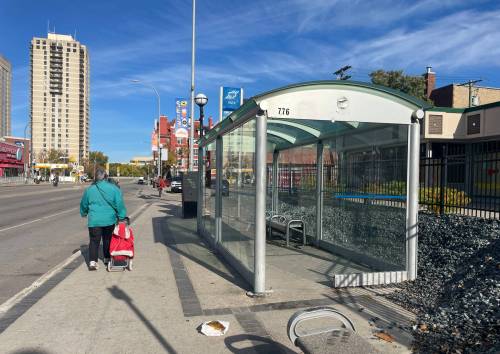
Duo accused in random Osborne Village attacks no strangers to police

Dean Pritchard and Chris Kitching 5 minute read Preview

Duo accused in random Osborne Village attacks no strangers to police

Dean Pritchard and Chris Kitching 5 minute read Tuesday, Oct. 6, 2026

A man arrested following a violent, random attack on two men in Osborne Village late Sunday night was released from jail a week earlier after a dozen charges, including crimes of violence, were stayed against him, court records show.

A man in his 40s was sent to hospital in critical condition and another man in his 20s in stable condition following separate attacks shortly before midnight in the vicinity of River Avenue and Osborne Street.

Police have charged Reginald Owen, 26, and Meaghan Owen, 32, both from Little Grand Rapids, with assault with a weapon and aggravated assault. They both remain in custody.

Court records show Reginald Owen was sentenced Sept. 24 to 30 days time served after pleading guilty to simple possession of magic mushrooms. Owen remained in custody until the following day when he was set to apply for bail on charges including assault, sexual assault, choking to overcome resistance, pointing a firearm, and carrying a concealed weapon.

Read
Tuesday, Oct. 6, 2026

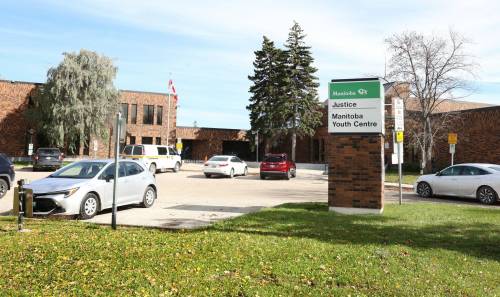
Youth centre library cancellation baffles

Editorial 4 minute read Preview

Youth centre library cancellation baffles

Editorial 4 minute read Yesterday at 2:00 AM CDT

It’s difficult to understand why Manitoba Corrections would shut down a library program that cost taxpayers nothing, was popular with young inmates and was designed to help them learn.

Read
Yesterday at 2:00 AM CDT

Amazon in the weeds over damage to tall grass reserve

Eva Wasney 7 minute read Preview

Amazon in the weeds over damage to tall grass reserve

Eva Wasney 7 minute read Tuesday, Oct. 6, 2026

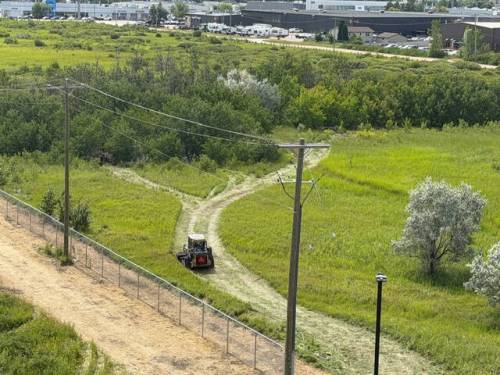
Patricia Dutchak was devastated when she first saw the wide swaths of crushed grass and upturned soil at Winnipeg’s Rotary Prairie Nature Park, a municipal heritage site.

“This is a very rare ecosystem, a remnant of tall grass prairie, there’s barely any left in the world, and to come here and see all this damage was heartbreaking,” Dutchak, chair of the Transcona Rotary Club’s parks committee, says.

The club is responsible for maintaining the protected green space, which was significantly damaged this summer when a fence between the park and the neighbouring Amazon distribution centre was relocated.

The 20-acre nature preserve is situated on a narrow tract of land on Regent Avenue West in the commercial heart of Transcona. The park received its municipal heritage designation in 1992 and is, today, surrounded by high-traffic streets, industrial warehouses and car dealerships.

Read
Tuesday, Oct. 6, 2026

Province takes aim at ER wait times by adding community-care capacity to free up hospital beds

Chris Kitching 5 minute read Preview

Province takes aim at ER wait times by adding community-care capacity to free up hospital beds

Chris Kitching 5 minute read Tuesday, Oct. 6, 2026

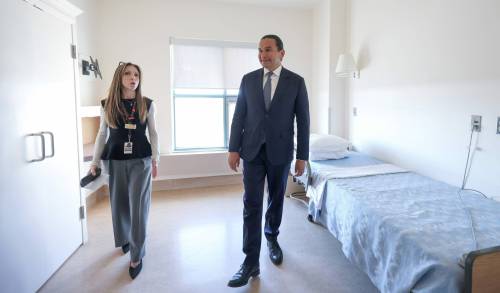
The province is aiming to free up hospital beds and cut wait times by adding 103 community-based care spaces in Winnipeg for patients who need shelter or specialized supports in order to be discharged.

Read
Tuesday, Oct. 6, 2026

RRC Polytech tallies pair of tech programs

Aaron Epp 4 minute read Yesterday at 7:00 PM CDT

Red River College Polytechnic has announced two new degree programs aimed at preparing students to meet workforce demands in Manitoba industries such as engineering and manufacturing.

The first cohorts working toward bachelor of technology degrees in advanced manufacturing and mechatronics will enter the classroom in January at the Winnipeg college’s Notre Dame Avenue campus.

The two programs include a foundation in research methods, Indigenous worldviews and Industry 4.0 technologies to equip graduates with the skills and confidence to take on increasing responsibility in the workplace, RRC Polytech announced earlier this week.

They offer more options for existing students, graduates and mid-career professionals, the school said.

Manitoba Federation of Labour calls for independent review of Workers Compensation Board

Gabrielle Piché 5 minute read Preview

Manitoba Federation of Labour calls for independent review of Workers Compensation Board

Gabrielle Piché 5 minute read Tuesday, Oct. 6, 2026

A major labour association is calling for an independent Workers Compensation Board review as Manitoba leads the country in workplace injury rates.

Last year, 2.5 employees in every 100 reported a workplace injury serious enough to take time off, WCB tracking shows. The number is higher than any other province — just as it has been for the past three years, according to the Manitoba Federation of Labour.

(In 2025, the next highest time loss injury rate was in British Columbia: 2.04 people for every 100.)

“Our prevention work in Manitoba is failing Manitobans,” said Kevin Rebeck, president of the Manitoba Federation of Labour. “We need an independent review to help shine a light on, ‘What is happening on the prevention front of WCB?’”

Read
Tuesday, Oct. 6, 2026