Justin Trudeau says he’ll take COVID-19 antibody test once available
Advertisement
Read this article for free:
or
Already have an account? Log in here »
To continue reading, please subscribe:

Digital Subscription
One year of digital access for only $205*
- Enjoy unlimited reading on winnipegfreepress.com
- Read the E-Edition, our digital replica newspaper
- Access News Break, our award-winning app
- Play interactive puzzles
*First annual payment billed as $205.00 + GST for one year. This annual subscription will automatically renew at $233.00 + GST every 52 weeks (10% off the regular annual price of $259.35). Offer available to new and qualified returning subscribers only. Cancel any time.
To continue reading, please subscribe:
Add Free Press access to your Brandon Sun subscription for only an additional
$1 for the first 4 weeks*
- Enjoy unlimited reading on winnipegfreepress.com
- Read the E-Edition, our digital replica newspaper
- Access News Break, our award-winning app
- Play interactive puzzles
*Your next Brandon Sun subscription payment will increase by $1.00 and you will be charged $17.95 plus GST for four weeks. After four weeks, your payment will increase to $24.95 plus GST every four weeks.
Read unlimited articles for free today:
or
Already have an account? Log in here »
Hey there, time traveller!
This article was published 26/05/2020 (2308 days ago), so information in it may no longer be current.
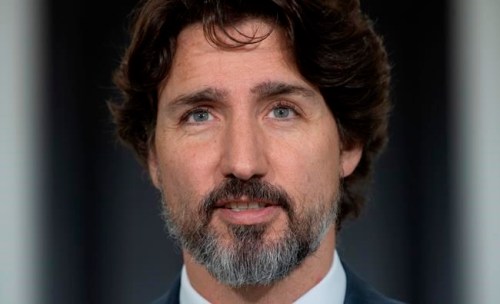
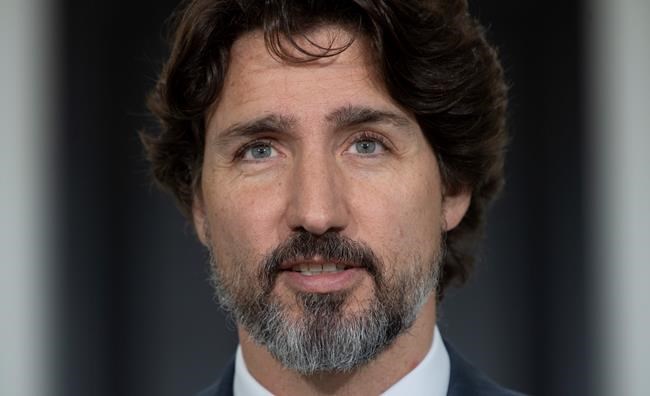
OTTAWA – Prime Minister Justin Trudeau said Tuesday that once there’s a test widely available to see who has had COVID-19, he’ll take it.
Trudeau was exposed to the novel coronavirus earlier this year via his wife, Sophie Gregoire Trudeau, who likely contracted it during a trip to England. The prime minister never showed any symptoms.
He was never tested himself. At the time, testing was limited to those who were symptomatic.
But testing is slowly becoming available now that can detect whether a person has previously had COVID-19 by looking for signs of the infection in their blood.
“Serological testing is an important part of understanding exactly how COVID-19 has been present in the country, including in people who haven’t displayed any symptoms at all,” Trudeau said.
“As soon as those tests become more largely available to Canadians, I will certainly ensure that I am one of them.”
There are serological tests approved for use in Canada but chief public health officer Dr. Theresa Tam said Tuesday the tests aren’t ready for “prime time,” in terms of Canadians being able to get them at their family doctor’s office, for example.
Instead, they will be part of public health surveillance efforts being carried out by an immunology task force, which is currently designing surveys aimed at figuring out the real rate of infection in Canada.
The number of positive cases at present is about five per cent nationally, among those who have been tested.
“The test-positive cases are the tip of the iceberg,” Tam said.
“These surveys are designed to see what’s the infection rate in the community. That is one of the primary objectives right now.”
The federal government is currently ramping up the ability of Canada’s health-care system to both test for current and past cases of COVID-19.
On Tuesday, Innovation Minister Navdeep Bains announced a dozen new contracts with Canadian companies to produce the supplies needed for current and serological tests, as well as to develop new testing methods.
Expanding testing capacity is a key element of the various provincial plans to ease up on physical distancing requirements designed to slow the spread of COVID-19.
But another element is ensuring there is enough personal protective gear available for both the health-care system and businesses to keep that spread at a minimum.
Canada is competing globally for supplies of equipment such as masks, gowns and hand sanitizer, while at the same time trying to increase capacity at home to make it.
That’s led to companies who normally produce everything from auto parts to parkas retooling their factories to engage in production of those goods.
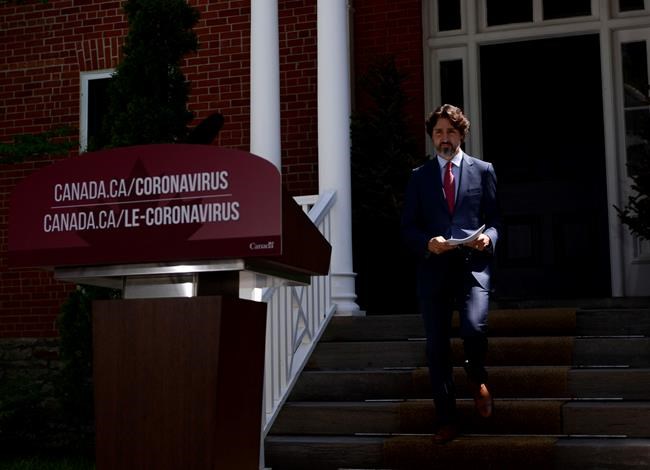
Anita Anand, the federal minister in charge of procuring that gear, said millions more pieces of equipment are also on their way from abroad, arriving almost daily.
“With every order and every delivery, challenges remain to be overcome,” Anand said.
“At this point we anticipate demand to continue to accelerate in Canada and around the world.”
The quantities on order from Canada dwarf what’s actually in hand so far, an issue attributed to the scramble for everything from raw materials to make the goods to finding the transportation for them.
The Liberals have been hit with criticism by their political opponents, and also from the medical community, about a perceived delay in the procurement of personal protective gear.
As of May 19, for example, the federal government had ordered close to 30,000 ventilators, but only 203 had arrived.
Anand was asked repeatedly Tuesday about the discrepancy between orders and quantities in hand, and suggested it is not that supplies are being delayed.
She pointed to hundreds of thousands of medical gowns that have recently arrived, as well as 7.6 million more surgical masks.
Anand said the numbers will continue to rise as new contracts are signed and deliveries continue.
Two sea containers filled with hand sanitizer are on the way, she said by way of example.
This report by The Canadian Press was first published May 26, 2020.
Related Articles
Military reports on 'disgusting' nursing homes
Advertisement Advertise With Us
Advertisement Advertise With Us