Abstinence not required: How a Baltimore drug treatment program prioritizes saving lives

Advertisement

Advertise with us

BALTIMORE (AP) — Anthony Kelly trudged through southwest Baltimore, each labored footstep a reminder of the roofing accident that left him with chronic pain and a raging opioid addiction several years after he returned home from serving in the Marines.

Read this article for free:


or

Already have an account? Log in here »

To continue reading, please subscribe:

Subscribe and receive a limited-edition Free Press branded hat or tote.

Digital Subscription

One year of digital access for only $205*

  • Enjoy unlimited reading on winnipegfreepress.com
  • Read the E-Edition, our digital replica newspaper
  • Access News Break, our award-winning app
  • Play interactive puzzles

*First annual payment billed as $205.00 + GST for one year. This annual subscription will automatically renew at $233.00 + GST every 52 weeks (10% off the regular annual price of $259.35). Offer available to new and qualified returning subscribers only. Cancel any time.

To continue reading, please subscribe:

Add Free Press access to your Brandon Sun subscription for only an additional

$1 for the first 4 weeks*

  • Enjoy unlimited reading on winnipegfreepress.com
  • Read the E-Edition, our digital replica newspaper
  • Access News Break, our award-winning app
  • Play interactive puzzles
Start now

*Your next Brandon Sun subscription payment will increase by $1.00 and you will be charged $17.95 plus GST for four weeks. After four weeks, your payment will increase to $24.95 plus GST every four weeks.

Hey there, time traveller!
This article was published 11/06/2023 (1196 days ago), so information in it may no longer be current.

BALTIMORE (AP) — Anthony Kelly trudged through southwest Baltimore, each labored footstep a reminder of the roofing accident that left him with chronic pain and a raging opioid addiction several years after he returned home from serving in the Marines.

Doctors used metal plates to reconstruct his lower legs and Kelly spent months learning to walk again. So began his plodding journey into the depths of substance use disorder, a downward spiral that would gradually weaken his body and consume his mind.

After his prescribed painkillers ran out, Kelly turned to a combination of heroin and cocaine that sometimes cost $500 per day.
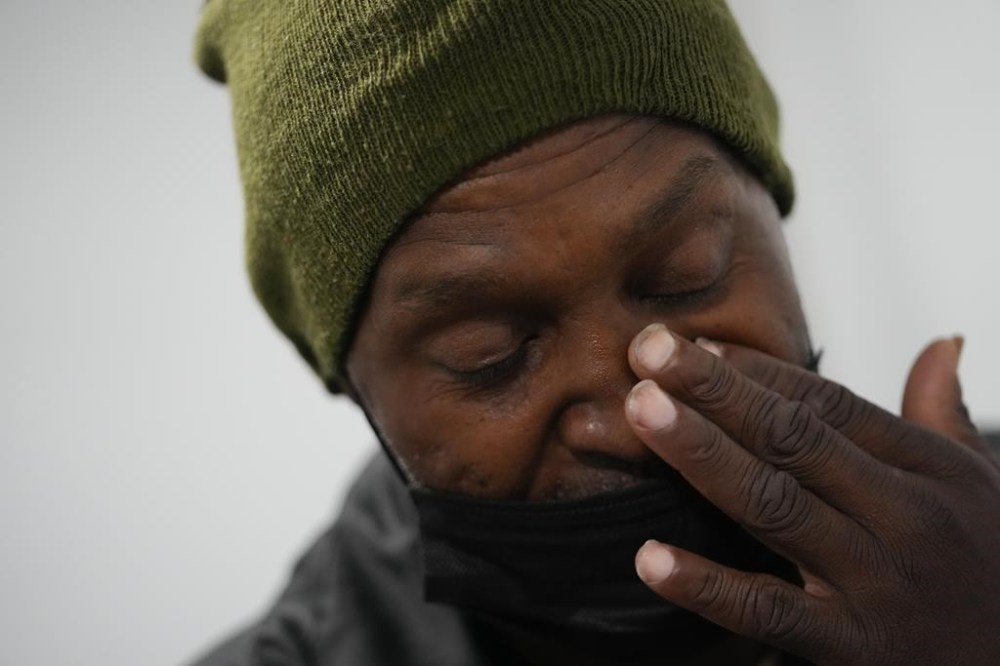
Marc Floyd, 54, reacts during a session with nurse practitioner Bobby Harris inside a Baltimore City Health Department RV, Monday, March 20, 2023, in Baltimore. The Baltimore City Health Department's harm reduction program uses the RV to address the opioid crisis, which includes expanding access to medication assisted treatment by deploying a team of medical staff to neighborhoods with high rates of substance abuse and offering buprenorphine prescriptions. (AP Photo/Julio Cortez)

More than a decade later, his substance use is more manageable and less expensive, though it remains a controlling force in his life. He takes buprenorphine, a prescription medication that’s considered the gold standard for treating opioid addiction by reducing cravings and easing withdrawal symptoms.

He gets the medication through a mobile health clinic housed in a retrofitted van, which parks in some of Baltimore’s most drug-ravaged communities, including Kelly’s neighborhood. Doctors and nurses meet with patients, write prescriptions and provide basic wound care, hepatitis C treatment, packages of the overdose reversal agent naloxone and more, all free of charge.

The clinic exemplifies an ongoing shift in the nation’s approach to stemming overdose deaths, which surged during the pandemic to unprecedented heights as the potent synthetic opioid fentanyl replaced heroin in drug markets across the country. The so-called harm reduction model, which has received endorsement and funding from the Biden administration, offers potentially life-saving services to opioid users, without requiring abstinence in return.

Advocates say it acknowledges the importance of keeping people alive, first and foremost, while they confront the sometimes insurmountable challenges associated with recovery. Critics argue it enables illegal activity.

In Baltimore’s “Healthcare on the Spot” program, most patients continue using street drugs, but the vast majority report using less, according to clinic staff.

“Being an addict, it’s more complicated than people think,” said Kelly, 49. “We built this web we’re entangled in. We didn’t get here overnight and we’re not gonna get better overnight. You can’t just snap out of it.”

Baltimore’s overdose death rate is significantly higher than the statewide and nationwide averages, with more than 1,000 lives lost in 2020, the most recent data available. The city makes up about 10% of Maryland’s population but logs more than 35% of its overdose deaths.

“We should be thinking about harm reduction on a spectrum. Some people want to stop using, others want to use safer. This is about truly meeting people where they are,” said Dr. Letitia Dzirasa, who served as the city’s health commissioner until recently being appointed deputy mayor. “It’s also about reducing the stigma. Because this is a disease, not a moral failing.”

Buprenorphine, which received federal approval for treatment of opioid use disorder in 2002, binds to opioid receptors in the brain without producing a euphoric high. Often prescribed under the brand name Suboxone, the drug typically comes in orange strips that dissolve under your tongue.

Research shows it significantly reduces a person’s risk of overdose and death. Despite its effectiveness, a relatively small percentage of people experiencing opioid addiction are prescribed the medication. In contrast to methadone treatment, which is highly regulated and often requires patients to visit a clinic every day, buprenorphine prescriptions can last weeks or months.

In December 2022, federal lawmakers passed legislation that made it easier for doctors to prescribe buprenorphine, recognizing its life-saving potential. Drug overdoses nationwide have claimed more than 100,000 lives annually since 2020, with about two-thirds of them related to fentanyl.

A picture frame displays Anthony Kelly, top, participating in a wrestling match in high school, Tuesday, May 2, 2023, in Baltimore. Kelly has been using help from the Baltimore City Health Department's harm reduction program RV, which is used to address the opioid crisis, which includes expanding access to medication assisted treatment by deploying a team of medical staff to neighborhoods with high rates of substance abuse and offering buprenorphine prescriptions. (AP Photo/Julio Cortez)

Every Monday morning, the Spot van parks in west Baltimore’s Upton community, a historic Black cultural hub once known for its renowned jazz clubs, upscale shops and vibrant nightlife.

Now a shadow of its former self, the neighborhood is filled with visible impacts of the local drug trade: dealers doing business outside vacant buildings, their customers nodding drowsily on public benches, stumbling through alleys and trying to scrounge up enough money to make it through another day. Baltimore police cruisers routinely patrol the area, part of the city’s crime-fighting strategy to increase law enforcement presence in communities plagued by gun violence.

Less than a block from the van’s parking spot, a tangle of deflated balloons commemorates a January shootout that wounded three people and killed two, including a young mother who was waiting to pick up a takeout order when she and her children got caught in the gunfire.

The Spot program, which launched in 2018, operates under a partnership between the Baltimore City Health Department and the Johns Hopkins University School of Medicine. It typically serves about 900 patients a year. An estimated 40% of them have a recent history of intravenous drug use, almost 75% are Black and more than half are experiencing homelessness or housing instability.

Darryl Jackson Sr., who enrolled last year along with his adult son, said sometimes the clinic feels like the only source of stability in his life. He recently had to leave the apartment where he had been staying and was researching rental assistance programs, which are often mired in bureaucracy and hobbled by impossibly long waitlists.

Jackson, 58, said he can’t tolerate shelter environments because he’s a stickler for cleanliness. He takes pride in maintaining a neat appearance. After a career in construction, he still dresses almost exclusively in canvas work pants and sneakers.

But on the inside, he struggles to keep his addiction in check and stave off a growing feeling of hopelessness. He recently returned to the Spot van after some missed appointments.

“They care,” he said. “So I keep coming back.”

Report Error Submit a Tip

More Stories

Jets GM insists club’s not working under any deadline in netminder’s trade request

Mike McIntyre 7 minute read Preview

Jets GM insists club’s not working under any deadline in netminder’s trade request

Mike McIntyre 7 minute read Thursday, Sep. 17, 2026

Connor Hellebuyck and his family were subject to so much post-Olympic vitriol that both the Winnipeg Jets security team and even police had to get involved.

Read
Thursday, Sep. 17, 2026

Canada must not accept another Iranian autocracy

David Matas 5 minute read 2:01 AM CDT

Iran is a state run by a radical government victimizing its citizens and its neighbours. How do we change that? Any regime change that repeats the mistakes of the past is not a solution.

What went wrong in the past which led to the current regime? One answer is the U.K. and American aided coup which led to the ouster in 1953 of a democratically elected government headed at the time by Mohammad Mossadegh and its replacement with an American friendly autocrat, the Shah of Iran, Mohammad Reza Pahlavi.

The Shah imposed his rule through the Iranian National Intelligence and Security Organization — SAVAK, the acronym of its Persian name. SAVAK systematically inflicted torture, arbitrary killings and extra-judicial killings on perceived opponents of the regime. It was only a matter of time before repression of a regime directed to serving foreign interests would be overthrown.

What replaced the regime of the Shah, in 1979, the current regime of the mullahs, is a regime as intolerant and violent as the regime of the Shah and then some. That was not inevitable. But neither was it surprising. The vicious nature of the current regime, following the example set by the Shah, and its hatred for the United States, reacting to the U.S. aided imposition of the Shah, both echoes and reacts to the past. In 1979, the U.S. reaped what it sowed in 1953.

Siloam Mission, WFPS discussing on-site paramedic to reduce staggering number of emergency calls

Scott Billeck 4 minute read Preview

Siloam Mission, WFPS discussing on-site paramedic to reduce staggering number of emergency calls

Scott Billeck 4 minute read Yesterday at 2:00 AM CDT

Winnipeg’s fire-paramedic service and its largest homeless-serving organization are discussing what it would look like to station at least one paramedic at Siloam Mission, as emergency calls to the downtown facility surge.

The ongoing discussions come as Winnipeg Fire Paramedic Service crews were dispatched 1,771 times during the first eight months of the year to the two adjacent Siloam properties at 303 Stanley St. and 300 Princess St.

WFPS said most of the calls were related to overdoses or other consequences of substance use, with the total nearly double the 854 calls recorded over the same period last year. By comparison, there were 831 calls during the same span in 2024, and 591 in 2023.

“The number of emergency calls isn’t sustainable for us as a service, but it’s certainly not sustainable for them as an agency trying to provide services,” WFPS chief Ryan Sneath told the Free Press. “And they recognize that they’re impacting emergency services, not them specifically, but the site in a significant way.”

Read
Yesterday at 2:00 AM CDT

Cabernet Sauvignon star of wine festival

Ben Sigurdson 5 minute read Preview

Cabernet Sauvignon star of wine festival

Ben Sigurdson 5 minute read 3:00 AM CDT

The Winnipeg Wine Festival will celebrate the king of red wine grapes next weekend — the theme of this year’s festival, which takes place Sept. 25 and 26 at the RBC Convention Centre, is Cabernet Sauvignon.

Cab Sauv, as it’s also known, is the world’s most widely planted wine grape of any colour, first coming to prominence in the 1800s in France’s Bordeaux region, where the grape is still popular. Rather than single-variety wines, Bordeaux reds tend to be blends, with those coming from the left bank of the Gironde estuary being Cabernet-dominant, while right-bank wines are Merlot-dominant, with Cabernet Sauvignon playing a supporting role. Cabernet and Merlot work well together and many other countries have followed suit in blending the two.

A team at University of California Davis put Cabernet Sauvignon through a DNA test in 1996 and discovered its parent grapes are Cabernet Franc and Sauvignon Blanc — it’s likely that at some point the two varieties, planted next to each other in some vineyard, crossed and mutated and became the grape we know today. (Someone growing grapes in the 19th century must have had an inkling of what was up, as the grape has been called Cabernet Sauvignon since long before the DNA test.)

Flavour-wise, most Cabernet Sauvignon wines are big and bold, with a core of deep dark berry flavours, some graphite and spice notes and relatively bright acidity. It’s a grape that is well-suited to barrel aging, with most examples seeing at least some time in wood.

Read
3:00 AM CDT

Not falling back means time loop remains unclosed

Jen Zoratti 4 minute read 2:01 AM CDT

I demand restitution. Where’s my hour?

In the traditional fall-back, spring-forward time change set up — you know, ol’ trusty that’s been effect for lo these 63 years — we lost an hour in the spring that we got back in the fall.

That was the social contract: you commit to feeling like you’re on cold medication for a week in March because you know a glorious extra hour of sleep will be returned to you in November. (Unless, of course, you have little kids, but look: we all make our choices.)

Well, that transaction, flawed as it was, isn’t happening this year. That hour you sacrificed to the sun gods in the spring? Gone. Not coming back. We’ve sprung forward and we shan’t be falling back — not in November, and (possibly) not ever. The scale shall remain unbalanced and the loop shall remain unclosed as Manitoba has adopted permanent daylight time.

Near-future U.S. the setting for surreal dual-world storyline

Reviewed by Morley Walker 4 minute read Preview

Near-future U.S. the setting for surreal dual-world storyline

Reviewed by Morley Walker 4 minute read 2:01 AM CDT

It’s not every day you encounter a seriously intended literary novel that attempts to dramatize a mind-bending physics theory like quantum entanglement.

But then the B.C.-born-and-raised Emily St. John Mandel is not your everyday Canadian literary writer.

In her late 40s, she has lived in the U.S. for her entire writing career. She is best known for her 2014 dystopian novel Station Eleven, about a Shakespearean acting troupe navigating a pandemic-ravaged America.

Her new outing, her seventh, Exit Party, shares DNA with detective and sci-fi genres more than with conventional literary fiction.

Read
2:01 AM CDT