How does heat kill? It confuses your brain. It shuts down your organs. It overworks your heart.

Advertisement

Advertise with us

As temperatures and humidity soar outside, what's happening inside the human body can become a life-or-death battle decided by just a few degrees.

Read this article for free:


or

Already have an account? Log in here »

To continue reading, please subscribe:

Subscribe and receive a limited-edition Free Press branded hat or tote.

Digital Subscription

One year of digital access for only $205*

  • Enjoy unlimited reading on winnipegfreepress.com
  • Read the E-Edition, our digital replica newspaper
  • Access News Break, our award-winning app
  • Play interactive puzzles

*First annual payment billed as $205.00 + GST for one year. This annual subscription will automatically renew at $233.00 + GST every 52 weeks (10% off the regular annual price of $259.35). Offer available to new and qualified returning subscribers only. Cancel any time.

To continue reading, please subscribe:

Add Free Press access to your Brandon Sun subscription for only an additional

$1 for the first 4 weeks*

  • Enjoy unlimited reading on winnipegfreepress.com
  • Read the E-Edition, our digital replica newspaper
  • Access News Break, our award-winning app
  • Play interactive puzzles
Start now

*Your next Brandon Sun subscription payment will increase by $1.00 and you will be charged $17.95 plus GST for four weeks. After four weeks, your payment will increase to $24.95 plus GST every four weeks.

Hey there, time traveller!
This article was published 21/06/2024 (820 days ago), so information in it may no longer be current.

As temperatures and humidity soar outside, what’s happening inside the human body can become a life-or-death battle decided by just a few degrees.

The critical danger point outdoors for illness and death from relentless heat is several degrees lower than experts once thought, say researchers who put people in hot boxes to see what happens to them.

With much of the United States, Mexico, India and the Middle East suffering through blistering heat waves, worsened by human-caused climate change, several doctors, physiologists and other experts explained to The Associated Press what happens to the human body in such heat.
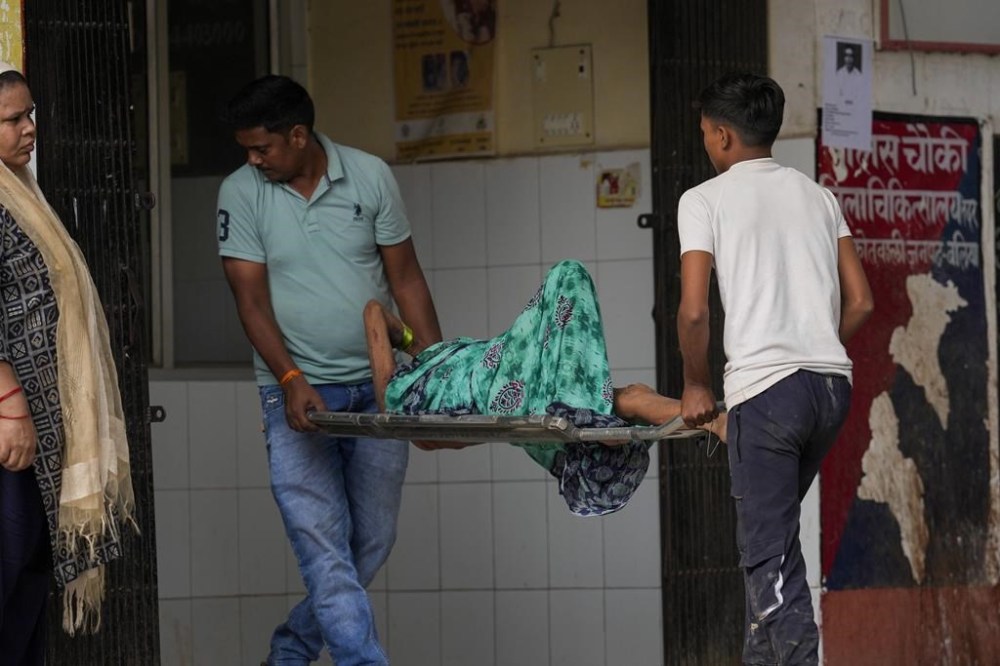
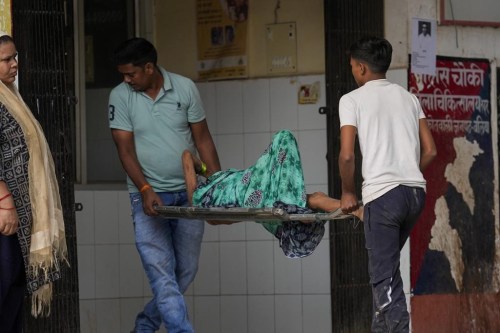
FILE - An elderly woman suffering from heat related ailment is brought to an overcrowded government district hospital in Ballia, Uttar Pradesh state, India, June 20, 2023. As temperatures and humidity soar outside, what's happening inside the human body can become a life-or-death battle decided by just a few degrees. (AP Photo/Rajesh Kumar Singh, File)

Key body temperature

The body’s resting core temperature is typically about 98.6 degrees Fahrenheit (37 degrees Celsius).

That’s only 7 degrees (4 Celsius) away from catastrophe in the form of heatstroke, said Ollie Jay, a professor of heat and health at the University of Sydney in Australia, where he runs the thermoergonomics laboratory.

Dr. Neil Gandhi, emergency medicine director at Houston Methodist Hospital, said during heat waves anyone who comes in with a fever of 102 or higher and no clear source of infection will be looked at for heat exhaustion or the more severe heatstroke.

“We routinely will see core temperatures greater than 104, 105 degrees during some of the heat episodes,” Gandhi said. Another degree or three and such a patient is at high risk of death, he said.

How heat kills

Heat kills in three main ways, Jay said. The usual first suspect is heatstroke — critical increases in body temperature that cause organs to fail.

When inner body temperature gets too hot, the body redirects blood flow toward the skin to cool down, Jay said. But that diverts blood and oxygen away from the stomach and intestines, and can allow toxins normally confined to the gut area to leak into circulation.

“That sets off a cascade of effects,” Jay said. “Clotting around the body and multiple organ failure and, ultimately, death.”

But the bigger killer in heat is the strain on the heart, especially for people who have cardiovascular disease, Jay said.

It again starts with blood rushing to the skin to help shed core heat. That causes blood pressure to drop. The heart responds by trying to pump more blood to keep you from passing out.

“You’re asking the heart to do a lot more work than it usually has to do,” Jay said. For someone with a heart condition “it’s like running for a bus with dodgy (hamstring). Something’s going to give.”

The third main way is dangerous dehydration. As people sweat, they lose liquids to a point that can severely stress kidneys, Jay said.

Many people may not realize their danger, Houston’s Gandhi said.

Dehydration can progress into shock, causing organs to shut down from lack of blood, oxygen and nutrients, leading to seizures and death, said Dr. Renee Salas, a Harvard University professor of public health and an emergency room physician at Massachusetts General Hospital.

“Dehydration can be very dangerous and even deadly for everyone if it gets bad enough — but it is especially dangerous for those with medical conditions and on certain medications,” Salas said.

Dehydration also reduces blood flow and magnifies cardiac problems, Jay said.

Attacking the brain

Heat also affects the brain. It can cause a person to have confusion, or trouble thinking, several doctors said.

“One of the first symptoms you’re getting into trouble with the heat is if you get confused,” said University of Washington public health and climate professor Kris Ebi. That’s little help as a symptom because the person suffering from the heat is unlikely to recognize it, she said. And it becomes a bigger problem as people age.

One of the classic definitions of heat stroke is a core body temperature of 104 degrees “coupled with cognitive dysfunction,” said Pennsylvania State University physiology professor W. Larry Kenney.

Humidity matters

Some scientists use a complicated outside temperature measurement called wet bulb globe temperature, which takes into account humidity, solar radiation and wind. In the past, it was thought that a wet-bulb reading of 95 Fahrenheit (35 Celsius) was the point when the body started having trouble, said Kenney, who also runs a hot box lab and has done nearly 600 tests with volunteers.
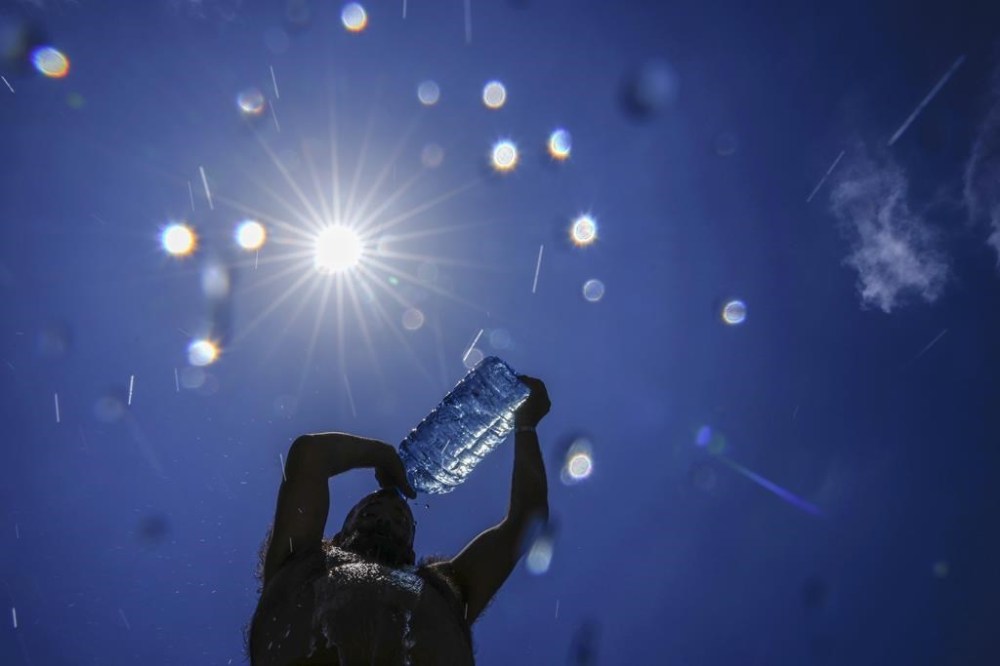
FILE - A man pours cold water onto his head to cool off on a sweltering hot day in the Mediterranean Sea in Beirut, Lebanon, July 16, 2023. As temperatures and humidity soar outside, what's happening inside the human body can become a life-or-death battle decided by just a few degrees. (AP Photo/Hassan Ammar, File)

His tests show the wet-bulb danger point is closer to 87 (30.5 Celsius). That’s a figure that has started to appear in the Middle East, he said.

And that’s just for young healthy people. For older people, the danger point is a wet bulb temperature of 82 (28 degrees Celsius), he said.

“Humid heat waves kill a lot more people than dry heat waves,” Kenney said.

When Kenney tested young and old people in dry heat, young volunteers could function until 125.6 degrees (52 degrees Celsius), while the elderly had to stop at 109.4 (43 degrees Celsius). With high or moderate humidity, the people could not function at nearly as high a temperature, he said.

“Humidity impacts the ability of sweat to evaporate,” Jay said.

Rushing to make patients cool

Heatstroke is an emergency, and medical workers try to cool a victim down within 30 minutes, Salas said.

The best way: Cold water immersion. Basically, “you drop them in a water bucket,” Salas said.

But those aren’t always around. So emergency rooms pump patients with cool fluids intravenously, spray them with misters, put ice packs in armpits and groins and place them on a chilling mat with cold water running inside it.

Sometimes it doesn’t work.

“We call it the silent killer because it’s not this kind of visually dramatic event,” Jay said. “It’s insidious. It’s hidden.”

___

This story has corrected to “humidity,” rather than “temperature” in a mention of how people’s function is affected by humidity.

___

Read more of AP’s climate coverage at http://www.apnews.com/climate-and-environment

___

Follow Seth Borenstein on X at @borenbears

______

The Associated Press’ climate and environmental coverage receives financial support from multiple private foundations. AP is solely responsible for all content. Find AP’s standards for working with philanthropies, a list of supporters and funded coverage areas at AP.org.

Report Error Submit a Tip

More Stories

Day 1 of Jets training camp in the books with pairings essentially cemented

Ken Wiebe 7 minute read Preview

Day 1 of Jets training camp in the books with pairings essentially cemented

Ken Wiebe 7 minute read Thursday, Sep. 17, 2026

Nearly six minutes into his question-and-answer session, Scott Arniel took a welcome detour from the news of the day.

After exhausting the discussion around the goalie who wasn’t in training camp, the head coach of the Winnipeg Jets finally got a query about the line combinations and defensive pairings that were unveiled in training camp.

And unlike past years, when exhibition games were more frequent and the training camp wasn’t this condensed, Arniel conceded these groupings were intentional and were likely staying together for some time.

The expansion to an 84-game regular season brings with it a reduction to four pre-season games and a much shorter training camp, which could limit the amount of experimentation that Arniel can do during the next two weeks.

Read
Thursday, Sep. 17, 2026

Grieving child builds backyard rocket ship

Harriet Zaidman 4 minute read 2:01 AM CDT

I Built a Rocket Ship (Kids Can Press, 32 pages, hardcover, $22) by Winnipegger Anna Lazowski is a tender story for children ages 4-8 about a little girl trying to make sense of her mother’s death. The child engages in conversation with her late mom, agreeing and disagreeing about things said as she carries objects (and of course, the cat) to the backyard. There, she is building a rocket ship she will pilot into the skies to find her mom again.

Jennica Lounsbury’s varied perspectives show the range of emotions the little girl experiences.

● ● ●

Northwoods Lullaby by Mary Casanova (University of Minnesota Press, 32 pages, hardover, $25) is a bedtime book for readers up to age eight, perfect to bring a busy, happy day to a close. Just like children who are listening to adults reading the book, all the animal babies are being tucked into their nests and burrows by loving parents: “Thump and scamper,/nimble clover./ Soon it’s time to rest. Baby loon/ nestles in/as Papa floats along.”

Hellebuyck standoff caused by… Nathan MacKinnon?

Mike McIntyre 6 minute read Preview

Hellebuyck standoff caused by… Nathan MacKinnon?

Mike McIntyre 6 minute read Yesterday at 6:34 PM CDT

Looking for someone to blame in the Connor Hellebuyck fiasco and cast as public enemy No. 1? How about long-time Winnipeg Jets nemesis Nathan MacKinnon?

Allow us to explain as we fire up the time machine and head back to February in Italy.

Oh, what could have been if MacKinnon had been able to score on what appeared to be an open net late in the third period of the men’s gold medal game with Hellebuyck down and seemingly out of position.

Instead, the star forward fired wide, keeping the score deadlocked at 1-1 as the clock ticked down on regulation.

Read
Yesterday at 6:34 PM CDT

Kinew delivered what most of us wanted; now we’ll have to deal with the consequences

Dan Lett 5 minute read Preview

Kinew delivered what most of us wanted; now we’ll have to deal with the consequences

Dan Lett 5 minute read Updated: Yesterday at 8:43 AM CDT

Premier Wab Kinew has decided to adopt permanent daylight savings time, which means a permanent end to the spring forward, fall back tradition of adjusting our clocks. And absolutely no one is surprised.

Read
Updated: Yesterday at 8:43 AM CDT

‘She was looking to destroy me’: convicted harasser faces new charges

Dean Pritchard 6 minute read Preview

‘She was looking to destroy me’: convicted harasser faces new charges

Dean Pritchard 6 minute read Thursday, Sep. 17, 2026

When Agnieszka Ciochon-Newton moved into the 55-plus apartment building on Stradbrook Avenue last year, she came across as “timid, soft-spoken and sensitive,” said building manager Tanya Owen.

Little did Owen know the meek-looking 58-year-old woman would soon turn her life and the lives of many of her tenants upside down and threaten her career and family.

“She was looking to destroy me for a simple tenant disagreement,” Owen said Thursday.

Court records show Ciochon-Newton was arrested earlier this month and charged with seven counts of criminal harassment, two counts of uttering threats and one count each of fraud, breaking and entering, attempting to obstruct justice, intimidation of a justice official, mischief and defamatory libel.

Read
Thursday, Sep. 17, 2026

Family account spiced with magic realism, geopolitical intrigue and a ghost story

Reviewed by Zilla Jones 4 minute read Preview

Family account spiced with magic realism, geopolitical intrigue and a ghost story

Reviewed by Zilla Jones 4 minute read 2:01 AM CDT

Tom Lin’s second novel Babylon, South Dakota moves beyond a historical account of an immigrant family’s struggle, delightfully blending and bending genres.

Lin is a Chinese-born novelist whose family emigrated to the U.S. when he was four years old. His debut novel, The Thousand Crimes of Ming Tsu, won the 2022 Andrew Carnegie Medal for Excellence in Fiction, making him the youngest ever recipient of that award. He earned a PhD in English from the University of California Davis and is currently an assistant professor of English and creative writing at the University of Iowa.

Babylon, South Dakota takes place in an unspecified time period that can be understood to be during the Mao era — likely the 1950s or ’60s. A young Chinese couple, the Hsuis, immigrate to the rural community that gives the book its title. They take the names Saul and Mei and settle on a 160-acre homestead left to them by a distant relative.

Saul’s dream is to breed and sell chrysanthemums from seeds he brought from China, while Mei wants to raise livestock. They speak no English, know nothing of life in the United States, are unprepared for the harshness of winter and the isolation of the farm and bring nothing with them except some gold, which Mei hides around the house for emergencies. Their only link to the outside world is a discarded and marginally functioning TV set, which Saul rescues and rigs up.

Read
2:01 AM CDT