Japan deploys equipment to Indonesia’s Borneo to help fight wildfires causing toxic haze
Advertisement
Read this article for free:
or
Already have an account? Log in here »
To continue reading, please subscribe:

Digital Subscription
One year of digital access for only $205*
- Enjoy unlimited reading on winnipegfreepress.com
- Read the E-Edition, our digital replica newspaper
- Access News Break, our award-winning app
- Play interactive puzzles
*First annual payment billed as $205.00 + GST for one year. This annual subscription will automatically renew at $233.00 + GST every 52 weeks (10% off the regular annual price of $259.35). Offer available to new and qualified returning subscribers only. Cancel any time.
To continue reading, please subscribe:
Add Free Press access to your Brandon Sun subscription for only an additional
$1 for the first 4 weeks*
- Enjoy unlimited reading on winnipegfreepress.com
- Read the E-Edition, our digital replica newspaper
- Access News Break, our award-winning app
- Play interactive puzzles
*Your next Brandon Sun subscription payment will increase by $1.00 and you will be charged $17.95 plus GST for four weeks. After four weeks, your payment will increase to $24.95 plus GST every four weeks.
Read unlimited articles for free today:
or
Already have an account? Log in here »
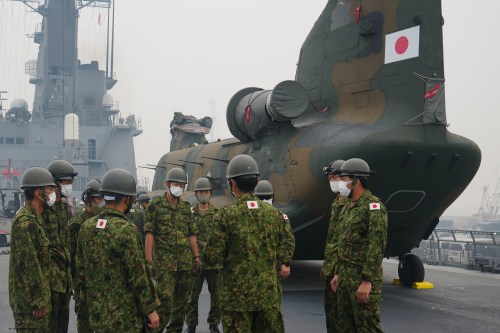
MEMPAWAH, Indonesia (AP) — A Japanese military transport ship docked on the island of Borneo on Thursday as part of a disaster relief mission to help fight wildfires in Indonesia that are causing a toxic haze impacting people’s health in other countries.
Japan deployed 300 crew members, landing ship JS Kunisaki and three CH-47 helicopters, which arrived in Kalimantan on the island of Borneo.
The mission in Indonesia marked the first known overseas firefighting operation carried out by the Japan Self-Defense Forces, or JSDF.
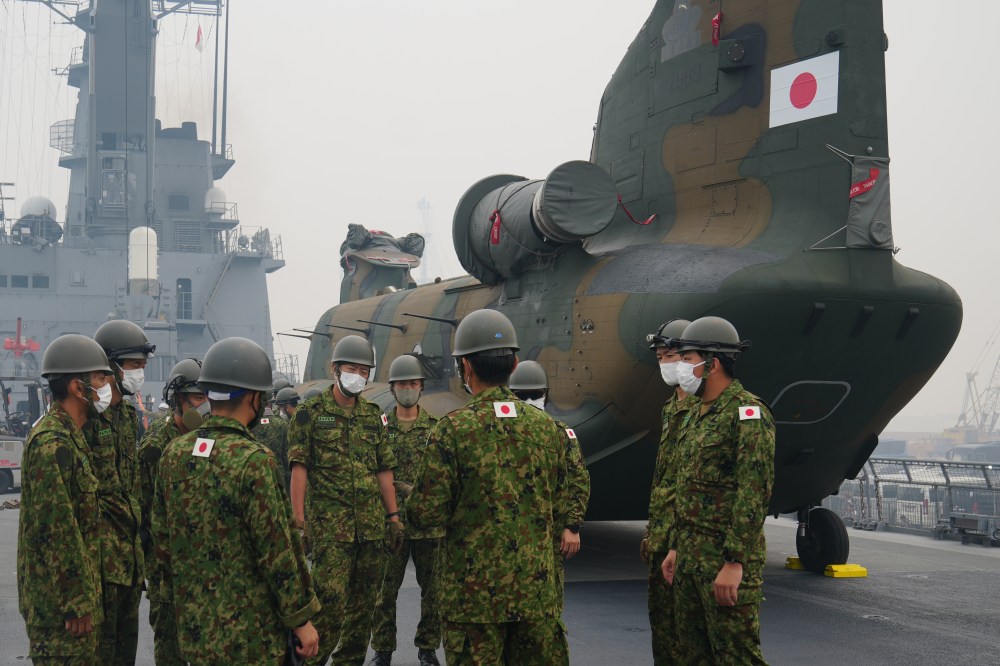
“To this end, we will learn from the Indonesian military’s operational experience and work in coordination and cooperation with them, striving to ensure that the Indonesian people can lead stable lives as soon as possible,” Col. Syunji Nakahara, the commander of the disaster relief activities, said at a port in Mempawah district.
Japan and Indonesia have been also increasingly strengthening their military cooperation ties, with the two sides discussing the Japanese sale of its used destroyers.
Indonesia has been plagued by forest and land fires for decades, but an intensifying El Niño pattern this year and a prolonged dry season worsened the impact of the fires.
Toxic haze and smoke have caused a health crisis in neighboring countries.
The smoke has drifted as far as the Philippines, more than 800 kilometers (500 miles) away, and breached Malaysia’s emergency-level threshold for air pollution, forcing authorities to declare an emergency last week in a town in Sarawak state on Borneo.
The air pollution has also affected several areas on the island of Sumatra, forcing schools to suspend learning activities at school. The toxic haze has affected more than 1.4 million students across the country.
Japan’s firefighting efforts will support Indonesian authorities in reaching areas that are difficult for ground teams to access.
The JSDF said in a statement on Thursday that the three CH-47 Chinook helicopters from Japan will start conducting firefighting operations on Borneo as soon as preparations are complete.

“Through these operations, we will dedicate ourselves to supporting the affected people of Indonesia and preventing further damage,” a written statement from JSDF said on Thursday.
Indonesian authorities have escalated firefighting efforts in several provinces as they seek to contain the blazes. The efforts have involved aircraft provided by countries in Southeast Asia and beyond, including Japan, the United States, Russia, Australia, Canada and Ukraine.
Indonesia’s Forestry Ministry recorded more than 202,000 hectares (nearly 500,000 acres) of burned land between January and July, almost three times Singapore’s size.
___
Mari Yamaguchi contributed to this report from Tokyo.