Majority of US states pursue nuclear power for emission cuts
Advertisement
Read this article for free:
or
Already have an account? Log in here »
To continue reading, please subscribe:

Digital Subscription
One year of digital access for only $205*
- Enjoy unlimited reading on winnipegfreepress.com
- Read the E-Edition, our digital replica newspaper
- Access News Break, our award-winning app
- Play interactive puzzles
*First annual payment billed as $205.00 + GST for one year. This annual subscription will automatically renew at $233.00 + GST every 52 weeks (10% off the regular annual price of $259.35). Offer available to new and qualified returning subscribers only. Cancel any time.
To continue reading, please subscribe:
Add Free Press access to your Brandon Sun subscription for only an additional
$1 for the first 4 weeks*
- Enjoy unlimited reading on winnipegfreepress.com
- Read the E-Edition, our digital replica newspaper
- Access News Break, our award-winning app
- Play interactive puzzles
*Your next Brandon Sun subscription payment will increase by $1.00 and you will be charged $17.95 plus GST for four weeks. After four weeks, your payment will increase to $24.95 plus GST every four weeks.
Read unlimited articles for free today:
or
Already have an account? Log in here »
Hey there, time traveller!
This article was published 17/01/2022 (1679 days ago), so information in it may no longer be current.
PROVIDENCE, R.I. (AP) — As climate change pushes states in the U.S. to dramatically cut their use of fossil fuels, many are coming to the conclusion that solar, wind and other renewable power sources might not be enough to keep the lights on.
Nuclear power is emerging as an answer to fill the gap as states transition away from coal, oil and natural gas to reduce greenhouse gas emissions and stave off the worst effects of a warming planet. The renewed interest in nuclear comes as companies, including one started by Microsoft founder Bill Gates, are developing smaller, cheaper reactors that could supplement the power grid in communities across the U.S.
Nuclear power comes with its own set of potential problems, especially radioactive waste that can remain dangerous for thousands of years. But supporters say the risks can be minimized and that the energy source will be essential to stabilize power supplies as the world tries to move away from carbon dioxide-emitting fossil fuels.
Tennessee Valley Authority President and CEO Jeff Lyash puts it simply: You can’t significantly reduce carbon emissions without nuclear power.
“At this point in time, I don’t see a path that gets us there without preserving the existing fleet and building new nuclear,” Lyash said. “And that’s after having maximized the amount of solar we can build in the system.”
The TVA is a federally owned utility that provides electricity to seven states as the nation’s third largest electricity generator. It’s adding about 10,000 megawatts of solar capacity by 2035 — enough to power nearly 1 million homes annually — but also operates three nuclear plants and plans to test a small reactor in Oak Ridge, Tennessee. By 2050, it hopes to hit its goal of becoming net zero, which means the amount of greenhouse gases produced is no more than the amount removed from the atmosphere.
An Associated Press survey of the energy policies in all 50 states and the District of Columbia found that a strong majority— about two-thirds— say nuclear, in one fashion or another, will help take the place of fossil fuels. The momentum building behind nuclear power could lead to the first expansion of nuclear reactor construction in the U.S. in more than three decades.
Roughly one-third of the states and the District of Columbia responded to the AP’s survey by saying they have no plans to incorporate nuclear power in their green energy goals, instead leaning heavily on renewables. Energy officials in those states said their goals are achievable because of advances in energy storage using batteries, investments in the grid for high-voltage interstate transmission, energy efficiency efforts to reduce demand and power provided by hydroelectric dams.
The split over nuclear power in U.S. states mirrors a similar debate unfolding in Europe, where countries including Germany are phasing out their reactors while others, such as France, are sticking with the technology or planning to build more plants.
The Biden administration, which has tried to take aggressive steps to reduce greenhouse gases, views nuclear as necessary to help compensate for the decline of carbon-based fuels in the nation’s energy grid.
U.S. Energy Secretary Jennifer Granholm told the AP that the administration wants to get to zero-carbon electricity, and “that means nuclear, that means hydropower, that means geothermal, that means obviously wind on and offshore, that means solar.″
“We want it all,” Granholm said during a visit in December to Providence, Rhode Island, to promote an offshore wind project.
The $1 trillion infrastructure package championed by Biden and signed into law last year will allocate about $2.5 billion for advanced reactor demonstration projects. The Energy Department said studies by Princeton University and the Decarb America Research Initiative show that nuclear is necessary for a carbon-free future.
Granholm also touted new technologies involving hydrogen and capturing and storing carbon dioxide before it is released into the atmosphere.
Nuclear reactors have operated reliably and carbon-free for many decades, and the current climate change conversation brings the benefits of nuclear to the forefront, said Maria Korsnick, president and chief executive officer of the Nuclear Energy Institute, the industry’s trade association.
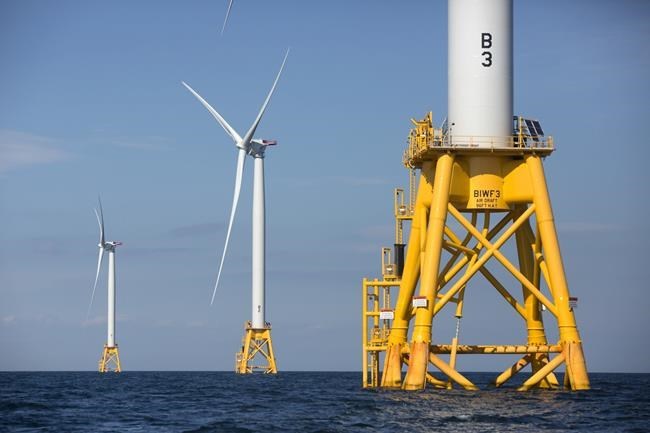
“The scale of this electric grid that’s across the United States, it needs something that’s always there, something that can help really be the backbone, if you will, for this grid,” she said. “That’s why it’s a partnership with wind and solar and nuclear.”
Nuclear technology still comes with significant risks that other low-carbon energy sources don’t, said Edwin Lyman, director of nuclear power safety at the Union of Concerned Scientists. While the new, smaller reactors might cost less than traditional reactors to build, they’ll also produce more expensive electricity, he said. He’s also concerned the industry might cut corners on safety and security to save money and compete in the market. The group does not oppose the use of nuclear power, but wants to make sure it’s safe.
“I’m not optimistic we’d see the kind of safety and security requirements in place that would make me feel comfortable with the adoption or deployment of these so-called small modular reactors around the country,” Lyman said.
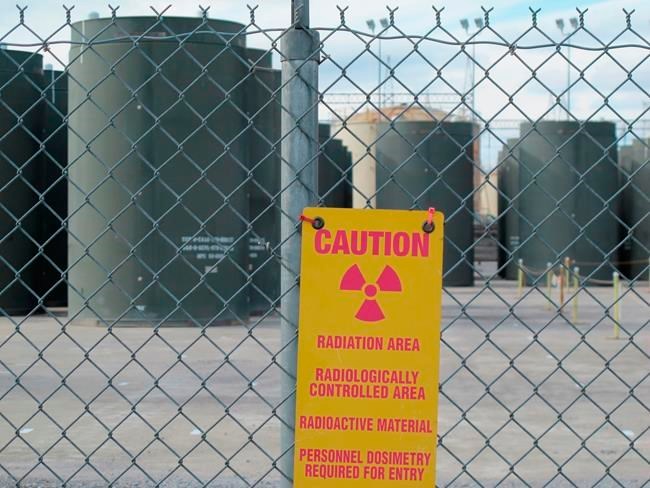
The U.S. also has no long-term plan for managing or disposing the hazardous waste that can persist in the environment for hundreds of thousands of years, and there’s the danger of accidents or targeted attacks for both the waste and the reactors, Lyman said. Nuclear disasters at Pennsylvania’s Three Mile Island, Chernobyl and more recently, Fukushima, Japan, in 2011 provide an enduring warning about the dangers.
Nuclear power already provides about 20% of electricity in the U.S., accounting for about half the nation’s carbon-free energy. Most of the 93 reactors operating in the country are east of the Mississippi River.
The Nuclear Regulatory Commission has approved just one of the new, small modular reactor designs — from a company called NuScale Power, in August 2020. Three other companies have told the commission they’re planning to apply for their designs. All of these use water to cool the core.
The NRC is expecting about a half dozen designs to be submitted for advanced reactors, which use something other than water to cool the core, such as gas, liquid metal or molten salt. That includes a project by Gates’ company, TerraPower, in Wyoming, the nation’s largest coal-producing state. It has long depended on coal for power and jobs, and ships coal to more than half the states.
As utilities quit coal, Wyoming is tapping into wind and installed the third-largest amount of wind power generating capacity of any state in 2020, after Texas and Iowa. But Glen Murrell, executive director of the Wyoming Energy Authority, said it’s unrealistic to expect all the nation’s energy to be provided exclusively through wind and solar. Renewable energy should work in tandem with other technologies such as nuclear and hydrogen, he said.
TerraPower plans to build its advanced reactor demonstration plant in Kemmerer, a town of 2,700 in western Wyoming where a coal plant is closing. The reactor uses Natrium technology, which is a sodium-cooled fast reactor paired with an energy-storage system.
In another coal-dependent state, West Virginia, some lawmakers are trying to repeal the state’s moratorium on the construction of new nuclear facilities.
A second reactor design by TerraPower will be built at the Idaho National Laboratory. The Molten Chloride Reactor Experiment will have a core that’s as small as a refrigerator and molten salt to cool it instead of water.
Among the other states that support nuclear power, Georgia maintains that its nuclear reactor expansion will “provide Georgia with ample clean energy” for 60 to 80 years. Georgia has the only nuclear project under construction in the U.S. — the expansion of Plant Vogtle from two of the traditional large reactors to four. The total cost is now more than double the original projection of $14 billion, and the project is years behind schedule.
New Hampshire said that without nuclear, the region’s environmental goals would be impossible to meet as affordably. And the Alaska Energy Authority has been working since 2007 to plan for the use of small modular nuclear reactors, possibly at remote mine sites and military bases first.
The Maryland Energy Administration said that while the goal of all renewable energy is laudable and costs are declining, “for the foreseeable future we need a variety of fuels,” including nuclear and cleaner natural gas-powered systems to ensure reliability and resiliency. Maryland has one nuclear plant, and the energy administration is talking with manufacturers of small modular reactors.
Other officials, mostly in Democratic-led states, said they’re moving beyond nuclear power. Some said they never relied heavily on it to begin with and don’t see a need for it in the future.
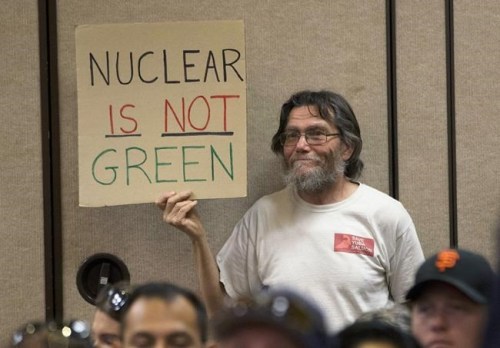
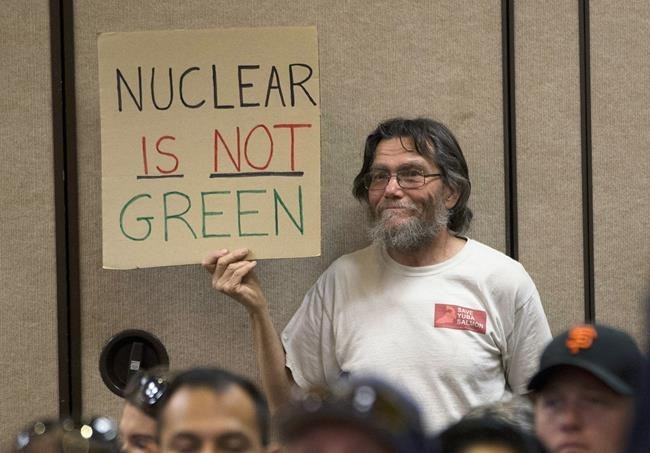
They said the cost of new reactors compared to installing wind turbines or solar panels, the safety concerns and the unresolved question of how to store hazardous nuclear waste are deal-breakers. Some environmentalists also oppose small modular reactors because of the safety concerns and hazardous waste questions. The Sierra Club has described them as “high-risk, high‐cost and highly questionable.”
In New York, which has some of the nation’s most ambitious goals to combat climate change, the future energy grid will be dominated by wind, solar and hydropower, said New York State Energy Research and Development Authority President and CEO Doreen Harris.
Harris said she sees a future beyond nuclear, dropping from nearly 30% of the state’s energy mix currently to around 5%, but the state will need advanced, long-duration battery storage and perhaps cleaner-burning fuels such as hydrogen.
Nevada is especially sensitive to nuclear energy because of the failed plan to store the nation’s commercial spent nuclear fuel at Yucca Mountain. Officials there don’t consider nuclear power a viable option. Instead, they see potential for battery technology for energy storage and geothermal energy.
“Nevada understands better than most other states that nuclear technology has significant lifecycle problems,” David Bobzien, director of the Nevada Governor’s Office of Energy, said in a statement. “A focus on short-term gains can’t alleviate the long-term issues with nuclear energy.”
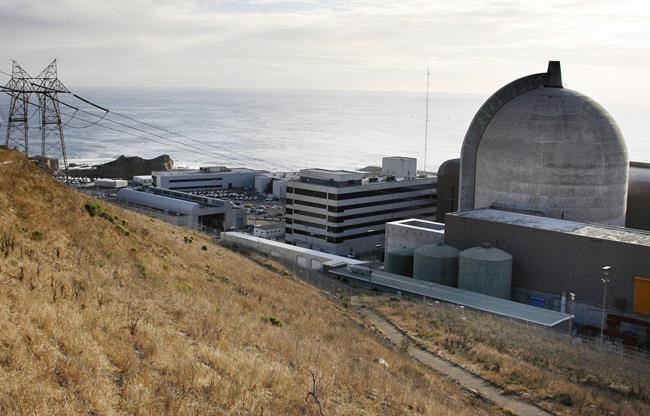
California is slated to close its last remaining nuclear power plant, Diablo Canyon, in 2025, as it turns to cheaper renewables to power its grid by 2045.
Officials think they can meet that goal if California sustains its expansion of clean electricity generation at a “record-breaking rate for the next 25 years,” building on average of 6 gigawatts of new solar, wind and battery storage sources annually, according to state planning documents. California also imports power produced in other states as part of a Western U.S. grid system.
Skeptics have questioned whether California’s all-in renewable plan can work in a state of nearly 40 million people.
Research from scientists at Stanford University and the Massachusetts Institute of Technology concluded that delaying Diablo Canyon’s retirement to 2035 would save California $2.6 billion in power system costs, reduce the chances of brownouts and lower carbon emissions. When the research was presented in November, former U.S. Energy Secretary Steven Chu said the nation is not positioned in the near-term to go to 100% renewable energy.
“They’ll be times when the wind doesn’t blow and the sun doesn’t shine,” he said. “And we will need some power that we can actually turn on and dispatch at will. That leaves two choices: either fossil fuel or nuclear.”
But the California Public Utilities Commission says it would likely take “seismic upgrades” and changes to the cooling systems, which could cost more than $1 billion, to continue operations at Diablo Canyon beyond 2025. Commission spokesperson Terrie Prosper said 11,500 megawatts of new clean energy resources will be online by 2026 to meet the state’s long-term needs.
Jason Bordoff, co-founding dean of the Columbia Climate School, said that while California’s plans are “technically possible,” he’s skeptical because it’s challenging to build that much renewable capacity quickly. Bordoff said there is “good reason” to think about extending the life of Diablo Canyon to keep energy costs down and reduce emissions as quickly as possible.

“We have to incorporate nuclear energy in a way that acknowledges it’s not risk-free,” he said. “But the risks of falling short of our climate goals exceed the risks of including nuclear energy as part of the zero carbon energy mix.”
___
Associated Press writer Matthew Daly in Washington, D.C., contributed to this report.
___
To read AP’s coverage of global climate change issues: https://apnews.com/hub/climate