House approves antitrust bill targeting Big Tech dominance
Advertisement
Read this article for free:
or
Already have an account? Log in here »
To continue reading, please subscribe:

Digital Subscription
One year of digital access for only $205*
- Enjoy unlimited reading on winnipegfreepress.com
- Read the E-Edition, our digital replica newspaper
- Access News Break, our award-winning app
- Play interactive puzzles
*First annual payment billed as $205.00 + GST for one year. This annual subscription will automatically renew at $233.00 + GST every 52 weeks (10% off the regular annual price of $259.35). Offer available to new and qualified returning subscribers only. Cancel any time.
To continue reading, please subscribe:
Add Free Press access to your Brandon Sun subscription for only an additional
$1 for the first 4 weeks*
- Enjoy unlimited reading on winnipegfreepress.com
- Read the E-Edition, our digital replica newspaper
- Access News Break, our award-winning app
- Play interactive puzzles
*Your next Brandon Sun subscription payment will increase by $1.00 and you will be charged $17.95 plus GST for four weeks. After four weeks, your payment will increase to $24.95 plus GST every four weeks.
Read unlimited articles for free today:
or
Already have an account? Log in here »
Hey there, time traveller!
This article was published 29/09/2022 (1451 days ago), so information in it may no longer be current.
WASHINGTON (AP) — The House on Thursday approved antitrust legislation targeting the dominance of Big Tech companies by giving states greater power in competition cases and increasing money for federal regulators.
The bipartisan measure passed by a 242-184 vote. It was separated from more ambitious provisions aimed at reining in Meta, Google, Amazon and Apple and cleared by key House and Senate committees. Those proposals have languished for months, giving the companies time for vigorous lobbying campaigns against them.
The more limited bill would give states an upper hand over companies in choosing the location of courts that decide federal antitrust cases. Proponents say this change would avert the “home-court advantage” that Big Tech companies enjoy in federal court in Northern California, where many of the cases are tried and many of the companies are based.
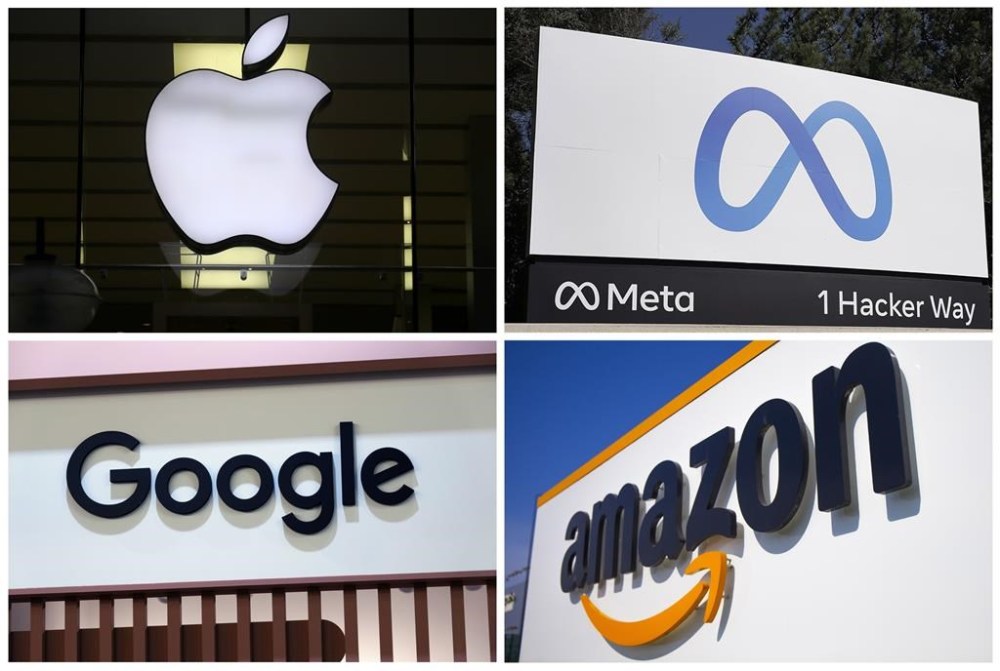
Many state attorneys general have pursued antitrust cases against the industry, and many states joined with the Justice Department and the Federal Trade Commission in their landmark lawsuits against Google and Meta (then called Facebook), respectively, in late 2020.
The bill also would increase filing fees paid by companies to federal agencies for all proposed mergers worth $500 million or more, while reducing the fees for small and medium-sized transactions. The aim is to increase revenue for federal enforcement efforts.
Under the bill, companies seeking approval for mergers would have to disclose subsidies they received from countries deemed to pose strategic or economic risks to the United States — especially China.
“We find ourselves in a monopoly moment as a country,” Rep. Lori Trahan, D-Mass., said before the vote. “Multibillion-dollar corporations have grown into behemoths, eliminating any real competition in their industries and using their dominance to hurt small businesses and consumers. Meta’s monopoly power has enabled it to harm women, children and people of all ages without recourse. Amazon has used its dominance to copy competitors’ products and run small businesses into the ground.”
The Biden administration, which has pushed for antitrust legislation targeting Big Tech, endorsed the bill this week.
The legislation drew fierce opposition from conservative Republicans who split from their GOP colleagues supporting the bill. The conservatives objected to the proposed revenue increase for the antitrust regulators, arguing there has been brazen overreach by the FTC under President Joe Biden.
Rep. Tom McClintock, R-Calif., described the FTC’s leader, Lina Khan, as a “a radical leftist seeking to replace consumers’ decisions with her own.”
Another California Republican, Rep. Darrell Issa, told his colleagues, “If you want to stifle innovation, vote for this.”
If Republicans win control of the House or Senate in the November elections, they are certain to try to crimp the activism of the FTC and to challenge its broader interpretation of its legal authority.
The more sweeping antitrust proposals would restrict powerful tech companies from favoring their own products and services over rivals on their platforms and could even lead to mandated breakups separating companies’ dominant platforms from their other businesses. They could, for example, prevent Amazon from steering consumers to its own brands and away from competitors’ products on its giant e-commerce platform.
The drafting of that legislation marked a new turn in Congress’ effort to curb the dominance of the tech giants and anti-competitive practices that critics say have hurt consumers, small businesses and innovation. But the proposal is complex and drew objections to some provisions from lawmakers of both parties, even though all condemn the tech giants’ conduct.
Lawmakers have faced a delicate task as they try to tighten reins around a powerful industry whose services, mostly free or nearly so, are popular with consumers and embedded into daily life.
So with time to act running out as the November elections approach in about six weeks, lawmakers extracted the less controversial provisions on antitrust court venues and merger filing fees, putting them into the new bill that passed.
Lawmakers added the provision targeting foreign subsidies to U.S. companies. Republicans especially have vocally criticized the Chinese ownership of popular video platform TikTok.
In the Senate, Minnesota Democrat Amy Klobuchar is sponsoring similar legislation with Republicans Chuck Grassley of Iowa and Mike Lee of Utah.
“Effective antitrust enforcement is critical to ensuring consumers and small businesses have the opportunity to compete,” Klobuchar said in a statement Thursday. “Enforcers cannot take on the biggest companies the world has ever known with duct tape and Band-Aids.”
Related Articles
Google has 'serious' concerns with Liberal bill requiring platforms to pay for news
Advertisement Advertise With Us
Advertisement Advertise With Us