Quebec government moves to ban planned obsolescence, ensure products can be repaired
Advertisement
Read this article for free:
or
Already have an account? Log in here »
To continue reading, please subscribe:

Digital Subscription
One year of digital access for only $205*
- Enjoy unlimited reading on winnipegfreepress.com
- Read the E-Edition, our digital replica newspaper
- Access News Break, our award-winning app
- Play interactive puzzles
*First annual payment billed as $205.00 + GST for one year. This annual subscription will automatically renew at $233.00 + GST every 52 weeks (10% off the regular annual price of $259.35). Offer available to new and qualified returning subscribers only. Cancel any time.
To continue reading, please subscribe:
Add Free Press access to your Brandon Sun subscription for only an additional
$1 for the first 4 weeks*
- Enjoy unlimited reading on winnipegfreepress.com
- Read the E-Edition, our digital replica newspaper
- Access News Break, our award-winning app
- Play interactive puzzles
*Your next Brandon Sun subscription payment will increase by $1.00 and you will be charged $17.95 plus GST for four weeks. After four weeks, your payment will increase to $24.95 plus GST every four weeks.
Read unlimited articles for free today:
or
Already have an account? Log in here »
Hey there, time traveller!
This article was published 01/06/2023 (1217 days ago), so information in it may no longer be current.
QUEBEC – The Quebec government wants to ban the sale of products that aren’t intended to last and reinforce consumers’ ability to repair the products they buy.
It says planned obsolescence and steps taken by manufactures to limit the ability of consumers to repair products are costing Quebecers thousands of dollars and hurting the environment.
“It’s normal that these goods need maintenance or repairs from time to time. What’s not normal is that replacement parts aren’t available or the device breaks when you try to repair it,” Kariane Bourassa, a government member and assistant to the minister of justice, told reporters in Quebec City.
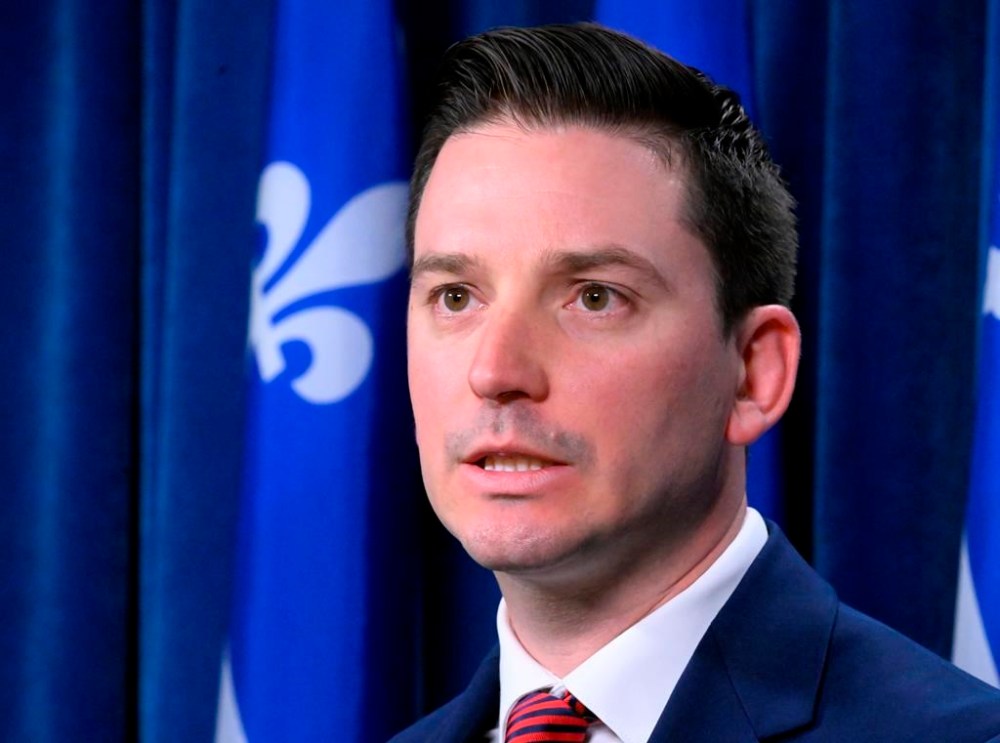
A bill introduced by the province’s justice minister Thursday would ban the sale of products whose obsolescence is planned as well as require manufacturers and retailers to ensure replacement parts and repair services are available at a reasonable price for the products they sell in the province.
If the bill is adopted, manufacturers would also be required to ensure products can be repaired with ordinary tools and without causing irreversible damage.
“It’s unacceptable that (a) perfectly functional device is equipped with an apparatus that prevents if from working normally after a certain amount of time,” Justice Minister Simon Jolin-Barrette said at the news conference. “It’s also intolerable that an electronic device is deliberately designed so that its evolution is limited. The negative impact on Quebecers’ wallets can’t be ignored, neither can the repercussions on our environment.”
The bill would also create a “warranty of good working order” — a specific time frame for different types of products, including refrigerators, computers, cellphones and air conditioners, during which manufacturers would be required to repair them at no cost to the consumer.
Jolin-Barrette said the length of that warranty will vary from product to product and has yet to be determined.
Also included in the bill are requirements that car manufacturers ensure their vehicles can be repaired by any mechanic, and not just at affiliated dealerships, and that those manufacturers make vehicle data needed to diagnose issues available to owners and long-term lessors, or their mechanics.
Jolin-Barrette said the bill also includes an “anti-lemon” measure that would allow people who purchased a vehicle within the previous three years to have that vehicle declared “seriously defective” by a court and cancel their purchase contract if major issues persist after multiple repair attempts.
He said the proposed measure is the first of its kind in Canada but that similar measures exist in all 50 U.S. states.
The bill would also begin the process of establishing a universal charger that would be required to work with all electronic devices. That step has been taken by the European Union, which will require most portable electronic devices to work with USB-C charging points by the end of 2024.
Violators could face fines of up to $125,000 for a first offence, he said, adding that those fines would be doubled for a second offence. Businesses can also be fined four times any profit they made as a result of a violation of the law.
Alissa Centivany, a professor at Western University in London, Ont., said the Quebec bill addresses several of the obstacles that prevent people from repairing their devices, though she expects manufacturers to fight it.
“This is a really exciting step forward. Who knows how it will unfold, but this is a great sign, and I’m hopeful that it will be successful. And I’m hopeful that other provinces will take Quebec’s lead here and propose similar laws,” she said in an interview.
Centivany said the House of Commons is also considering a bill that would modify the federal Copyright Act to allow people to circumvent technological protection measures, also known as digital locks, in order to diagnose problems and make repairs. Those digital locks have been used to prevent repairs to a wide range of products, from kitchen appliances to farm tractors.
While that law would be a step forward, many of the restrictions on repair fall under areas of provincial jurisdiction, she said.
For Centivany, being able to repair products would help the environment, as well as save Canadians money by allowing them to use products for longer.
“Being able to fix our stuff, or seek out a third-party repair technician to help us fix our stuff, it’s also important for things like skill development, for digital citizenship, for self determination, self-efficacy, feeling like we have an impact in our world,” she said.
The province’s opposition parties have said they are open to the Coalition Avenir Québec government initiative.
This report by The Canadian Press was first published June 1, 2023.
— By Jacob Serebrin in Montreal, with files from Thomas Laberge in Quebec City.