Invaders from underground are coming in cicada-geddon. It’s the biggest bug emergence in centuries
Advertisement
Read this article for free:
or
Already have an account? Log in here »
To continue reading, please subscribe:

Digital Subscription
One year of digital access for only $205*
- Enjoy unlimited reading on winnipegfreepress.com
- Read the E-Edition, our digital replica newspaper
- Access News Break, our award-winning app
- Play interactive puzzles
*First annual payment billed as $205.00 + GST for one year. This annual subscription will automatically renew at $233.00 + GST every 52 weeks (10% off the regular annual price of $259.35). Offer available to new and qualified returning subscribers only. Cancel any time.
To continue reading, please subscribe:
Add Free Press access to your Brandon Sun subscription for only an additional
$1 for the first 4 weeks*
- Enjoy unlimited reading on winnipegfreepress.com
- Read the E-Edition, our digital replica newspaper
- Access News Break, our award-winning app
- Play interactive puzzles
*Your next Brandon Sun subscription payment will increase by $1.00 and you will be charged $17.95 plus GST for four weeks. After four weeks, your payment will increase to $24.95 plus GST every four weeks.
Read unlimited articles for free today:
or
Already have an account? Log in here »
Hey there, time traveller!
This article was published 01/04/2024 (874 days ago), so information in it may no longer be current.
Trillions of evolution’s bizarro wonders, red-eyed periodical cicadas that have pumps in their heads and jet-like muscles in their rears, are about to emerge in numbers not seen in decades and possibly centuries.
Crawling out from underground every 13 or 17 years, with a collective song as loud as jet engines, the periodical cicadas are nature’s kings of the calendar.
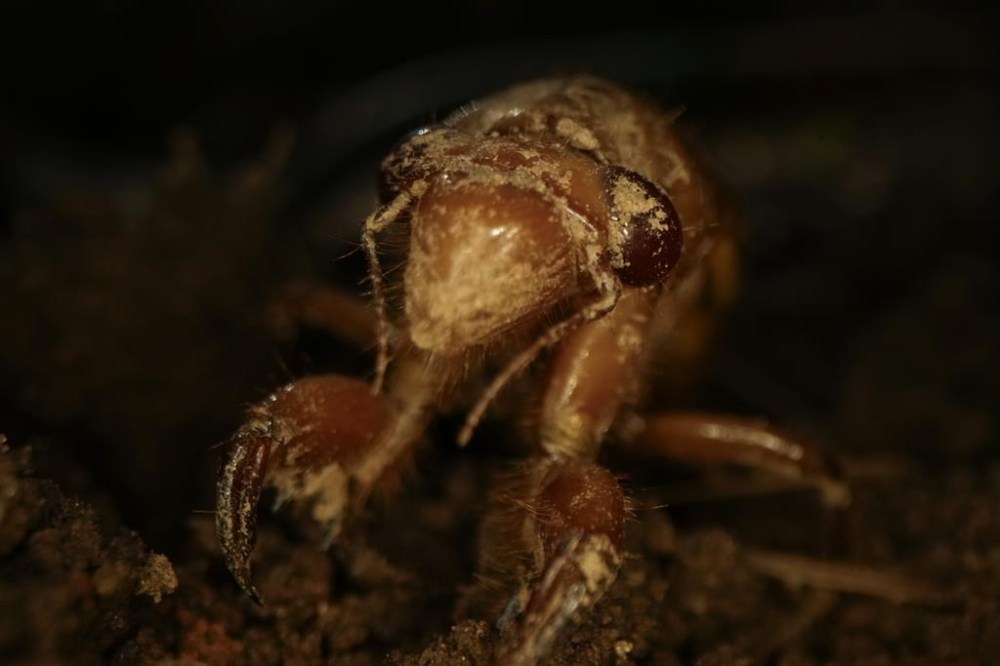
These black bugs with bulging eyes differ from their greener-tinged cousins that come out annually. They stay buried year after year, until they surface and take over a landscape, covering houses with shed exoskeletons and making the ground crunchy.
This spring, an unusual cicada double dose is about to invade a couple parts of the United States in what University of Connecticut cicada expert John Cooley called “cicada-geddon.” The last time these two broods came out together in 1803 Thomas Jefferson, who wrote about cicadas in his Garden Book but mistakenly called them locusts, was president.
“Periodic cicadas don’t do subtle,” Cooley said.
If you’re fascinated by the upcoming solar eclipse, the cicadas are weirder and bigger, said Georgia Tech biophysicist Saad Bhamla.
“We’ve got trillions of these amazing living organisms come out of the Earth, climb up on trees and it’s just a unique experience, a sight to behold,” Bhamla said. “It’s like an entire alien species living underneath our feet and then some prime number years they come out to say hello.”
At times mistaken for voracious and unrelated locusts, periodical cicadas are more annoying rather than causing biblical economic damage. They can hurt young trees and some fruit crops, but it’s not widespread and can be prevented.
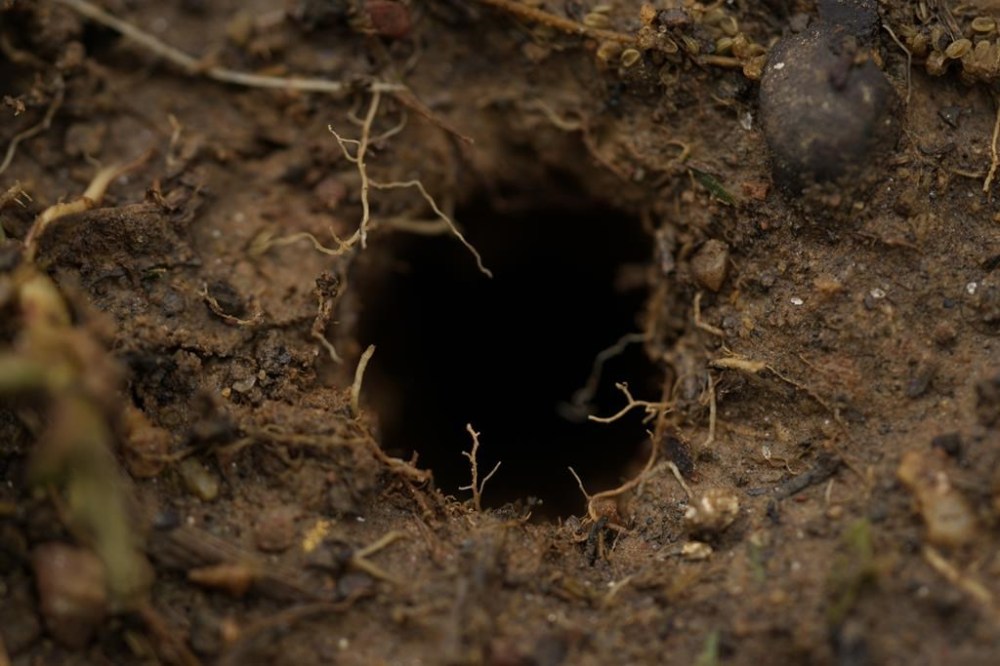
The largest geographic brood in the nation — called Brood XIX and coming out every 13 years — is about to march through the Southeast, having already created countless boreholes in the red Georgia clay. It’s a sure sign of the coming cicada occupation. They emerge when the ground warms to 64 degrees (17.8 degrees Celsius), which is happening earlier than it used to because of climate change, entomologists said. The bugs are brown at first but darken as they mature.
Soon after the insects appear in large numbers in Georgia and the rest of the Southeast, cicada cousins that come out every 17 years will inundate Illinois. They are Brood XIII.
“You’ve got one very widely distributed brood in Brood XIX, but you have a very dense historically abundant brood in the Midwest, your Brood XIII,” said University of Maryland entomologist Mike Raupp.
“And when you put those two together… you would have more than anywhere else any other time,” University of Maryland entomologist Paula Shrewsbury said.
These hideaway cicadas are found only in the eastern United States and a few tiny other places. There are 15 different broods that come out every few years, on 17- and 13-year cycles. These two broods may actually overlap — but probably not interbreed — in a small area near central Illinois, entomologists said.
The numbers that will come out this year – averaging around 1 million per acre over hundreds of millions of acres across 16 states – are mind-boggling. Easily hundreds of trillions, maybe quadrillions, Cooley said.
An even bigger adjacent joint emergence will be when the two largest broods, XIX and XIV, come out together in 2076, Cooley said: “That is the cicada-palooza.”
The origin of some of the astronomical cicada numbers can likely be traced to evolution, Cooley and several other entomologists said. Fat, slow and tasty, periodical cicadas make ideal meals for birds, said Raupp, who eats them himself. (His school put out a cicada cookbook called “Cicada-Licious.” ) But there are too many for them to be eaten to extinction, he said.
“Birds everywhere will feast. Their bellies will be full and once again the cicadas will emerge triumphant,” Raupp said.
The other way cicadas use numbers, or math, is in their cycles. They stay underground either 13 or 17 years, both prime numbers. Those big and odd numbers are likely an evolutionary trick to keep predators from relying on a predictable emergence.
The cicadas can cause problems for young trees and nurseries when their mating and nesting weighs down and breaks branches, Shrewsbury said.
Periodical cicadas look for vegetation surrounding mature trees, where they can mate and lay eggs and then go underground to feast on the roots, said Mount St. Joseph University biologist Gene Kritsky, a cicada expert who wrote a book on this year’s dual emergence. That makes American suburbia “periodical cicada heaven,” he said.
It can be hard on the eardrums when all those cicadas get together in those trees and start chorusing. It’s like a singles bar with the males singing to attract mates, with each species having its own mating call.
“The whole tree is screaming,” said Kritsky, who created a Cicada Safari app to track where the cicadas are.
Cooley takes hearing protection because it can get so intense.
“It’s up in the 110 decibel range,” Cooley said. “It’d be like putting your head next to a jet. It is painful.”
The courtship is something to watch, Kritsky imitated the male singing “ffaairro (his pitch rising), ffaairro.”
“She flicks her wings,” Kritsky narrated in a play-by-play. “He moves closer. He sings. She flicks her wings. When he gets really close, he doesn’t have a gap, he’ll go ffaairro, ffaairro, ffaairro, fffaairo.”
Then the mating is consummated, with the female laying eggs in a groove in a tree branch. The cicada nymph will fall to the ground, then dig underground to get to the roots of a tree.
Cicadas are strange in that they feed on the tree’s xylem, which carry water and some nutrients. The pressure inside the xylem is lower than outside, but a pump in the cicada’s head allows the bug to get fluid that it otherwise wouldn’t be able to get out of the tree, said Carrie Deans, a University of Alabama Huntsville entomologist.
The cicada gets so much fluid that it has a lot of liquid waste to get rid of. It does so thanks to a special muscle that creates a jet of urine that flows faster than in most any other animal, said Georgia Tech’s Bhamla.
In Macon, Georgia, T.J. Rauls was planting roses and holly this week when he came across a cicada while digging. A neighbor had already posted an image of an early-emerging critter.
Rauls named his own bug “Bobby” and said he’s looking forward to more to come.
“I think it will be an exciting thing,” Rauls said. “It will be bewildering with all their noises.”
___
Carolyn Kaster contributed from Macon, Georgia.
___
Read more of AP’s climate coverage at http://www.apnews.com/climate-and-environment
___
Follow Seth Borenstein on X at @borenbears
______
The Associated Press’ climate and environmental coverage receives financial support from multiple private foundations. AP is solely responsible for all content. Find AP’s standards for working with philanthropies, a list of supporters and funded coverage areas at AP.org.