Ontario awarded nearly $1M in contracts for business case on moving science centre
Advertisement
Read this article for free:
or
Already have an account? Log in here »
To continue reading, please subscribe:

Digital Subscription
One year of digital access for only $205*
- Enjoy unlimited reading on winnipegfreepress.com
- Read the E-Edition, our digital replica newspaper
- Access News Break, our award-winning app
- Play interactive puzzles
*First annual payment billed as $205.00 + GST for one year. This annual subscription will automatically renew at $233.00 + GST every 52 weeks (10% off the regular annual price of $259.35). Offer available to new and qualified returning subscribers only. Cancel any time.
To continue reading, please subscribe:
Add Free Press access to your Brandon Sun subscription for only an additional
$1 for the first 4 weeks*
- Enjoy unlimited reading on winnipegfreepress.com
- Read the E-Edition, our digital replica newspaper
- Access News Break, our award-winning app
- Play interactive puzzles
*Your next Brandon Sun subscription payment will increase by $1.00 and you will be charged $17.95 plus GST for four weeks. After four weeks, your payment will increase to $24.95 plus GST every four weeks.
Read unlimited articles for free today:
or
Already have an account? Log in here »
Hey there, time traveller!
This article was published 14/06/2024 (828 days ago), so information in it may no longer be current.
TORONTO – Ontario awarded nearly $1 million in contracts to various companies to write a business case on moving the Ontario Science Centre to Ontario Place on Toronto’s waterfront, The Canadian Press has learned.
The $925,075 in contracts, an amount disclosed through a freedom-of-information request, is a fraction of the province’s overall $215-billion budget.
However, it is still far too large for a report that seemed designed to give the Progressive Conservatives cover for a deal with European company Therme to build a privately owned spa at Ontario Place as it redevelops the waterfront attraction, critics said.
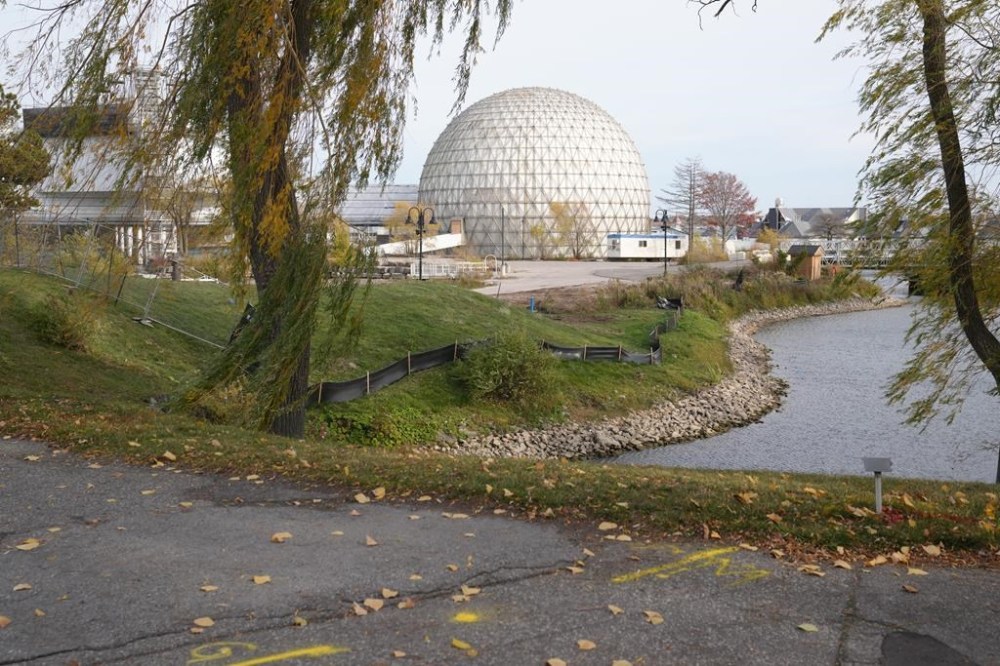
“Spending a million dollars to cook up a sham business case is ridiculous beyond words,” NDP Leader Marit Stiles wrote in a statement.
“There is more than enough evidence that the business case was nonsense and simply a justification to build a publicly funded mega parking lot for Therme.”
Liberal critic Adil Shamji, whose riding is home to the science centre, said it is “outrageous” that Premier Doug Ford spent $1 million of public money on consultants “to tell him what he wanted to hear.”
“Doug Ford was always going to find a way to move forward with his nonsensical plan to relocate the Ontario Science Centre,” Shamji wrote in a statement.
“Blowing $1 million of taxpayer money on consultants was just a way to make his business case appear more legitimate.”
Green Party Leader Mike Schreiner said spending that much on the business case doesn’t make sense.
“It’s a really unjustifiable expense for an unjustifiable decision right now,” he said.
Stiles, Schreiner and many others have been fighting Therme’s waterpark and spa planned for Ontario Place, and the business case suggested that relocating the Ontario Science Centre there from its current location in east Toronto could help temper that criticism.
“Securing a publicly owned cultural anchor, such as the OSC, could be an important addition to counter negative perceptions of the commercialization and privatization of this unique waterfront public asset,” the consultants wrote in the business case.
A report in December from the auditor general found that a proposal in the spring of 2023 to government decision makers to relocate the science centre, including the business case, noted that a “site-wide parking solution” was needed to meet Ontario’s lease obligations with Therme.
It proposed that new parking be integrated with the new science centre building “in order to dispel public/stakeholder concerns relating to cost and impact on the environment,” the auditor wrote.
The business case itself was “incomplete,” the auditor general said, including not factoring in financing or incremental parking costs.
Ford agreed in a deal with the City of Toronto this year to consider moving the parking to nearby Exhibition Place, but no decision has yet been made.
The report concluded that relocating the science centre from its current location to Ontario Place would save about $250 million over 50 years — largely because the new building will be half the size.
A spokesperson for Infrastructure Minister Kinga Surma noted the projected cost savings, in their defence of the business case.
“The cost of the business case was necessary to ensure an informed decision could be made regarding the future of the Ontario Science Centre and was conducted by leading experts with a history of reputable work in the industry,” Ash Milton wrote in a statement.
The 2023 business case reached the same financial conclusion as a business case completed in 2016, the auditor general said. At that time, the science centre board said that due to growing capital needs, the status quo wasn’t an option. It proposed instead rebuilding at its current site, but no action was taken on any of the options, the auditor general said.
The current science centre building is facing $369 million in deferred and critical maintenance needs over the next 20 years, the business case said.
A lack of government funding is a key cause of that, the auditor said.
There have been 42 projects deemed “critical” since 2017 that haven’t been repaired, and of those projects, the science centre had asked for funding for seven of them at least three times in the past five years but was denied each time, the auditor wrote.
Infrastructure Ontario ordered the science centre in June 2022 to close a pedestrian bridge connecting the main entrance to the exhibition halls after the bridge was deemed unsafe.
The business case said bridge repair would cost $16 million but there is no timeline for that. When asked about the bridge, the infrastructure minister’s spokesperson said third-party engineers are assessing various aspects of the science centre and updating estimated repair costs.
As part of the business case, Pinchin Engineering led a building condition assessment with a contract of $448,900. Ernst & Young led an economic and fiscal impact analysis with a contract of $276,000. Lord Cultural Resources completed an Ontario Science Centre relocation environmental scan, plans for a relocated science centre, revised attendance projections, and a report on “revenue and cost reduction opportunities and benefits of relocation” with a contract of $116,175.
Lord Cultural Resources was retained as a sub-consultant to Fotenn Planning and Design, which looked at planning and land use for the current science centre site with a contract of $20,000. BDP Quadrangle Architects Limited was retained as a sub-consultant to Lord Cultural Resources and received a $35,000 contract to do test-fit work on relocated science centre plans.
A.W. Hooker Quantity Surveyors consulted on construction costs with a contract of $29,000.
This report by The Canadian Press was first published June 14, 2024.

Advertisement Advertise With Us
Advertisement Advertise With Us