What to know about the two waves of deadly explosions that hit Lebanon and Syria
Advertisement
Read this article for free:
or
Already have an account? Log in here »
To continue reading, please subscribe:

Digital Subscription
One year of digital access for only $205*
- Enjoy unlimited reading on winnipegfreepress.com
- Read the E-Edition, our digital replica newspaper
- Access News Break, our award-winning app
- Play interactive puzzles
*First annual payment billed as $205.00 + GST for one year. This annual subscription will automatically renew at $233.00 + GST every 52 weeks (10% off the regular annual price of $259.35). Offer available to new and qualified returning subscribers only. Cancel any time.
To continue reading, please subscribe:
Add Free Press access to your Brandon Sun subscription for only an additional
$1 for the first 4 weeks*
- Enjoy unlimited reading on winnipegfreepress.com
- Read the E-Edition, our digital replica newspaper
- Access News Break, our award-winning app
- Play interactive puzzles
*Your next Brandon Sun subscription payment will increase by $1.00 and you will be charged $17.95 plus GST for four weeks. After four weeks, your payment will increase to $24.95 plus GST every four weeks.
Read unlimited articles for free today:
or
Already have an account? Log in here »
Hey there, time traveller!
This article was published 17/09/2024 (748 days ago), so information in it may no longer be current.
NEW YORK (AP) — Just one day after pagers used by hundreds of members of the militant group Hezbollah exploded, more electronic devices detonated in Lebanon Wednesday in what appeared to be a second wave of sophisticated, deadly attacks that targeted an extraordinary number of people.
Both attacks, which are widely believed to be carried out by Israel, have hiked fears that the two sides’ simmering conflict could escalate into all-out war. This week’s explosions have also deepened concerns about the scope of potentially compromised devices, particularly after such bombings have killed or injured so many civilians.
Here’s what we know so far.
What happened across these two waves of attacks?
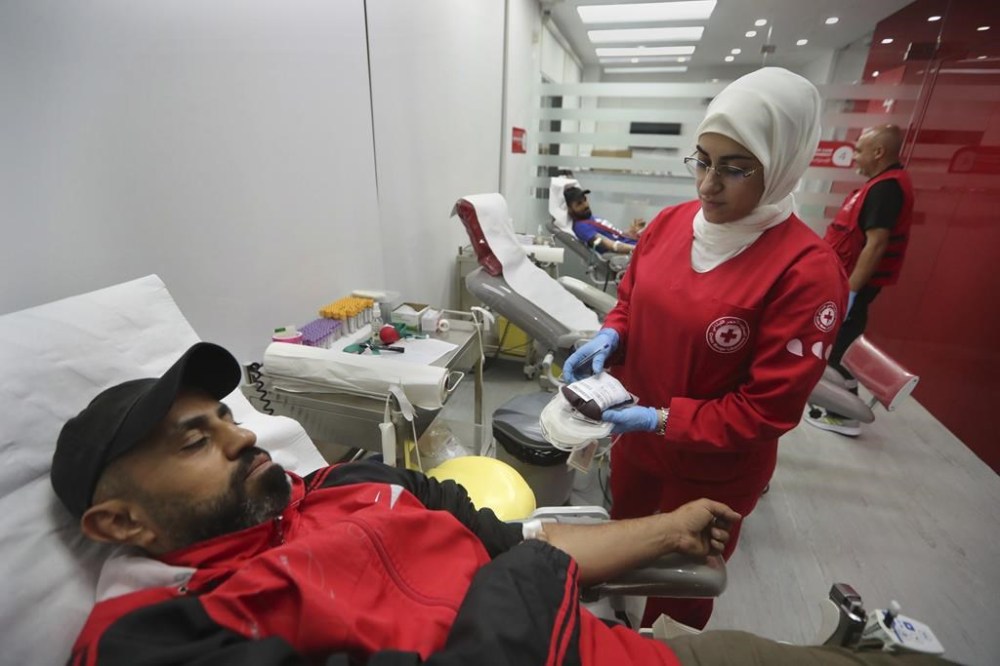
On Tuesday, pagers used by hundreds of Hezbollah members exploded almost simultaneously in parts of Lebanon as well as Syria. The attack killed at least 12 people — including two young children — and wounded thousands more.
An American official, who spoke on the condition of anonymity, said Israel briefed the U.S. on the operation — where small amounts of explosives hidden in the pagers were detonated. The Lebanese government and Iran-backed Hezbollah also blamed Israel for the deadly explosions. The Israeli military, which has a long history of sophisticated operations behind enemy lines, declined to comment.
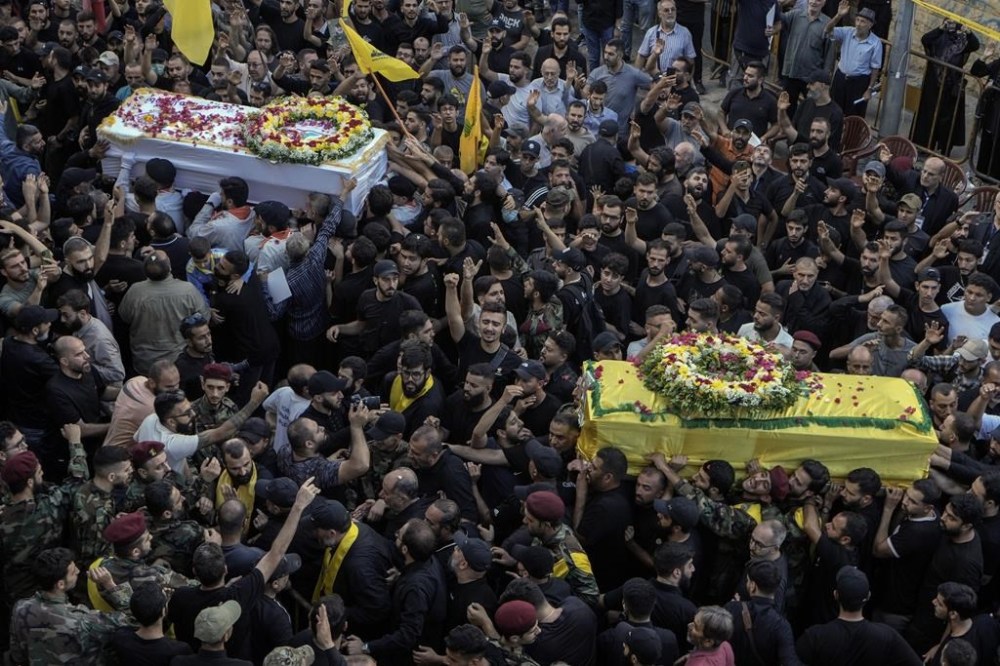
A day after these deadly explosions, more detonations triggered in Beirut and parts of Lebanon Wednesday — including several blasts heard at a funeral in Beirut for three Hezbollah members and a child killed by Tuesday’s explosions, according to Associated Press journalists at the scene.
At least 25 people were killed and more than 600 were wounded, the Health Ministry said, in this apparent second attack.
When speaking to troops on Wednesday, Israeli Defense Minister Yoav Gallant made no mention of the explosions of electronic devices, but praised the work of Israel’s army and security agencies and said “we are at the start of a new phase in the war.”
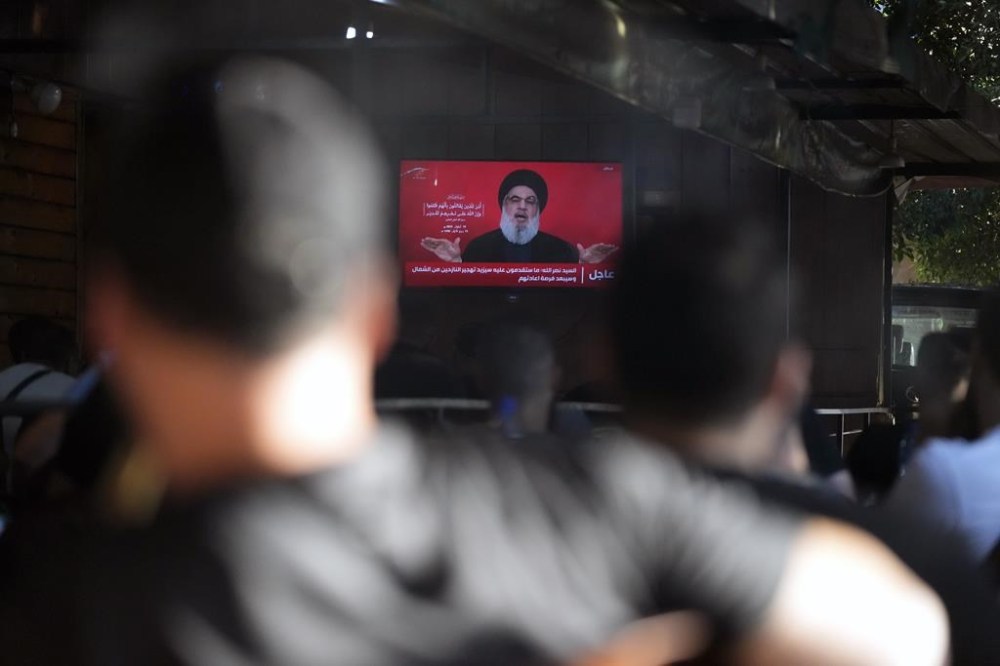
The leader of Hezbollah said Thursday the mass bombing attack on the group’s communications devices in Lebanon and Syria was a “severe blow” and said Israel had crossed a “red line.” But Hassan Nasrallah vowed the group would emerge stronger and continue its daily strikes into northern Israel. He said the group is investigating how the bombings were carried out.
“Yes, we were subjected to a huge and severe blow,” he said. “The enemy crossed all boundaries and red lines,” he added.
He vowed that Hezbollah will keep going on with its attacks along the border with Israel as long as the war in Gaza continues.
What kinds of devices were used?
A Hezbollah official told the AP that walkie-talkies used by the group exploded on Wednesday. The official spoke on condition of anonymity because he was not authorized to speak to the media. Lebanon’s official news agency also reported that solar energy systems exploded in homes in several areas of Beirut and in southern Lebanon, wounding at least one girl.
While details are still emerging from Wednesday’s attack, the second wave of explosions targeted a country that is still reeling from Tuesday’s pager bombings. That attack appeared to be a complex Israeli operation targeting Hezbollah, but an enormous amount of civilian casualties were also reported, as the detonations occurred wherever members’ pagers happened to be — including homes, cars, grocery stores and cafes.
Hezbollah has used pagers as a way to communicate for years. And more recently, Nasrallah warned the group’s members not to carry cellphones, saying they could be used by Israel to track the group’s movements.
Pagers also run on a different wireless network than mobile phones, which usually makes them more resilient in times of emergency. And for a group like Hezbollah, the pagers provided a means to sidestep what’s believed to be intensive Israeli electronic surveillance on mobile phone networks in Lebanon — as pagers’ tech is simpler and carries lower risks for intercepted communications.
Elijah J. Magnier, a Brussels-based veteran and a senior political risk analyst who says he has had conversations with members of Hezbollah and survivors of the attack, said that the newer brand of pagers used in Tuesday’s explosions were procured more than six months ago. How they arrived in Lebanon remains unclear.
Taiwanese company Gold Apollo said Wednesday it had authorized use of its brand on the AR-924 pager model — but that a Budapest, Hungary-based company called BAC Consulting KFT produced and sold the pagers.
Taiwan’s Ministry of Economic Affairs said that it had no records of direct exports of Gold Apollo pagers to Lebanon. And a Hungarian government spokesman later added that the pager devices had never been in Hungary, either, noting that BAC had merely acted as an intermediary.
Speculation around the origins of the devices that exploded Wednesday has also emerged. A sales executive at the U.S. subsidiary of Japanese walkie-talkie maker Icom told the AP that the exploded radio devices in Lebanon appear to be a knock-off product and not made by Icom.
“I can guarantee you they were not our products,” said Ray Novak, a senior sales manager for Icom’s amateur radio division, in an interview Wednesday at a trade show in Providence, Rhode Island.
Osaka-based Icom added in a Thursday statement that the wireless radio unit IC-V82 was once manufactured for exports including to the Middle East from 2004 to October 2014. But the production and shipment of its main unit had ended about 10 years ago and batteries for them have also discontinued. Icom said the radio used in the explosion was not carrying an anti-counterfeit hologram sticker that all Icom devices should be carrying.
What kind of sabotage would cause these devices to explode?
Tuesday’s explosions were most likely the result of supply-chain interference, several experts told the AP — noting that very small explosive devices may have been built into the pagers prior to their delivery to Hezbollah, and then all remotely triggered simultaneously, possibly with a radio signal. That corroborates information shared from the U.S. official.
A former British Army bomb disposal officer explained that an explosive device has five main components: A container, a battery, a triggering device, a detonator and an explosive charge.
“A pager has three of those already,” said the ex-officer, who spoke on condition of anonymity because he now works as a consultant with clients on the Middle East. “You would only need to add the detonator and the charge.”
This signals involvement of a state actor, said Sean Moorhouse, a former British Army officer and explosive ordnance disposal expert. He added that Israel’s foreign intelligence agency, the Mossad, was the most obvious suspect to have the resources to carry out such an attack. Israel has a long history of carrying out similar operations in the past.
The specifics of Wednesday’s explosions are still uncertain. But reports of more electronic devices exploding may suggest even greater infiltration of boobytrap-like interference in Lebanon’s supply chain. It also deepens concerns around the lack of certainty of who may be holding rigged devices.
How long was this operation
?
It would take a long time to plan an attack of this scale. The exact specifics are still unknown, but experts who spoke with the AP about Tuesday’s explosions shared estimates ranging anywhere between several months to two years.
The sophistication of the attack suggests that the culprit has been collecting intelligence for a long time, explained Nicholas Reese, adjunct instructor at the Center for Global Affairs in New York University’s School of Professional Studies. An attack of this caliber requires building the relationships needed to gain physical access to the pagers before they were sold; developing the technology that would be embedded in the devices; and developing sources who can confirm that the targets were carrying the pagers.
Citing conversations with Hezbollah contacts, Magnier said the group is currently investigating what type of explosives were used in the device, suspecting RDX or PETN, highly explosive materials that can cause significant damage with as little as 3-5 grams. They are also questioning whether the device had a GPS system allowing Israel to track movement of the group members.
A Hezbollah official familiar with the investigation said the internal review is also looking into the intermediary and where the devices were produced.

“We have solid evidence that Mossad is behind it,” the official, who spoke on condition of anonymity because he is not authorized to speak to the press, said.
Once the explosions began, Hezbollah deployed special units in charge of smart guided missiles, he added. The official said there were reported defects in some of the devices before the attacks but he did not specify how long before.
The official said Hezbollah members had sent their pagers for maintenance because they were not operating properly, such as not receiving signals. In other cases, Hezbollah members said there were failures in message delivery. He confirmed that some of the devices did not explode.
___
Associated Press journalists Johnson Lai in Taipei, Bassem Mroue in Beirut and Matt O’Brien in Providence, Rhode Island contributed to this report.