Newly spotted asteroid has a tiny chance of hitting Earth in 2032
Advertisement
Read this article for free:
or
Already have an account? Log in here »
To continue reading, please subscribe:

Digital Subscription
One year of digital access for only $205*
- Enjoy unlimited reading on winnipegfreepress.com
- Read the E-Edition, our digital replica newspaper
- Access News Break, our award-winning app
- Play interactive puzzles
*First annual payment billed as $205.00 + GST for one year. This annual subscription will automatically renew at $233.00 + GST every 52 weeks (10% off the regular annual price of $259.35). Offer available to new and qualified returning subscribers only. Cancel any time.
To continue reading, please subscribe:
Add Free Press access to your Brandon Sun subscription for only an additional
$1 for the first 4 weeks*
- Enjoy unlimited reading on winnipegfreepress.com
- Read the E-Edition, our digital replica newspaper
- Access News Break, our award-winning app
- Play interactive puzzles
*Your next Brandon Sun subscription payment will increase by $1.00 and you will be charged $17.95 plus GST for four weeks. After four weeks, your payment will increase to $24.95 plus GST every four weeks.
Read unlimited articles for free today:
or
Already have an account? Log in here »
Hey there, time traveller!
This article was published 29/01/2025 (580 days ago), so information in it may no longer be current.
CAPE CANAVERAL, Fla. (AP) — A newly discovered asteroid has a tiny chance of smacking Earth in 2032, space agency officials said Wednesday.
Scientists put the odds of a strike at slightly more than 1%.
“We are not worried at all, because of this 99 percent chance it will miss,” said Paul Chodas, director of NASA’s Center for Near Earth Object Studies. “But it deserves attention.”
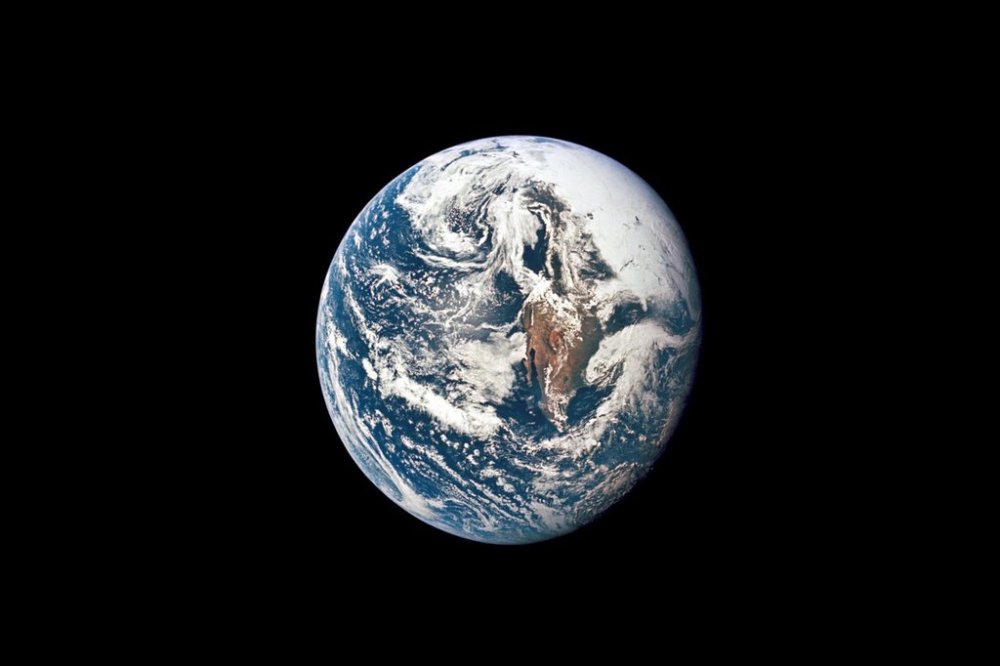
First spotted last month by a telescope in Chile, the near-Earth asteroid — designated 2024 YR4 — is estimated to be 130 to 330 feet (40 to 100 meters) across.
Scientists are keeping close watch on the space rock, which is currently heading away from Earth. As the asteroid’s path around the sun becomes better understood, Chodas and others said there’s a good chance the risk to Earth could drop to zero.
The asteroid will gradually fade from view over the next few months, according to NASA and the European Space Agency. Until then, some of the world’s most powerful telescopes will keep monitoring it to better determine its size and path. Once out of sight, it won’t be visible until it passes our way again in 2028.
The asteroid came closest to Earth on Christmas Day — passing within roughly 500,000 miles (800,000 kilometers) of Earth, about twice the distance of the moon. It was discovered two days later.
Chodas said scientists are poring over sky surveys from 2016, when predictions show the asteroid also ventured close.
If scientists can find the space rock in images from then, they should be able to determine whether it will hit or miss the planet, he told The Associated Press. “If we don’t find that detection, the impact probability will just move slowly as we add more observations,” he said.

Earth gets clobbered by an asteroid this size every few thousand years, according to ESA, with the potential for severe damage. That’s why this one now tops ESA’s asteroid risk list.
The potential impact would occur on Dec. 22, 2032. It’s much too soon to know where it might land if it did hit Earth.
The good news, according to NASA, is that for now, no other known large asteroids have an impact probability above 1%.
___
The Associated Press Health and Science Department receives support from the Howard Hughes Medical Institute’s Science and Educational Media Group and the Robert Wood Johnson Foundation. The AP is solely responsible for all content.
Related Articles
Why asteroid 2024 YR4 is unlikely to hit Earth in 2032 and how scientists keep track
Advertisement Advertise With Us
Advertisement Advertise With Us