Why asteroid 2024 YR4 is unlikely to hit Earth in 2032 and how scientists keep track

Advertisement

Advertise with us

CAPE CANAVERAL, Fla. (AP) — The threat of a newly discovered asteroid has risen slightly in the past few weeks, as the world’s telescopes rush to track its course. But the chance of an impact is still quite slim.

Read this article for free:


or

Already have an account? Log in here »

To continue reading, please subscribe:

Subscribe and receive a limited-edition Free Press branded hat or tote.

Digital Subscription

One year of digital access for only $205*

  • Enjoy unlimited reading on winnipegfreepress.com
  • Read the E-Edition, our digital replica newspaper
  • Access News Break, our award-winning app
  • Play interactive puzzles

*First annual payment billed as $205.00 + GST for one year. This annual subscription will automatically renew at $233.00 + GST every 52 weeks (10% off the regular annual price of $259.35). Offer available to new and qualified returning subscribers only. Cancel any time.

To continue reading, please subscribe:

Add Free Press access to your Brandon Sun subscription for only an additional

$1 for the first 4 weeks*

  • Enjoy unlimited reading on winnipegfreepress.com
  • Read the E-Edition, our digital replica newspaper
  • Access News Break, our award-winning app
  • Play interactive puzzles
Start now

*Your next Brandon Sun subscription payment will increase by $1.00 and you will be charged $17.95 plus GST for four weeks. After four weeks, your payment will increase to $24.95 plus GST every four weeks.

Hey there, time traveller!
This article was published 13/02/2025 (579 days ago), so information in it may no longer be current.

CAPE CANAVERAL, Fla. (AP) — The threat of a newly discovered asteroid has risen slightly in the past few weeks, as the world’s telescopes rush to track its course. But the chance of an impact is still quite slim.

New calculations suggest there’s a 2% chance the space rock 2024 YR4 will smack Earth in 2032. This also means there’s a 98% chance it will safely pass our planet. The odds of a strike will almost certainly continue to go up and down as the asteroid’s path around the sun is better understood, and astronomers said there’s a good chance the risk likely will drop to zero.

NASA and the European Space Agency’s Webb Space Telescope will observe this near-Earth asteroid in March before the object disappears from view. Once that happens, scientists will have to wait until 2028 when it passes our way again.

What’s an asteroid?

Asteroids are space rocks orbiting the sun that are considerably smaller than planets. Scientists believe they’re the leftovers from the solar system’s formation 4.6 billion years ago.

There are so many asteroids orbiting between Mars and Jupiter — millions of them — that this region is known as the main asteroid belt. They sometimes get pushed out of the belt and can end up all over the place — like this one.

How do scientists track potentially dangerous asteroids?

A telescope in Chile discovered the asteroid 2024 YR4 in December. It’s estimated to be 130 feet to 300 feet (40 meters to 90 meters) across. Observations by the Webb telescope should provide a more precise measurement, according to NASA.

NASA and the European Space Agency initially put the odds of a strike at just over 1%. By Thursday, it had risen to roughly 2%. NASA describes that as still “extremely low.”

Until scientists have a better understanding of the asteroid’s path around the sun, they caution the odds will continue to fluctuate — and quite possibly fall to zero.

“You don’t have to be worried about anything. It’s a curiosity,” said Larry Denneau, senior software engineer with the University of Hawaii’s asteroid impact alert system that first spotted the asteroid. “Don’t panic. Let the process play out, and we’ll have a for-sure answer.”

In 2021, NASA gave the all-clear to another potentially worrisome asteroid, Apophis, after new telescope observations ruled out any chance of it hitting Earth in 2068.

Should we worry about asteroid 2024 YR4?

It’s way too soon to fret over this asteroid, according to the experts.
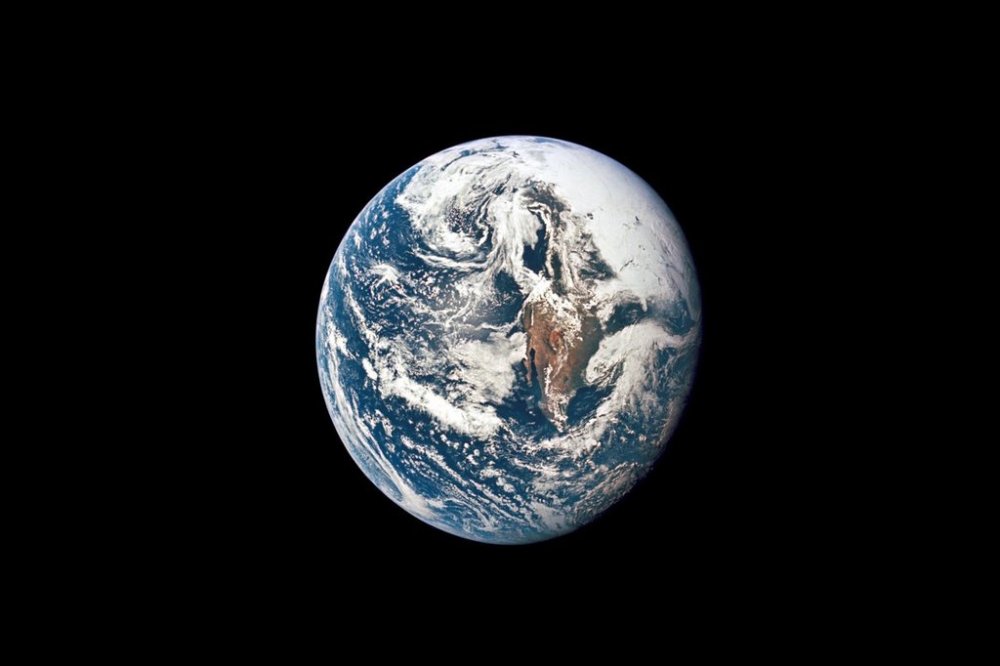
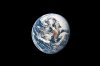
FILE - This May 18, 1969 photo provided by NASA shows Earth from 36,000 nautical miles away as photographed from the Apollo 10 spacecraft during its trans-lunar journey toward the moon. (NASA via AP)

“No one should be concerned that the impact probability is rising. This is the behavior our team expected,” Paul Chodas, director of NASA’s Center for Near-Earth Object Studies, said in an email. “To be clear, we expect the impact probability to drop to zero at some point.”

Since the asteroid’s size and orbit are uncertain, it’s unclear where it might hit and what the possible impacts would be should it strike Earth. If the asteroid is on the smaller end, ESA said any potential impacts would be local similar to the Tunguska event that flattened thousands of square miles of forest in remote Siberia in 1908. But if it’s close to 330 feet (100 meters), “the consequences would be significantly worse.”

Chodas said once Webb pinpoints the asteroid’s size, NASA can predict “how serious an impact this asteroid could produce and how difficult a task it might be to deflect this asteroid.”

NASA already has some experience nudging an asteroid. The space agency’s Dart spacecraft deliberately rammed a harmless asteroid in 2022 in the first planetary defense test of its kind, altering its orbit around its larger companion asteroid.

___

AP video journalist Mary Conlon contributed to this report.

___

The Associated Press Health and Science Department receives support from the Howard Hughes Medical Institute’s Science and Educational Media Group and the Robert Wood Johnson Foundation. The AP is solely responsible for all content.

Report Error Submit a Tip

More Stories

Transit safety drives first mayoral debate

Morgan Modjeski 5 minute read Preview

Transit safety drives first mayoral debate

Morgan Modjeski 5 minute read 2:01 AM CDT

The safety of Winnipeg Transit drivers was front and centre Monday as the first mayoral debate of the 2026 election focused on public transit.

Kevin Klein, the most experienced of the 10 candidates at the Amalgamated Transit Union 1505-hosted debate, said the time for partial safety shields has passed.

“The partial shields have failed drivers. That’s why we need change,” the former PC MLA and city councillor said, adding driver safety is not a staffing issue, but a “protection failure.”

If elected, Klein said he will bring in full-shield implementation across the city within two years and start a nine-bus pilot project immediately.

Read
2:01 AM CDT

Winnipeg venues saying no to AI-made advertisements

Sheldon Birnie 8 minute read Preview

Winnipeg venues saying no to AI-made advertisements

Sheldon Birnie 8 minute read Updated: Yesterday at 10:22 AM CDT

Although the days when telephone poles and notice boards across the city were thick with gig posters, either slopped up with wheat paste or wrapped tight with packing tape, are behind us, the art of making an appealing visual ad for live music events is still a vital part of the local creative scene.

However, a widespread backlash against a new kind of slop — the use of generative AI images — has been building, especially among creatives when it comes to promoting live music.

“Live music is and always has been a DIY type of scene, especially locally,” says Evan Simpson, who has been working as a graphic designer for nearly a decade.

“For years people have been making their own flyers, or if they have the budget, hiring a designer or artist to come up with some artwork for their flyers. It’s a whole ecosystem, a scene supporting itself. If you take away the visual side of it, the spark, individuality and uniqueness of each gig poster is lost. What a sad world it would be if all art were made by AI.”

Read
Updated: Yesterday at 10:22 AM CDT

Premier touts Port of Churchill opportunities at Canadian investment summit

Carol Sanders 5 minute read Preview

Premier touts Port of Churchill opportunities at Canadian investment summit

Carol Sanders 5 minute read Updated: Yesterday at 6:58 PM CDT

Premier Wab Kinew announced Monday that major capital investments in the Port of Churchill Plus project will receive an exemption from Manitoba’s seven per cent retail sales tax.

Kinew made the announcement at the start of the two-day Canada investment summit in Toronto. The premier made the pitch to a room of 250 Canadian and global investors representing more than US$13 trillion in assets.

“We are here in Toronto to tell global investors that the Port of Churchill is open and ready to expand,” Kinew told the Canadian Global Growth Forum, a provincial government news release said.

“These new capital incentives make it easier for investors to get in on the ground floor of the largest project featured at the Canada investment summit. The grain and critical minerals we are already shipping out of the port are reaching Europe faster than the Port of Vancouver. With the right investments we can ship commodities year-round, strengthening trade between reliable partners and creating good jobs,” the premier, who was not made available for an interview, said in the release.

Read
Updated: Yesterday at 6:58 PM CDT

Why asteroid 2024 YR4 is unlikely to hit Earth in 2032 and how scientists keep track

Marcia Dunn, The Associated Press 4 minute read Preview

Why asteroid 2024 YR4 is unlikely to hit Earth in 2032 and how scientists keep track

Marcia Dunn, The Associated Press 4 minute read Thursday, Feb. 20, 2025

CAPE CANAVERAL, Fla. (AP) — The threat of a newly discovered asteroid has risen slightly in the past few weeks, as the world’s telescopes rush to track its course. But the chance of an impact is still quite slim.

New calculations suggest there's a 2% chance the space rock 2024 YR4 will smack Earth in 2032. This also means there's a 98% chance it will safely pass our planet. The odds of a strike will almost certainly continue to go up and down as the asteroid’s path around the sun is better understood, and astronomers said there's a good chance the risk likely will drop to zero.

NASA and the European Space Agency's Webb Space Telescope will observe this near-Earth asteroid in March before the object disappears from view. Once that happens, scientists will have to wait until 2028 when it passes our way again.

What's an asteroid?

Read
Thursday, Feb. 20, 2025

Subway owner becomes 14th candidate for mayor 

1 minute read Yesterday at 4:50 PM CDT

A franchise business owner is the 14th candidate to register in the race to become Winnipeg’s next mayor.

Gagandeep Bawa, 45, said he has owned a downtown Subway franchise for five years, and believes more work is needed to address safety concerns in the area.

Bawa said robberies and thefts have led some businesses to move out, showing more support is needed. If elected, he would push for a greater security presence, such as more Downtown Community Safety Partnership or Exchange District BIZ patrols.

Bawa said he would also attempt to create water bill rebates for seniors and single parents.

Winnipeg and choosing its future direction

Kate Kehler 5 minute read 2:00 AM CDT

Winnipeg, the capital of ‘Friendly Manitoba’, is becoming far less friendly to anyone who is struggling to survive. The city is also less and less supportive of the not-for-profit sector which struggles to support those struggling to survive.

Municipal politicians have long insisted that social services are provincial responsibilities. However, the city charter makes it clear that mayor and council are “to promote and maintain the health, safety and welfare of the inhabitants.”

Mayor and council are empowered to decide how they do that. Every four years, we citizens get to vote on what we think and feel about those decisions. That’s our democracy, weighted against the disenfranchised though it is.

In 2022, only 37.17 per cent of eligible voters, the lowest percentage since 1989, voted. Recent Probe Research data demonstrates that only one-third of Winnipeggers believe the next mayor and council will make even a minor difference in addressing Winnipeg’s challenges, and another third believe they will make no difference at all.