How US tech giants supplied Israel with AI models, raising questions about tech’s role in warfare
Advertisement
Read this article for free:
or
Already have an account? Log in here »
To continue reading, please subscribe:

Digital Subscription
One year of digital access for only $205*
- Enjoy unlimited reading on winnipegfreepress.com
- Read the E-Edition, our digital replica newspaper
- Access News Break, our award-winning app
- Play interactive puzzles
*First annual payment billed as $205.00 + GST for one year. This annual subscription will automatically renew at $233.00 + GST every 52 weeks (10% off the regular annual price of $259.35). Offer available to new and qualified returning subscribers only. Cancel any time.
To continue reading, please subscribe:
Add Free Press access to your Brandon Sun subscription for only an additional
$1 for the first 4 weeks*
- Enjoy unlimited reading on winnipegfreepress.com
- Read the E-Edition, our digital replica newspaper
- Access News Break, our award-winning app
- Play interactive puzzles
*Your next Brandon Sun subscription payment will increase by $1.00 and you will be charged $17.95 plus GST for four weeks. After four weeks, your payment will increase to $24.95 plus GST every four weeks.
Read unlimited articles for free today:
or
Already have an account? Log in here »
Hey there, time traveller!
This article was published 18/02/2025 (578 days ago), so information in it may no longer be current.
TEL AVIV, Israel (AP) — U.S. tech giants have quietly empowered Israel to track and kill many more alleged militants more quickly in Gaza and Lebanon through a sharp spike in artificial intelligence and computing services. But the number of civilians killed has also soared, along with fears that these tools are contributing to the deaths of innocent people.
Militaries have for years hired private companies to build custom autonomous weapons. However, Israel’s recent wars mark a leading instance in which commercial AI models made in the United States have been used in active warfare, despite concerns that they were not originally developed to help decide who lives and who dies.
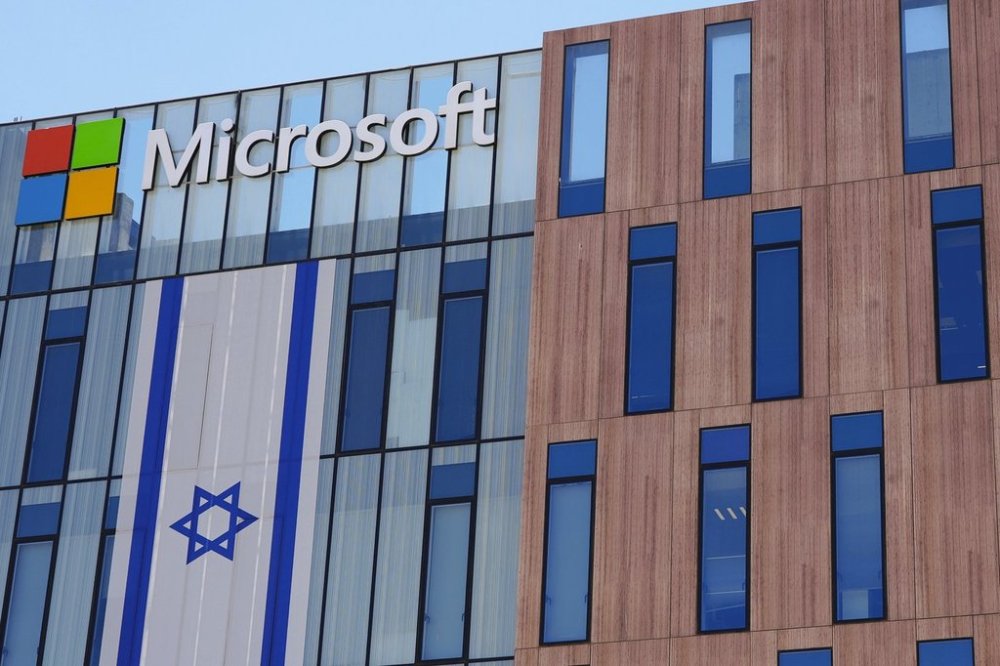
The Israeli military uses AI to sift through vast troves of intelligence, intercepted communications and surveillance to find suspicious speech or behavior and learn the movements of its enemies. After a surprise attack by Hamas militants on Oct. 7, 2023, its use of Microsoft and OpenAI technology skyrocketed, an Associated Press investigation found.
The investigation also revealed new details of how AI systems select targets and ways they can go wrong, including faulty data or flawed algorithms. It was based on internal documents, data and exclusive interviews with current and former Israeli officials and company employees.
Israel’s goal after the attack that killed about 1,200 people and took over 250 hostages was to eradicate Hamas, and its military has called AI a “game changer” in yielding targets more swiftly. Since the war started, more than 50,000 people have died in Gaza and Lebanon and nearly 70% of the buildings in Gaza have been devastated, according to health ministries in Gaza and Lebanon.
“This is the first confirmation we have gotten that commercial AI models are directly being used in warfare,” said Heidy Khlaaf, chief AI scientist at the AI Now Institute and former senior safety engineer at OpenAI. “The implications are enormous for the role of tech in enabling this type of unethical and unlawful warfare going forward.”
Israel’s Use of AI and Cloud Computing Soared During War
Among U.S. tech firms, Microsoft has had an especially close relationship with the Israeli military spanning decades.
That relationship, alongside those with other tech companies, stepped up after the Hamas attack. Israel’s war response strained its own servers and increased its reliance on outside, third-party vendors, according to a presentation last year by Col. Racheli Dembinsky, the military’s top information technology officer. As she described how AI had provided Israel “very significant operational effectiveness” in Gaza, the logos of Microsoft Azure, Google Cloud and Amazon Web Services appeared on a large screen behind her.
The Israeli military’s usage of Microsoft and OpenAI artificial intelligence spiked last March to nearly 200 times higher than before the week leading up to the Oct. 7 attack, the AP found in reviewing internal company information. The amount of data it stored on Microsoft servers doubled between that time and July 2024 to more than 13.6 petabytes — roughly 350 times the digital memory needed to store every book in the Library of Congress. Usage of Microsoft’s huge banks of computer servers by the military also rose by almost two-thirds in the first two months of the war alone.
Microsoft declined to provide any comment for this story and did not respond to a detailed list of written questions about the cloud and AI services it provides to the Israeli military.
In an expansive statement on its website, the company says “respecting human rights is a core value of Microsoft″ and it is committed “to champion the positive role of technology across the globe.” In its 40-page Responsible AI Transparency Report for 2024, Microsoft pledges to “map, measure, and manage generative AI risks throughout the development cycle to reduce the risk of harm,” and does not mention its lucrative military contracts.
Advanced AI models are provided through OpenAI, the maker of ChatGPT, through Microsoft’s Azure cloud platform, where they are purchased by the Israeli military, the documents and data show. Microsoft has been OpenAI’s largest investor.
OpenAI said it does not have a partnership with Israel’s military, and its usage policies say its customers should not use its products to develop weapons, destroy property or harm people. About a year ago, however, OpenAI changed its terms of use from barring military use to allowing for “national security use cases that align with our mission.”
The Israeli military declined to answer detailed written questions from The AP about its use of commercial AI products from American tech companies, but said its analysts use AI-enabled systems to help identify targets and independently examine them together with high-ranking officers to meet international law, weighing the military advantage against the collateral damage.
“These AI tools make the intelligence process more accurate and more effective,” said an Israeli military statement to the AP. “They make more targets faster, but not at the expense of accuracy, and many times in this war they’ve been able to minimize civilian casualties.”
Other U.S. Tech Firms Also Work With Israel’s Military
Google and Amazon provide cloud computing and AI services to the Israeli military under “Project Nimbus,” a $1.2 billion contract signed in 2021, when Israel first tested out its in-house AI-powered targeting systems. The IDF has used Cisco and Dell server farms or data centers. Red Hat, an independent IBM subsidiary, also has provided cloud computing technologies to the Israeli military, while Palantir Technologies, a Microsoft partner in U.S. defense contracts, has a “strategic partnership” providing AI systems to help Israel’s war efforts.
After OpenAI changed its terms of use last year to allow for national security purposes, Google followed suit earlier this month with a similar change to its public ethics policy to remove language saying it wouldn’t use its AI for weapons and surveillance.
Google said it is committed to responsibly developing and deploying AI “that protects people, promotes global growth, and supports national security.”
What Is Commercial AI Used For?
The Israel Defense Forces uses Microsoft Azure to compile information gathered through mass surveillance, which it transcribes and translates, including phone calls, texts and audio messages, according to an Israeli intelligence officer who works with the systems. That data can then be cross-checked with Israel’s in-house targeting systems and vice versa.
He said he relies on Azure to quickly search for terms and patterns within massive text troves, such as finding conversations between two people within a 50-page document. Azure also can find people giving directions to one another in the text, which can then be cross-referenced with the military’s own AI systems to pinpoint locations.
The Microsoft data AP reviewed shows that since the Oct. 7 attack, the Israeli military has made heavy use of transcription and translation tools and OpenAI models, although it does not detail which. Typically, AI models that transcribe and translate perform best in English. OpenAI has acknowledged that its popular AI-powered translation model Whisper, which can transcribe and translate into multiple languages including Arabic, can make up text that no one said, including adding racial commentary and violent rhetoric.
Are Israel’s AI Systems Reliable?
Errors can happen for many reasons involving AI, said Israeli military officers who have worked with the targeting systems and other tech experts. Intercepted phone calls tied to a person’s profile include the time the person called and the names and numbers of those on the call. But it takes an extra step to listen to and verify the original audio, or to see a translated transcript.
The Israeli military says a person who knows Arabic is supposed to check translations. Still, one intelligence officer said he had seen targeting mistakes that relied on incorrect machine translations from Arabic to Hebrew.
___

Biesecker reported from Washington and Burke from San Francisco. AP reporters Abby Sewell and Sarah El Deeb in Beirut, Julia Frankel and Natalie Melzer in Jerusalem, Dake Kang in Beijing and Michael Liedtke in San Francisco contributed to this report.
___
Contact AP’s global investigative team at Investigative@ap.org or https://www.ap.org/tips/
___
The Associated Press receives financial assistance from the Omidyar Network to support coverage of artificial intelligence and its impact on society. AP is solely responsible for all content. Find AP’s standards for working with philanthropies, a list of supporters and funded coverage areas at AP.org.