What to know about Trump’s draft proposal to curtail state AI regulations
Advertisement
Read this article for free:
or
Already have an account? Log in here »
To continue reading, please subscribe:

Digital Subscription
One year of digital access for only $205*
- Enjoy unlimited reading on winnipegfreepress.com
- Read the E-Edition, our digital replica newspaper
- Access News Break, our award-winning app
- Play interactive puzzles
*First annual payment billed as $205.00 + GST for one year. This annual subscription will automatically renew at $233.00 + GST every 52 weeks (10% off the regular annual price of $259.35). Offer available to new and qualified returning subscribers only. Cancel any time.
To continue reading, please subscribe:
Add Free Press access to your Brandon Sun subscription for only an additional
$1 for the first 4 weeks*
- Enjoy unlimited reading on winnipegfreepress.com
- Read the E-Edition, our digital replica newspaper
- Access News Break, our award-winning app
- Play interactive puzzles
*Your next Brandon Sun subscription payment will increase by $1.00 and you will be charged $17.95 plus GST for four weeks. After four weeks, your payment will increase to $24.95 plus GST every four weeks.
Read unlimited articles for free today:
or
Already have an account? Log in here »
Hey there, time traveller!
This article was published 20/11/2025 (274 days ago), so information in it may no longer be current.
President Donald Trump is considering pressuring states to stop regulating artificial intelligence in a draft executive order obtained Thursday by The Associated Press, as some in Congress also consider whether to temporarily block states from regulating AI.
Trump and some Republicans argue that the limited regulations already enacted by states, and others that might follow, will dampen innovation and growth for the technology.
Critics from both political parties — as well as civil liberties and consumer rights groups — worry that banning state regulation would amount to a favor for big AI companies who enjoy little to no oversight.
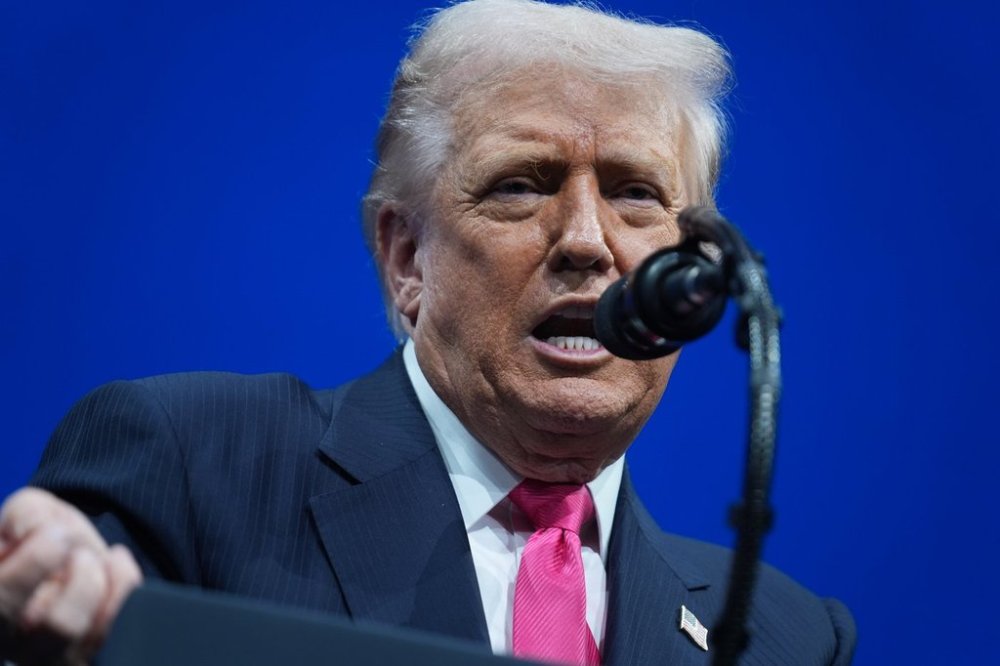
While the draft executive order could change, here’s what to know about states’ AI regulations and what Trump is proposing.
What state-level regulations exist and why
Four states — Colorado, California, Utah and Texas — have passed laws that set some rules for AI across the private sector, according to the International Association of Privacy Professionals.
Those laws include limiting the collection of certain personal information and requiring more transparency from companies.
The laws are in response to AI that already pervades everyday life. The technology helps make consequential decisions for Americans, including who gets a job interview, an apartment lease, a home loan and even certain medical care. But research has shown that it can make mistakes in those decisions, including by prioritizing a particular gender or race.
“It’s not a matter of AI makes mistakes and humans never do,” said Calli Schroeder, director of the AI & Human Rights Program at the public interest group EPIC.
“With a human, I can say, ‘Hey, explain, how did you come to that conclusion, what factors did you consider?’” she continued. “With an AI, I can’t ask any of that, and I can’t find that out. And frankly, half the time the programmers of the AI couldn’t answer that question.”
States’ more ambitious AI regulation proposals require private companies to provide transparency and assess the possible risks of discrimination from their AI programs.
Beyond those more sweeping rules, many states have regulated parts of AI: barring the use of deepfakes in elections and to create nonconsensual porn, for example, or putting rules in place around the government’s own use of AI.
What Trump and some Republicans want to do
The draft executive order would direct federal agencies to identify burdensome state AI regulations and pressure states to not enact them, including by withholding federal funding or challenging the state laws in court.
It would also begin a process to develop a lighter-touch regulatory framework for the whole country that would override state AI laws.
Trump’s argument is that the patchwork of regulations across 50 states impedes AI companies’ growth, and allows China to catch up to the U.S. in the AI race. The president has also said state regulations are producing “Woke AI.”
The draft executive order that was leaked could change and should not be taken as final, said a senior Trump administration official who requested anonymity to describe internal White House discussions.
The official said the tentative plan is for Trump to sign the order Friday.
Separately, House Republican leadership is already discussing a proposal to temporarily block states from regulating AI, the chamber’s majority leader, Steve Scalise, told Punchbowl News this week.
It’s yet unclear what that proposal would look like, or which AI regulations it would override.
TechNet, which advocates for tech companies including Google and Amazon, has previously argued that pausing state regulations would benefit smaller AI companies still getting on their feet and allow time for lawmakers develop a country-wide regulatory framework that “balances innovation with accountability.”
Why attempts at federal regulation have failed
Some Republicans in Congress have previously tried and failed to ban states from regulating AI.

Part of the challenge is that opposition is coming from their party’s own ranks.
Florida’s Republican governor, Ron DeSantis, said a federal law barring state regulation of AI was “Not acceptable” in a post on X this week.
DeSantis argued that the move would be a “subsidy to Big Tech” and would stop states from protecting against a list of things, including “predatory applications that target children” and “online censorship of political speech.”
A federal ban on states regulating AI is also unpopular, said Cody Venzke, senior policy council at the ACLU’s National Political Advocacy Department.
“The American people do not want AI to be discriminatory, to be unsafe, to be hallucinatory,” he said. “So I don’t think anyone is interested in winning the AI race if it means AI that is not trustworthy.”