Heat adds to strains on areas with data centers, raising the temperature on AI debates
Advertisement
Read this article for free:
or
Already have an account? Log in here »
To continue reading, please subscribe:

Digital Subscription
One year of digital access for only $205*
- Enjoy unlimited reading on winnipegfreepress.com
- Read the E-Edition, our digital replica newspaper
- Access News Break, our award-winning app
- Play interactive puzzles
*First annual payment billed as $205.00 + GST for one year. This annual subscription will automatically renew at $233.00 + GST every 52 weeks (10% off the regular annual price of $259.35). Offer available to new and qualified returning subscribers only. Cancel any time.
To continue reading, please subscribe:
Add Free Press access to your Brandon Sun subscription for only an additional
$1 for the first 4 weeks*
- Enjoy unlimited reading on winnipegfreepress.com
- Read the E-Edition, our digital replica newspaper
- Access News Break, our award-winning app
- Play interactive puzzles
*Your next Brandon Sun subscription payment will increase by $1.00 and you will be charged $17.95 plus GST for four weeks. After four weeks, your payment will increase to $24.95 plus GST every four weeks.
Read unlimited articles for free today:
or
Already have an account? Log in here »
LOWELL, Mass. (AP) — Eileen Castle’s swimming pool, one of the only ones for blocks around, was once a refuge for neighborhood children on hot summer days.
But even as temperatures soared this week, Castle, 82, said she won’t be filling the pool — not with the data center behind her house buzzing with the sound of its industrial air conditioners and its backup diesel generators belching fumes at unexpected times.
“I think about the air quality, the water, what effects it has on the kids in the area,” she said on her front stoop as children whirred past on bicycles.
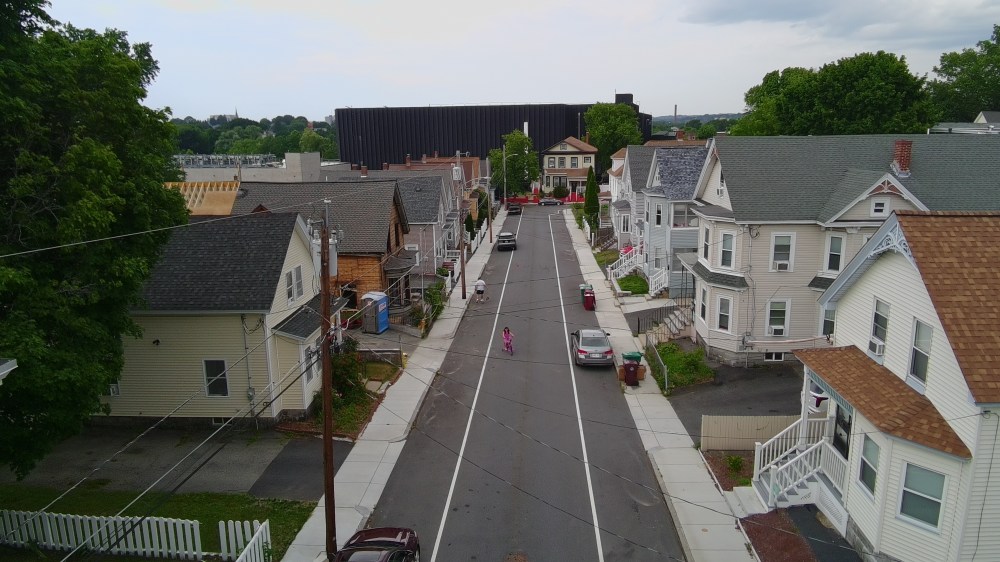
Hot weather of the kind sweeping the eastern U.S. drives up electricity demand for data centers, adding to their strain on power grids and worsening air quality for surrounding areas. The impact on communities like the racially diverse Sacred Heart neighborhood in Lowell, Massachusetts underscores why the artificial intelligence industry is feeling so much heat over the fast-sprouting facilities.
Around the country, data centers have been blamed increasingly for a host of environmental ills. Some tech industry figures say the facilities have become lightning rods for concerns over broader economic and societal changes posed by the AI boom.
But on sweltering days, it’s hard not to see the effects on Castle’s neighborhood, which the state has designated as facing higher environmental and health risks because of a population that’s been historically excluded from political decision-making.
“It’s majority low-income and working family, family members who are working hard every day to just try to put food on the table,” said state Rep. Tara Hong, a Democrat who represents a heavily Cambodian American district in Lowell, a city of about 115,000 people northwest of Boston. “It’s an inclusive place there and that data center is just smack in the middle of everything.”
Data centers require more resources to cope with heat waves
A heat wave is “almost the worst situation for data center operation,” said Shaolei Ren, a professor at the University of California, Riverside, who has studied AI’s environmental toll.
A data center’s racks of computer servers run hot and there are two ways to keep them running without interruption, Ren said: refrigeration-based cooling, which is energy-intensive, and evaporative cooling, which is water-intensive.
Some data centers will turn to backup diesel generators as a “preventative measure” to mitigate the likelihood of an outage, Ren said. If the grid is highly stressed, grid operators will sometimes ask data centers to turn on their generators as “the last line of defense,” Ren said.
Diesel emissions can have harmful effects on human health, even with short-term exposure. If too many diesel generators are fired up during heat waves, Ren said that could be “a disaster for the local air quality.″
The operator of the Lowell data center, the Markley Group, said it has planted more than 2,000 trees nearby to improve air quality. CEO Jeff Markley said in a statement to The Associated Press that the company has switched on generators in an emergency only a handful of times.
“They are not run proactively or continuously; they engage only during an actual power disruption to keep critical systems online, plus brief weekly testing of about five minutes per unit, run one generator at a time,” he said.
A data center sprouted where a pasta factory made spaghetti
Markley said he chose Lowell because of its abundant water for cooling — supplied by the same Merrimack River that powered 19th century textile mills in the Industrial Revolution. He said the Lowell facility uses about 118,000 gallons of water per day at the peak of summer, a small fraction of the city’s daily consumption.
Castle, a lifelong resident, was among those who welcomed the Markley Group a decade ago when it first started building on the site of an abandoned Prince spaghetti factory. But about two years ago, when the Markley Group added its second cooling tank behind her above-ground swimming pool, along with a growing number of surveillance cameras, the relationship had soured.
In response to growing opposition, Lowell’s City Council voted 10-0 in February to pass a moratorium blocking further data center expansion for a year.
Data center electricity use has grown in the last few years, said Jonathan Koomey, a researcher who has been studying the computing warehouses for 30 years. But it’s “very much a local phenomenon,” he said. On a national scale, Koomey said demand growth has been moderate in recent years and he doesn’t expect that to change.
“This is not a national crisis. It’s not explosive growth nationally,” he said. But in communities surrounding data centers, there are environmental costs, local economic costs, traffic and other concerns that need to be accounted for, Koomey added.
When temperatures climb into triple digits — as they’re expected to this week in New England — it’s harder to push heat out of a data center. Keeping it cool then requires more power, as is true of commercial buildings and homes. That can strain power grids and pose a “real risk” of power outages, Koomey said.
That strain looks different from the typical summer AC rush, when systems operators are dealing with “a lot of small loads” from individuals turning on home air conditioners, Koomey said.
“One of the challenges that the data center operators face is that these data centers are pretty big loads. They are big enough that they have to think about how to coordinate them and make sure that they’re not all cutting off at the same time or coming on at the same time,″ he said.
The North American Electric Reliability Corporation, a nonprofit that develops and enforces standards for the utility industry, recently issued an alert about the “unprecedented challenges from a surge in large power consumers” and developed guidelines to mitigate the “immediate risks posed″ by AI data centers.
As servers heat up, so do community data center tensions
Tensions ran so high in Lowell this week that police officers temporarily detained a 14-year-old girl who spoke out of turn at a city-led community forum on data center zoning.
“I’m not hurting anyone,” the girl shouted Monday after police officers escorted her from a middle school auditorium. “We just don’t want data centers!”
A coalition of data center opponents is increasingly clashing with electricians employed by Markley and other data center backers who say the facility boosts Lowell’s ties to the tech industry.
Criticized for calling police to the contentious meeting and later asking an officer to remove the girl, Lowell Mayor Erik Gitschier, whose office is nonpartisan, told local talk radio station WCAP he didn’t know her age at the time and defended his efforts to try to bring decorum to a topic he said deserves debate.
“It was warm out,” he said. “You had people who had definite, passionate positions and they were screaming.”
___
Huamani contributed from New York.
Related Articles
It’s not the weather — it’s the climate
Advertisement Advertise With Us
Advertisement Advertise With Us