

Pimicikamak’s $20-M in unpaid Hydro bills pales in comparison to what Hydro owes First Nation, chief says

Advertisement
Read this article for free:
or
Already have an account? Log in here »
To continue reading, please subscribe:

Digital Subscription
One year of digital access for only $205*
- Enjoy unlimited reading on winnipegfreepress.com
- Read the E-Edition, our digital replica newspaper
- Access News Break, our award-winning app
- Play interactive puzzles
*First annual payment billed as $205.00 + GST for one year. This annual subscription will automatically renew at $233.00 + GST every 52 weeks (10% off the regular annual price of $259.35). Offer available to new and qualified returning subscribers only. Cancel any time.
To continue reading, please subscribe:
Add Free Press access to your Brandon Sun subscription for only an additional
$1 for the first 4 weeks*
- Enjoy unlimited reading on winnipegfreepress.com
- Read the E-Edition, our digital replica newspaper
- Access News Break, our award-winning app
- Play interactive puzzles
*Your next Brandon Sun subscription payment will increase by $1.00 and you will be charged $17.95 plus GST for four weeks. After four weeks, your payment will increase to $24.95 plus GST every four weeks.
Read unlimited articles for free today:
or
Already have an account? Log in here »
Hey there, time traveller!
This article was published 19/01/2026 (267 days ago), so information in it may no longer be current.
As far as protests go, this could be among the most expensive ever seen in the province.
To underline its anger over unresolved compensation from the 1977 Northern Flood Agreement, the Pimicikamak (Cross Lake) Cree Nation stopped paying its electricity bills from Manitoba Hydro about 10 years ago. Now, the remote First Nation owes more than $20 million in arrears on its residential accounts.
The money owing to Hydro and the simmering dispute between Pimicikamak, Hydro and the province over full implementation of the NFA was brought to a full boil recently when the community — located more than 700 kilometres north of Winnipeg — suffered a catastrophic loss of electricity on Dec. 28.
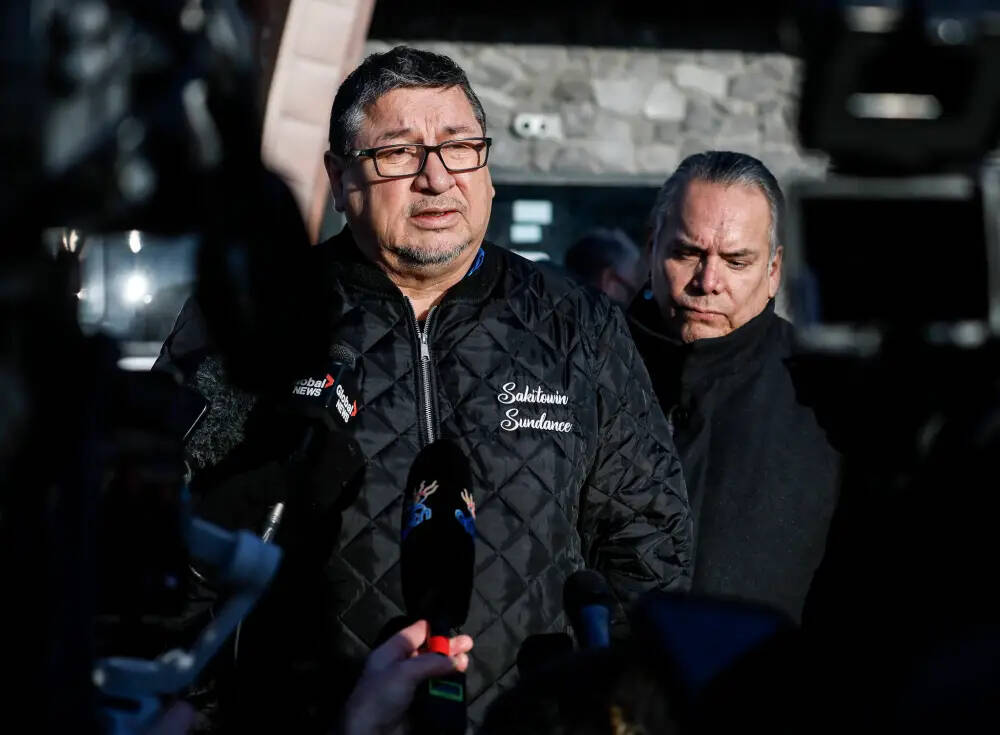
The days-long blackout triggered burst water pipes, sewage backups and fires from sodden electrical panels. More than 4,400 residents have been evacuated from the community while emergency workers, tradespeople and the military attempt to assess and repair damage to more than 1,300 homes.
Underlying the blackout and the arrears however, is Pimicikamak’s unique place in the history of Hydro and the NFA.
The original NFA sought to compensate five northern First Nations — Pimicikamak, Norway House Cree Nation, Nisichawayasihk Cree Nation (Nelson House), Tataskweyak (Split Lake) First Nation and York Factory (York Landing) First Nation — for the enormous flooding engineered to create the reservoirs to feed water into Hydro’s generating stations, and the management of river and lake water levels that feed those reservoirs.
In the 1990s, four of those five First Nations signed “implementation agreements” that effectively superseded the NFA. The lone holdout was Pimicikamak, which refused, based on a deeply embraced belief the original NFA had not been fully satisfied.
“They owe us hundreds of millions of dollars and they’ll have to pay up.”
Pimicikamak Chief David Monias said as part of the push for full implementation of the NFA, members of the community stopped paying their Hydro bills. A Hydro spokesman said the arrears are being partially serviced by regular compensation payments being made to the First Nation, a portion of which is held back to keep the arrears at $20 million.
Monias said while Hydro has paid compensation to the community, it has failed to live up to three lofty promises made in the original NFA: to provide potable water; to eradicate poverty; and to eliminate unemployment. Fulfilling those pledges will cost exponentially more than the residential account arrears, he added.
“Hydro says that we owe them some money,” Monias said in an interview. “We told them, if you think we owe you money, then sue us, OK? They haven’t done that because they know that if they (go into court) to say that we owe them money, then we can point out that they owe us money, too. They owe us hundreds of millions of dollars and they’ll have to pay up, as well.”
A spokesman for Manitoba Hydro said the utility “continues to honour all of its obligations” under the NFA, spending almost $500 million at Pimicikamak in the form of direct compensation and investments in community infrastructure. Hydro currently pays $12 million annually in compensation payments.
“Hydro has… failed to carry out the promises of the Northern Flood Agreement.”

The residential account arrears continues to be among the bigger ongoing points of dispute, the spokesman said. The $20 million owed by Pimicikamak is roughly one third of all unpaid electricity bills in the province, he added.
However, Peter Kulchyski, a professor of Indigenous studies at the University of Manitoba, argued the total amount of money owing to Hydro has to be viewed in the context of the enormous failures of the federal and provincial governments to honour the original NFA.
Kulchyski said the implementation agreements signed by the other four First Nations that were part of the NFA have been largely discredited as failed efforts to compensate the communities for the environmental devastation of their traditional lands.
“It’s very rich for Hydro to say, ‘Oh, you know, they owe us $20 million and they’ve owed it to us for 10 years,’ but during the same time, Hydro has… failed to carry out the promises of the Northern Flood Agreement. That $20 million is nickel-and-dime stuff, compared to the amount of money they’ve made off the Lake Winnipeg regulation.”
dan.lett@freepress.mb.ca
Dan Lett is a columnist for the Free Press, providing opinion and commentary on politics in Winnipeg and beyond. Born and raised in Toronto, Dan joined the Free Press in 1986. Read more about Dan.
Dan’s columns are built on facts and reactions, but offer his personal views through arguments and analysis. The Free Press’ editing team reviews Dan’s columns before they are posted online or published in print — part of the our tradition, since 1872, of producing reliable independent journalism. Read more about Free Press’s history and mandate, and learn how our newsroom operates.
Our newsroom depends on a growing audience of readers to power our journalism. If you are not a paid reader, please consider becoming a subscriber.
Our newsroom depends on its audience of readers to power our journalism. Thank you for your support.
Dan Lett is a columnist for the Free Press, providing opinion and commentary on politics in Winnipeg and beyond. Born and raised in Toronto, Dan joined the Free Press in 1986. Read more about Dan.
Dan’s columns are built on facts and reactions, but offer his personal views through arguments and analysis. The Free Press’ editing team reviews Dan’s columns before they are posted online or published in print — part of the our tradition, since 1872, of producing reliable independent journalism. Read more about Free Press’s history and mandate, and learn how our newsroom operates.
Our newsroom depends on a growing audience of readers to power our journalism. If you are not a paid reader, please consider becoming a subscriber.
Our newsroom depends on its audience of readers to power our journalism. Thank you for your support.
Related Articles
Hydro finds shotgun pellet in broken line that cut power, devastated Pimicikamak






Advertisement Advertise With Us
Advertisement Advertise With Us
History
Updated on Monday, January 19, 2026 7:04 PM CST: removes opinion tag
Updated on Monday, January 19, 2026 7:44 PM CST: Removes honorific
Updated on Tuesday, January 20, 2026 7:50 PM CST: Corrects distance from Pimicikamak to Winnipeg