

Proposed social-media ban for Manitoba children gets likes, thumbs-down

Advertisement
Read this article for free:
or
Already have an account? Log in here »
To continue reading, please subscribe:

Digital Subscription
One year of digital access for only $205*
- Enjoy unlimited reading on winnipegfreepress.com
- Read the E-Edition, our digital replica newspaper
- Access News Break, our award-winning app
- Play interactive puzzles
*First annual payment billed as $205.00 + GST for one year. This annual subscription will automatically renew at $233.00 + GST every 52 weeks (10% off the regular annual price of $259.35). Offer available to new and qualified returning subscribers only. Cancel any time.
To continue reading, please subscribe:
Add Free Press access to your Brandon Sun subscription for only an additional
$1 for the first 4 weeks*
- Enjoy unlimited reading on winnipegfreepress.com
- Read the E-Edition, our digital replica newspaper
- Access News Break, our award-winning app
- Play interactive puzzles
*Your next Brandon Sun subscription payment will increase by $1.00 and you will be charged $17.95 plus GST for four weeks. After four weeks, your payment will increase to $24.95 plus GST every four weeks.
Read unlimited articles for free today:
or
Already have an account? Log in here »
Mia Danyluk had a YouTube channel before she reached double digits. She was 11 years old when she signed up for Snapchat. In Grade 9, she joined Instagram.
Perhaps unsurprisingly, it was on social media that she learned about Manitoba’s plan to ban children and youth from accessing these platforms.
The irony was not lost on her — a 16-year-old who was raised in Winnipeg and on the borderless online world.
JOHN WOODS / FREE PRESS Grade 11 student Mia Danyluk learned about Manitoba’s plan to ban children and youth from social media platforms while she was online.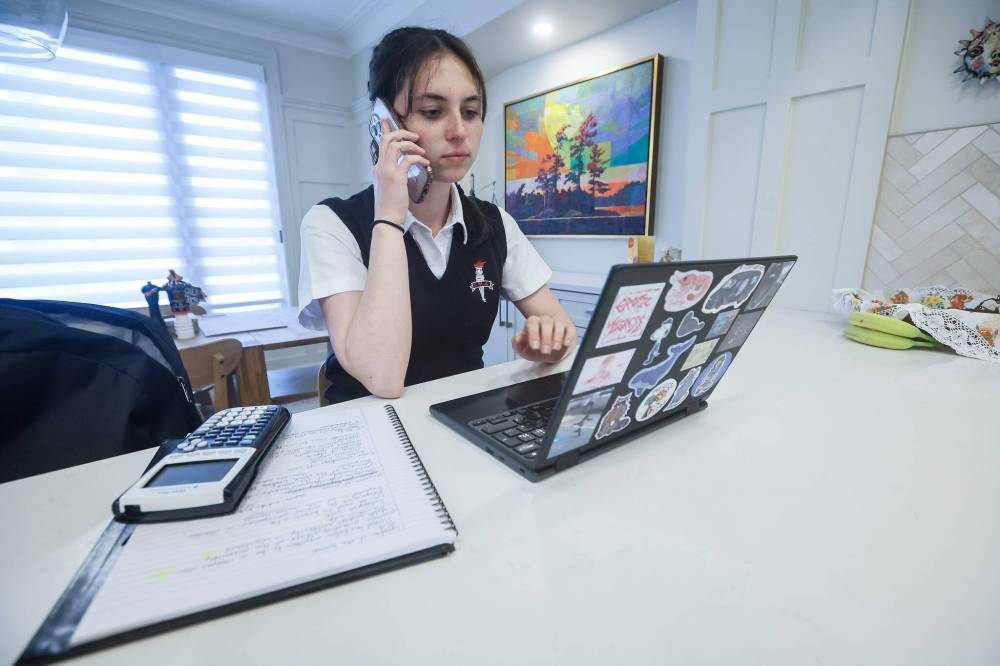
“We’re seeing younger and younger kids grow up with an iPad instead of toys in their hands. If we’re exposing kids to screens, we need to teach them online safety,” the high schooler said.
Mia is among the young skeptics of Premier Wab Kinew’s latest proposal to police screen time, in part because she’s witnessed peers find workarounds to the classroom cellphone ban since it took effect in September 2024.
Kinew has released few details about how his government plans to keep anyone aged 15 and younger off social media and prevent them from using chatbots powered by artificial intelligence. Even still, his commitment to do so has been praised by the Canadian Centre for Child Protection, Unplugged Canada, a parent-run advocacy group, and others.
Within 48 hours of the light-on-details announcement, made during an NDP fundraiser on Saturday, at least one student-initiated petition had been organized.
“I use social media to stay in touch with friends, organize plans, and keep up with what’s going on. It helps me stay connected.”
The Change.org petition, created by 12-year-old Ibrahim Hamid calls on signatories to “protect our children’s right to a connected, informed future.”
“I use social media to stay in touch with friends, organize plans, and keep up with what’s going on. It helps me stay connected,” the Grade 6 student said in a text.
Mia echoed those comments, but she also acknowledged that social media poses danger to users because it hosts cyberbullying, unrealistic highlight reels and graphic content.
“Social media itself needs to work on itself. It wants to give you the most shocking, jaw-dropping (content) — whatever gets engagement,” the Grade 11 student said.
JOHN WOODS / FREE PRESS Within 48 hours of the NDP’s announcement on Saturday, at least one student-initiated petition had been organized.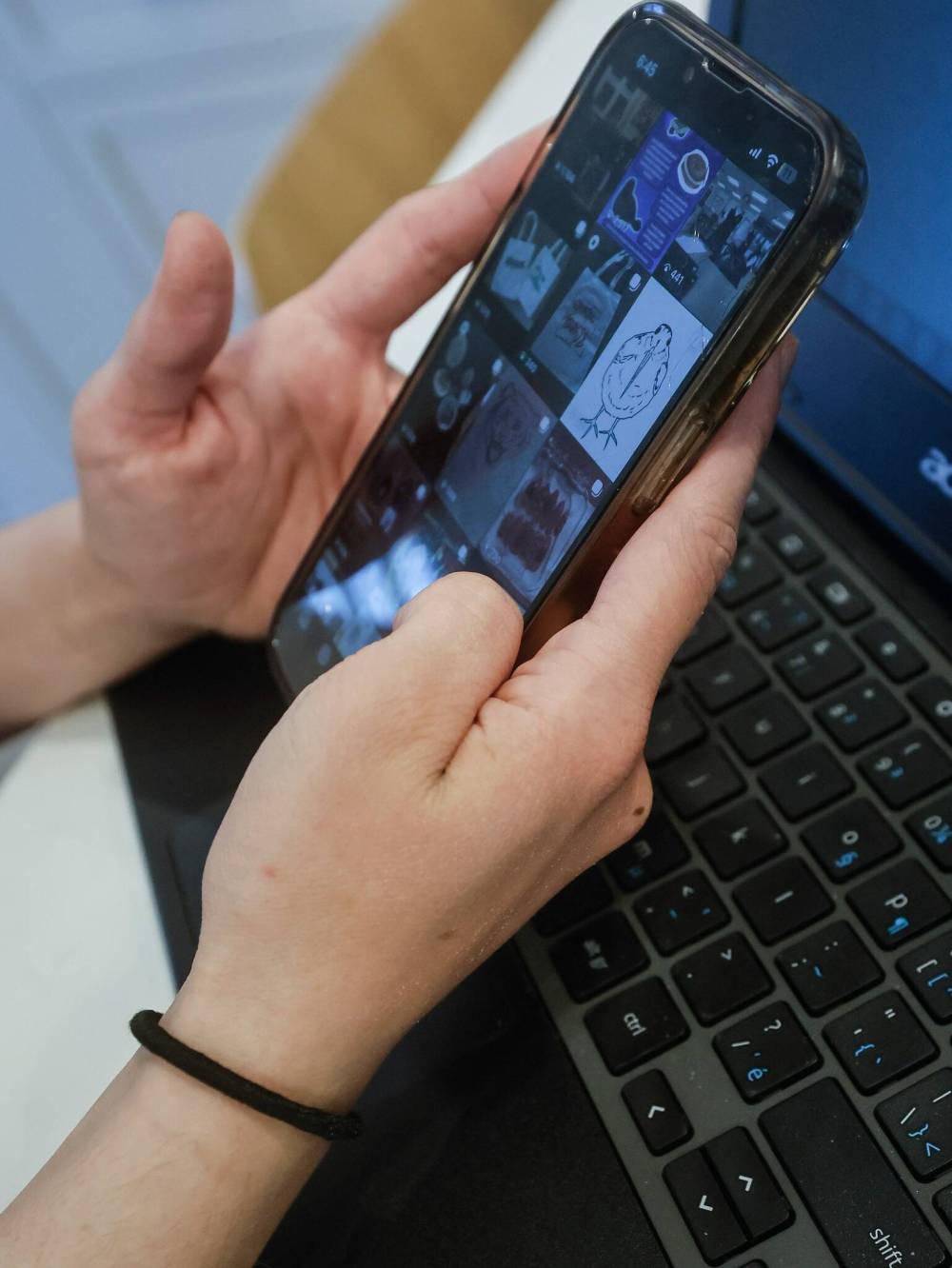
Tech companies need to do a better job of moderating feeds and restricting inappropriate content, such as violence and nudity, from being posted, she said.
Kinew told reporters on Tuesday the province could impose hefty fines on social media giants that violate future legislation.
Katie Szilagyi, a law and technology scholar at the University of Manitoba, said she’s concerned the province will copy-and-paste what’s been created in Australia.
As of Dec. 10, 2025, Australia became the first country to ban children from holding accounts on social media before their 16th birthday.
A compliance update released last month found some platforms continue to encourage underage use and age-verification methods have proven unreliable. The report indicated “a substantial proportion” of children under 16 had retained accounts despite regulatory changes.
“We want to hold the right people responsible and the people who are responsible are the technological companies, in terms of how they’ve built addictive platforms that work on dopamine and making sure people spend as much time on their platforms as possible,” Szilagyi said.
“To what degree are we letting our foot off the gas in terms of requiring some kind of algorithmic transparency or some kind of platform accountability by focusing on age verification or age estimation?”
“Social media itself needs to work on itself. It wants to give you the most shocking, jaw-dropping (content) – whatever gets engagement.”
The associate professor noted that there are numerous cybersecurity concerns associated with age-verification processes.
Meghan Dobbs and Laura Jones, both of whom have children in elementary school in Winnipeg, share in their optimism that Manitoba can learn from Australia.
“I’m a cup-is-half-full person,” said Dobbs, who has a four, seven and 11-year-old.
The mother of three said she’s hopeful an outright ban will be presented in an educational way that is positive, appropriate and nonjudgmental so there is buy-in.
Dobbs doesn’t permit her children to use social media, no matter how much they beg to watch TikTok dance videos they heard about from other students on their school playground.
For Jones, whose daughters are aged 10 and 12, the prospect of a social media ban is welcome because it will take the pressure off her as “the bad guy.”

“The last thing that I want is for for-profit (tech companies) to be the major influence on my kids’ values, interests and self-worth and how those are formed,” she said, noting she limits her daughters’ screen time to Facebook Messenger Kids.
Mia, 16, has listened to numerous online safety presentations dating back to elementary school.
These assemblies are important, but more public awareness and education needs to be done so everyone knows about the dark side of social media, including its implications for users’ body image and self-esteem levels, she said.
As far as the Grade 11 student is concerned, children and youth aren’t the only ones who need these lessons. Mia noted that many adults post photos and other personal information about their children online.
For her, social media is a tool to communicate with friends and learn about local events and music.
“Banning social media — sure, it sounds great,” Mia said.
“But No. 1, how is that going to be enforced? No. 2, is that really effective? And No. 3, what are we doing to help those who still use social media?”
maggie.macintosh@freepress.mb.ca
Maggie Macintosh
Education reporter
Maggie Macintosh reports on education for the Free Press. Originally from Hamilton, Ont., she first reported for the Free Press in 2017. Read more about Maggie.
Funding for the Free Press education reporter comes from the Government of Canada through the Local Journalism Initiative.
Every piece of reporting Maggie produces is reviewed by an editing team before it is posted online or published in print — part of the Free Press‘s tradition, since 1872, of producing reliable independent journalism. Read more about Free Press’s history and mandate, and learn how our newsroom operates.
Our newsroom depends on a growing audience of readers to power our journalism. If you are not a paid reader, please consider becoming a subscriber.
Our newsroom depends on its audience of readers to power our journalism. Thank you for your support.
Maggie Macintosh
Education reporter
Maggie Macintosh reports on education for the Free Press. Originally from Hamilton, Ont., she first reported for the Free Press in 2017. Read more about Maggie.
Funding for the Free Press education reporter comes from the Government of Canada through the Local Journalism Initiative.
Every piece of reporting Maggie produces is reviewed by an editing team before it is posted online or published in print — part of the Free Press‘s tradition, since 1872, of producing reliable independent journalism. Read more about Free Press’s history and mandate, and learn how our newsroom operates.
Our newsroom depends on a growing audience of readers to power our journalism. If you are not a paid reader, please consider becoming a subscriber.
Our newsroom depends on its audience of readers to power our journalism. Thank you for your support.
Related Articles
Kinew threatens billion-dollar fines for tech giants ignoring social-media ban for youths




Advertisement Advertise With Us
Advertisement Advertise With Us