

Teachers give Kinew failing grade over proposal to ban YouTube in classrooms

Advertisement
Read this article for free:
or
Already have an account? Log in here »
To continue reading, please subscribe:

Digital Subscription
One year of digital access for only $205*
- Enjoy unlimited reading on winnipegfreepress.com
- Read the E-Edition, our digital replica newspaper
- Access News Break, our award-winning app
- Play interactive puzzles
*First annual payment billed as $205.00 + GST for one year. This annual subscription will automatically renew at $233.00 + GST every 52 weeks (10% off the regular annual price of $259.35). Offer available to new and qualified returning subscribers only. Cancel any time.
To continue reading, please subscribe:
Add Free Press access to your Brandon Sun subscription for only an additional
$1 for the first 4 weeks*
- Enjoy unlimited reading on winnipegfreepress.com
- Read the E-Edition, our digital replica newspaper
- Access News Break, our award-winning app
- Play interactive puzzles
*Your next Brandon Sun subscription payment will increase by $1.00 and you will be charged $17.95 plus GST for four weeks. After four weeks, your payment will increase to $24.95 plus GST every four weeks.
Read unlimited articles for free today:
or
Already have an account? Log in here »
Manitoba teachers are decrying the premier’s proposal to keep YouTube out of their classrooms as part of his government’s social media ban.
In a public radio interview that aired Saturday, Premier Wab Kinew spoke at length about his vision to prevent children aged 15 and under from accessing the popular video-sharing platform and other apps.
“One of the examples people ask about is teachers using YouTube in the classroom — ‘Is that going to be allowed?’” Kinew said on The House, a CBC political and current affairs program.

“Right now, I think my answer would be no.”
Kinew cited concerns about the platform’s autoplay, algorithm-based recommendation and infinite-scroll features.
In response to outcry among members over the long weekend, the Manitoba Teachers’ Society released a video condemning Kinew’s proposal on Monday.
“I don’t think the kids need to be watching YouTube unsupervised, but there are lots of valuable teaching resources on there,” said one teacher who was not authorized to speak to the Free Press.
For example, Let’s Talk Science, a national education charity, runs a channel that posts videos that can make lessons more engaging for students, she said.
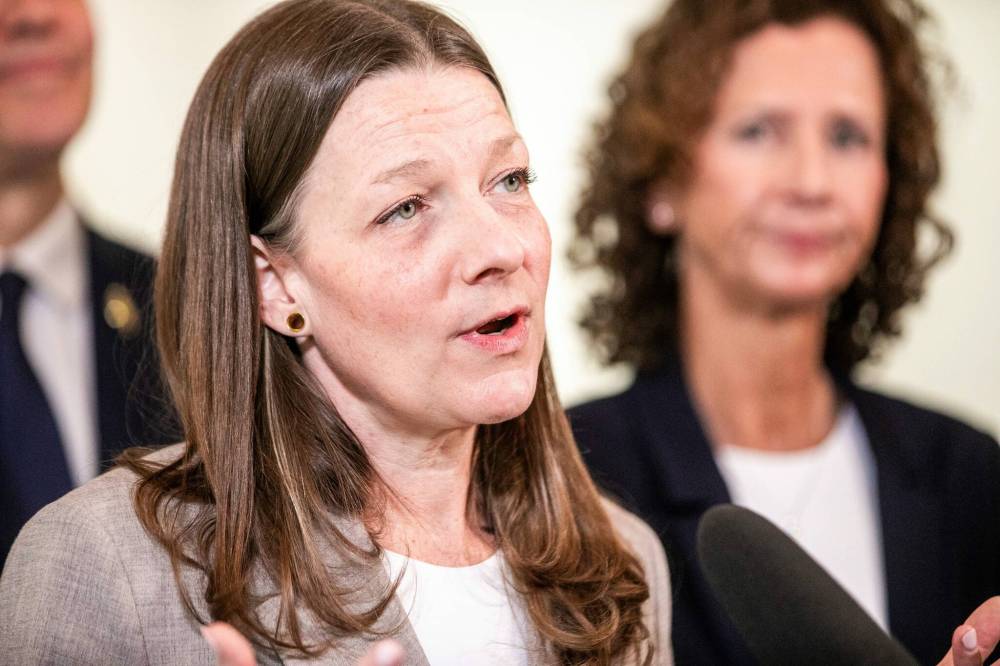
Teachers’ union president Lillian Klausen called the decision to outlaw YouTube entirely “a bad idea” that dismisses teachers as professionals who regularly vet materials to engage different kinds of learners.
“Don’t take away the tools we need to work if you’re not going to be funding (replacements),” said Klausen, who represents 17,000 public school educators.
Klausen noted the free platform, which hosts billions of videos on subjects of all kinds, has replaced VHS tapes and DVDs in schools.
As physical textbooks fall out of favour, YouTube has become “a key resource” for sharing educational content for in-person and distance learning models, said Charlie Marks, president of the Manitoba Association of Education Technology Leaders.
The association’s executive team is drafting a letter to the Kinew government to offer its expertise on banning social media in schools.
Marks noted there are tricks to get around advertisements and information technology staff can set up controls to ensure only pre-screened videos can be shown.
Education Minister Tracy Schmidt said she’s concerned about screen time, but she did not single out YouTube.

Discussions about how to bar Manitoba children from accessing social media and artificial intelligence have only just begun, Schmidt said, noting the province plans to take teachers’ input into account.
A balance must be struck, because technology can bolster education, but “there’s nothing more important than the protection of our kids,” she added.
The premier told the radio interviewer he’d be open to allowing the supervised use of a version of YouTube Kids that doesn’t have features engineered to keep users scrolling on it.
He also hinted future restrictions on social media and AI chatbots will not be enforced with age-verification in the manner that Australia has used since implementing its ban last December. In that country, platforms have been requesting that users submit proof they are old enough to register and maintain accounts.
maggie.macintosh@freepress.mb.ca
Maggie Macintosh
Education reporter
Maggie Macintosh reports on education for the Free Press. Originally from Hamilton, Ont., she first reported for the Free Press in 2017. Read more about Maggie.
Funding for the Free Press education reporter comes from the Government of Canada through the Local Journalism Initiative.
Every piece of reporting Maggie produces is reviewed by an editing team before it is posted online or published in print — part of the Free Press‘s tradition, since 1872, of producing reliable independent journalism. Read more about Free Press’s history and mandate, and learn how our newsroom operates.
Our newsroom depends on a growing audience of readers to power our journalism. If you are not a paid reader, please consider becoming a subscriber.
Our newsroom depends on its audience of readers to power our journalism. Thank you for your support.
Maggie Macintosh
Education reporter
Maggie Macintosh reports on education for the Free Press. Originally from Hamilton, Ont., she first reported for the Free Press in 2017. Read more about Maggie.
Funding for the Free Press education reporter comes from the Government of Canada through the Local Journalism Initiative.
Every piece of reporting Maggie produces is reviewed by an editing team before it is posted online or published in print — part of the Free Press‘s tradition, since 1872, of producing reliable independent journalism. Read more about Free Press’s history and mandate, and learn how our newsroom operates.
Our newsroom depends on a growing audience of readers to power our journalism. If you are not a paid reader, please consider becoming a subscriber.
Our newsroom depends on its audience of readers to power our journalism. Thank you for your support.
Related Articles
Manitoba could have commissioner enforce planned social media ban for kids: Kinew




Advertisement Advertise With Us
Advertisement Advertise With Us