Career and Community Experiences
Please review each article prior to use: grade-level applicability and curricular alignment might not be obvious from the headline alone.

‘A life-or-death program’: non-profit’s successful at-risk youth training awaits Ottawa funding decision
4 minute read Preview Friday, Mar. 20, 2026
Construction groups miffed by new fee on public-sector projects
5 minute read Preview Thursday, Mar. 19, 2026
Friends’ infill complexes ensure designs fit, respect older neighbourhoods
3 minute read Preview Thursday, Mar. 19, 2026
Province intends to create registry of Manitoba-certified Red Seal tradespeople
3 minute read Preview Thursday, Mar. 19, 2026
After 43-year career at the zoo, Janice Martin returns to lend a hand
9 minute read Preview Monday, Mar. 16, 2026
Ukrainian Guide to Winnipeg directory puts focus on area businesses, services run by Ukrainians
5 minute read Preview Saturday, Mar. 14, 2026Supporting oversized contributions of bite-sized farms
4 minute read Saturday, Mar. 14, 2026Small-scale food producers in Manitoba may be oceans away from their counterparts in Africa, but they share a common need for extension services relevant to their size.
Extension has historically been pivotal to helping farmers keep abreast of the ever-changing dynamics of agricultural production.
Yet when it comes to getting information on how to produce food better, whether they are in it to feed themselves or their neighbours, small farmers fall through the cracks. Industry and government extension services are heavily tilted towards helping large farmers to improve productivity.
Of the world’s roughly 570 million farms, 0.1 per cent exceeding 1,000 hectares (2,471 acres) manage half of all the world’s agricultural land to produce 16 per cent of the globe’s food energy. Farms of 124 acres or more grow 55 per cent of the world’s cereals, pulses, sugar and oilseed crops, the UN-FAO reports.

Tired of theft, local businesses consider IDing customers, making diners pre-pay
6 minute read Preview Thursday, Mar. 12, 2026
AI — when you find your servant is your master
5 minute read Preview Wednesday, Mar. 11, 2026
Two-thirds of Manitobans using AI, but a lot aren’t happy about it, survey reveals
4 minute read Preview Tuesday, Mar. 10, 2026
Union coalition demanding government action on downtown safety
5 minute read Preview Tuesday, Mar. 10, 2026
Volunteering at aviation museum sparks love of learning, sharing knowledge for former Air Force pilot
9 minute read Preview Monday, Mar. 9, 2026
Show her the money
6 minute read Preview Saturday, Mar. 7, 2026
International Women’s Day spotlight on invisible work
6 minute read Preview Saturday, Mar. 7, 2026
Students build confidence, businesses at JA Manitoba trade fair
3 minute read Preview Friday, Mar. 6, 2026
Many Canadian women seeing limited pathways to promotions, according to study results
3 minute read Preview Friday, Apr. 24, 2026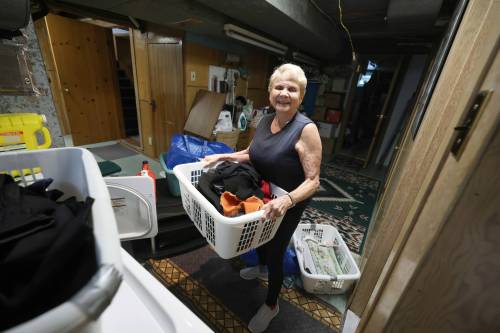
Retired nurse doesn’t mind doing laundry to help raise money for Children’s Hospital Foundation
9 minute read Preview Monday, Mar. 2, 2026
Burger King to bring AI-based voice coach to Canada later this year
4 minute read Preview Friday, Mar. 20, 2026
People First president focuses on helping those who need help
8 minute read Preview Monday, Feb. 23, 2026
Tax-filing season begins today. Here’s all you need to know
4 minute read Preview Thursday, Feb. 26, 2026
Untapped workforce
6 minute read Preview Saturday, Feb. 21, 2026
‘Neighbourhood staple’ Oakwood Cafe to shutter
5 minute read Preview Tuesday, Feb. 17, 2026
Eviance to develop success strategy for women entrepreneurs with disabilities
3 minute read Preview Friday, Feb. 13, 2026