Personal Management
Please review each article prior to use: grade-level applicability and curricular alignment might not be obvious from the headline alone.

Classic Scoop founder left lucrative job to start business offering treats on-site for parties, festivals
5 minute read Preview Friday, Aug. 14, 2026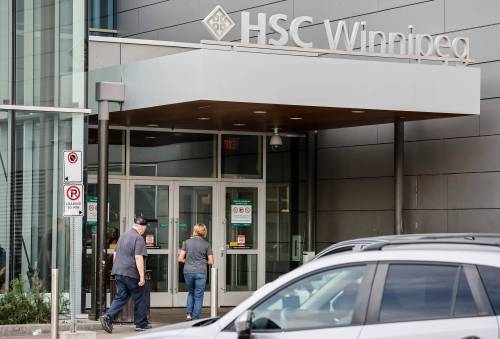
HSC nurses concerned info hacked in cyberattack
3 minute read Preview Wednesday, Aug. 12, 2026
It’s been a winding journey to the pros for PWHL’s first Manitoban bench boss
8 minute read Preview Monday, Aug. 10, 2026
Does Wealthsimple want to add sports, politics to its new prediction markets product?
5 minute read Preview Monday, Aug. 10, 2026

À Granby, le Manitoba francophone au micro
8 minute read Preview Saturday, Aug. 8, 2026
Some US adults are using AI for financial guidance but few trust it, Gallup poll finds
4 minute read Preview Monday, Aug. 10, 2026Authors fall prey to scam artists and fraudsters
5 minute read Tuesday, Aug. 4, 2026Today’s AI promotion scams aimed at authors attempt to exploit their human vulnerabilities.
Thinking is competitive advantage
5 minute read Saturday, Aug. 1, 2026Artificial Intelligence is set to become one of the greatest productivity tools businesses have ever seen. Ironically, its greatest value comes from rewarding the people who think the best rather than those who simply use it the most.
Every credible AI expert reinforces AI is just another tool. When used properly, it is potentially very powerful and can provide some excellent value — but it is not a holistic solution to every problem your business faces. As AI becomes more efficient, it creates more time for humans to think more deeply and become more capable.
You must maintain the “human in the loop.” Unless thinking and guidance are properly connected, a business can never achieve necessary alignment.
In other words, does the AI tool do what you need it to — or meant it to — in your organization? You will only know if you set an objective, test the tool, review the results and compare them with what you intended to achieve.
Keep free youth transit simple
4 minute read Friday, Jul. 31, 2026For too many young Winnipeggers, the cost of a bus pass is a barrier. It can mean missing a class, turning down a job opportunity or staying home from a program that could change their future.
Free transit for youth in Winnipeg is a transformational policy that will pay dividends for decades to come — advancing key environmental, educational and poverty reduction goals in our communities.
As champions for young people across our city, BGC Winnipeg and the YMCA-YWCA of Winnipeg commend Premier Wab Kinew and Mayor Scott Gillingham for recognizing that investing in young people is investing in Winnipeg’s future. By uniting to make transit free for youth across Winnipeg, both levels of government are delivering a forward-thinking policy that has the potential to have generational impact.
At a time when families are stretched to their limits by inflation, free transportation for youth offers real, immediate relief.
Tanning is getting hot again. Here’s what it really does to your skin
5 minute read Tuesday, Aug. 25, 2026Nichole Sims started using a tanning bed at 15 because she said everyone around her was doing it, especially before events like homecoming dances and prom.
Eight years later, she was diagnosed with melanoma — a potentially life-threatening skin cancer.
During that time, Sims has seen tanning become even more popular among young people online. She tries to counter the misinformation on social media that touts tanning as a mood booster and beauty requirement by sharing her own experience.
“I just feel like our generation doesn’t really look into a lot of risks. They just kind of live in the moment," Sims said.
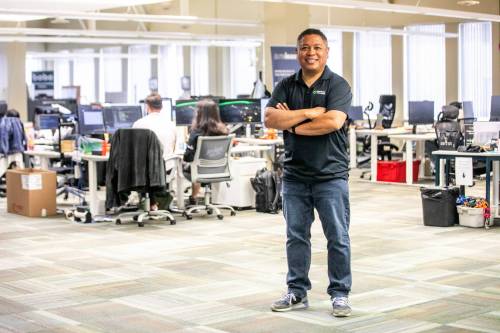
Manitoba Innovates seeks to pump up in-person networking as artificial intelligence-created resumés become norm
6 minute read Preview Monday, Jul. 27, 2026
Banks seek to implement AI tools for customers … who love them until they don’t work
6 minute read Preview Saturday, Jul. 25, 2026
Great workplace shorts debate: time to free knees
7 minute read Preview Saturday, Jul. 25, 2026Canada overlooks scores of workers
4 minute read Wednesday, Jul. 22, 2026Canada has a labour shortage and a labour surplus at the same time. Canada’s labour force shortages are no longer a temporary challenge. Across the country, “help wanted” signs are everywhere.

Ethics isn’t about big scandals — it’s about little decisions made each day
5 minute read Preview Saturday, Jul. 18, 2026
Cut the number of choices you make each day. Your brain will thank you
6 minute read Preview Monday, Aug. 17, 2026
bet365 expands Canadian footprint with launch in Alberta’s gaming market
4 minute read Preview Tuesday, Aug. 4, 2026
Sports gambling marketing during World Cup raises concerns about negative influence on susceptible audiences
5 minute read Preview Saturday, Jul. 11, 2026
How great managers adapt without playing favourites
7 minute read Preview Monday, Jul. 13, 2026
Apartment rents continue to climb in Manitoba
2 minute read Preview Friday, Jul. 10, 2026
Celebrating an important milestone in their new country
4 minute read Preview Wednesday, Jul. 8, 2026
Winnipeg high school football coach subject of hazing investigation
4 minute read Preview Tuesday, Jul. 7, 2026