Financial Literacy
Please review each article prior to use: grade-level applicability and curricular alignment might not be obvious from the headline alone.

Canada Goose says diversification efforts working but Q3 profit fell from year ago
5 minute read Preview Friday, Feb. 27, 2026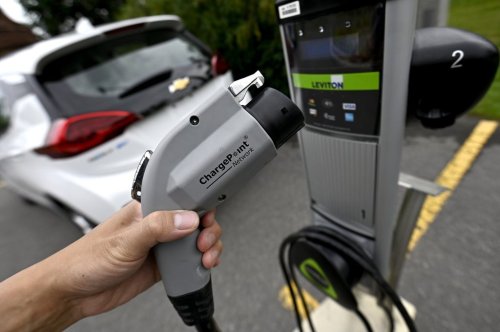
Ottawa to relaunch EV rebates program in 2 weeks with new auto strategy
7 minute read Preview Friday, Feb. 6, 2026
New book from renowned Canadian financial author aims to help you ‘Save Yourself’
6 minute read Preview Monday, Feb. 2, 2026
LRSD says 12 per cent increase needed to avoid layoffs if provincial funding frozen
5 minute read Preview Friday, Jan. 23, 2026
New year, deeper pockets needed
5 minute read Preview Wednesday, Dec. 31, 2025
Higher school taxes a preventable problem
5 minute read Preview Tuesday, Nov. 25, 2025
Why AI is poised to become Santa’s little helper this holiday
6 minute read Preview Thursday, Dec. 4, 2025
Grandparents can make lasting impact for disabled grandchildren by contributing to RDSP
6 minute read Preview Monday, Nov. 24, 2025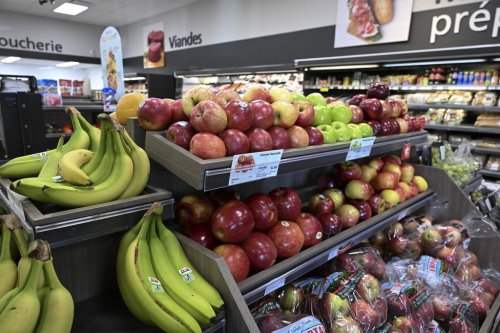
Canadians seeking ways to save on groceries as food costs remain top concern: survey
4 minute read Preview Friday, Nov. 21, 2025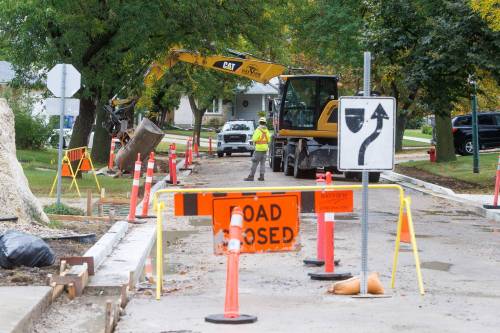
Twelve takeaways from the City of Winnipeg budget
5 minute read Preview Friday, Nov. 14, 2025
Many Canadians preparing to cut back on holiday spending: survey
2 minute read Preview Wednesday, Nov. 12, 2025
Investment regulator funds program to help Indigenous youth manage settlement money
5 minute read Preview Saturday, Nov. 1, 2025
Billie Eilish to billionaires: ‘No hate, but give your money away, shorties’
5 minute read Preview Monday, Nov. 3, 2025
Black-led non-profit developer gets federal funds for affordable housing units in north part of city
4 minute read Preview Monday, Oct. 20, 2025
Domestic enrolment helped U of W’s fiscal health: president
4 minute read Preview Sunday, Sep. 21, 2025
St. Boniface residents drained after demolition of Happyland pool
5 minute read Preview Friday, Sep. 19, 2025
Province to reimburse Brandon school division for evacuee costs
2 minute read Preview Friday, Sep. 19, 2025
Better protection needed for urban trees
4 minute read Preview Wednesday, Sep. 17, 2025Missed payments by Manitoba small businesses rise
3 minute read Tuesday, Sep. 16, 2025Missed payments by Manitoba small businesses rose nearly 13 per cent earlier this year, new Equifax Canada data show.
The credit bureau counted 2,005 Manitoba businesses that didn’t meet at least one payment deadline between April and June, when looking at financial trade delinquencies. Construction, mining, transportation and wholesale trades were among the categories to see increased delinquency rates.
“Provinces that have been stable in the past are really showing areas where they’re starting to pull apart,” said Jeff Brown, Equifax Canada’s head of commercial solutions.
Manitoba’s financial trades delinquency rate year-over-year change outpaced the national average of 8.67 per cent.
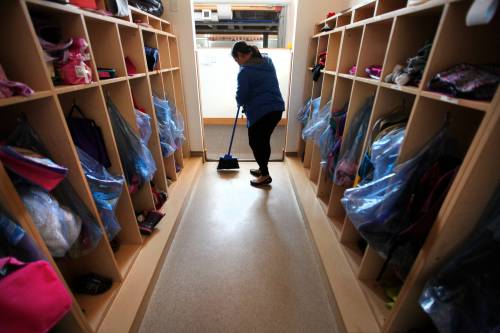
Early childhood educators give high marks to job satisfaction: poll
3 minute read Preview Monday, Sep. 15, 2025
‘As we grow, our roots only grow deeper’: Red River Mutual insurance company celebrates 150 years
6 minute read Preview Monday, Sep. 15, 2025Canadian farmers facing harvest cash-flow crunch, talking support
4 minute read Saturday, Sep. 13, 2025Canadian farmers are understandably disappointed the federal government’s response to China’s punishing import tariffs on canola, pork, peas and seafood hasn’t so far included direct compensation.
After all, the duties are widely seen as retaliation for Canadian tariffs effectively locking Chinese electric cars out of the local market — a policy decision that had nothing to do with agriculture. This is the second time in recent memory China has targeted Canadian farmers to score points on unrelated issues. It’s unlikely to be the last.
While the full impact remains unclear, when Canada’s second-largest canola customer imposes tariffs of 75.8 per cent on seed and 100 per cent on oil and meal, it’s a safe bet demand will be curbed and prices will be lower than they would have been otherwise. Industry estimates place the eventual costs in the range of $2 billion.
However, commodity prices this year are depressed across the board — for a host of reasons. Much of the new-crop canola has yet to be harvested and very little has been sold.
Ottawa earmarks $29M for energy retrofits for Manitoba households
3 minute read Friday, Sep. 12, 2025Manitoba homeowners and renters will be the first to benefit from a new federal program to reduce — and for some, eliminate — the cost of energy retrofits.
Federal environment and natural resources ministers Julie Dabrusin and Tim Hodgson joined provincial officials in Winnipeg’s Chalmers neighbourhood Friday to announce $29 million for Efficiency Manitoba under the greener homes affordability program.
“The way we heat, cool and power our homes impacts our environment, our wallets and the comfort of our daily lives,” Hodgson said, adding that 7,000 modest-income households in Manitoba would have access to no-cost energy retrofits.
“That will make their energy bills hundreds of dollars cheaper, their homes more comfortable and their carbon footprint smaller,” he said.