Social Studies (general)
Please review each article prior to use: grade-level applicability and curricular alignment might not be obvious from the headline alone.
When the internet first arrived in the mid-1990s, it screeched. Literally.
It screamed its way into our homes through the telephone lines, a metallic cry that sounded like the future forcing its way through. We waited through the static, convinced that life was about to get easier. People said it would save us time, let us work from home and give us more hours with our families.
No one mentioned that it would also move into our bedrooms, our pockets and our dreams. No one could have imagined that it would change how we fight, how we march, how we plead for justice. That the fight for justice itself would become a digital labyrinth where truth moves slowly and attention moves fast.
Back then, when a heroine from a popular early-2000s television show was dumped with nothing but a handwritten note, it became a cultural tragedy. There was nothing noble about writing your cowardice on a Post-it. A few years later, a company fired hundreds by email and it made national news. Today, we âquietly quitâ through apps without blinking, edit our grief into reels, add the music the app suggests and call it closure.
Forum Art Centre and the art of neighbourhood life
5 minute read Preview Thursday, Oct. 30, 2025The road not taken: lowest number of Manitobans in three decades cross border at Pembina in July, August
5 minute read Preview Wednesday, Oct. 29, 2025Former Liberal cabinet minister says young people are hesitant to enter politics
5 minute read Preview Wednesday, Oct. 15, 2025On second anniversary of Oct. 7 attacks and start of Gaza war, officers say rushing to cover painful vandalism reduces odds of arrests
8 minute read Preview Tuesday, Oct. 7, 2025Roasters and cafés grapple with rising coffee bean prices
4 minute read Preview Monday, Oct. 6, 2025Muslim-Jewish dialogue group encourages empathy
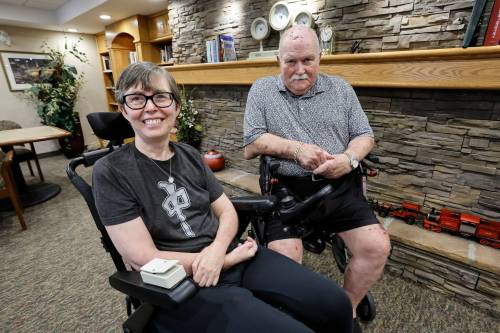
5 minute read Saturday, Oct. 4, 2025Three days after Oct. 7, 2023, Ari Zaretsky received an email message that brought him to tears. The message expressed deep condolences for the massacre of Israeli civilians at the hands of Hamas, and a recognition of the pain and grief that Zaretsky and his family must be enduring.
The email was sent from Wesam Abuzaiter, who, like Zaretsky, worked at Sunnybrook Health Sciences Centre in Toronto. Abuzaiter, a pharmacist, is a Canadian-Palestinian Muslim originally from Gaza. Zaretsky, a psychiatrist, is a Canadian Jew and Zionist.
Together, they are the founders of the Sunnybrook dialogue group.
Abuzaiter and Zaretsky had crossed paths in the hospital a few years before âwhen he invited her to share her personal journey as an international graduate during an educational session with her colleagues. During that presentation, Zaretsky also shared that he was a child of Holocaust survivors.
TikTok as a tool â but for whom?
4 minute read Preview Wednesday, Oct. 1, 2025Big things are ahead for northern Manitoba.
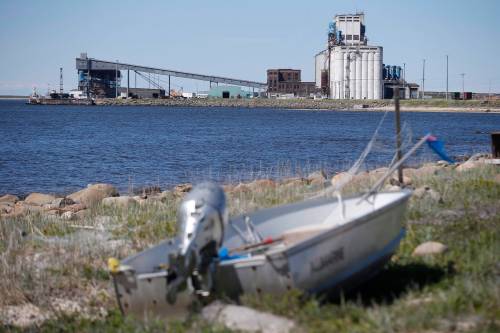
Political leaders at every level are focused on unlocking the Northâs tremendous potential, and what sets this moment apart is the scale â which comes with the need for thoughtful planning that includes people, not just infrastructure, to help us realize the opportunity ahead.
Churchill could emerge as a vital Canadian port, with year-round shipping supported by icebreakers, an upgraded railway and all-weather roads connecting isolated communities. Upgrading Manitoba Hydroâs northern transmission system and investing in new projects like the Kivalliq Hydro-Fibre Link, would deliver clean energy and broadbandâopening new possibilities for families and businesses across Northern Manitoba and Nunavut. Major mining initiatives are advancing and have been recognized as nationally significant.
These ambitious undertakings have the potential to transform Manitoba, benefiting all Manitobans â especially those in the North â with good, new jobs. Realizing this future will require people (thousands of them) âwelders, carpenters, electricians and heavy-duty mechanics to build and maintain energy and transport systems; operators to construct roads; IT specialists and logisticians to run modern supply chains; and nurses, teachers and social workers to strengthen communities as they grow. With large-scale projects underway across Canada, competition for a skilled workforce will be fierce.
Schools work to fulfil promise afforded by new law supporting Indigenous language
5 minute read Preview Tuesday, Sep. 30, 2025Silenced no more: Indigenous languages celebrated at site of former residential school
4 minute read Preview Tuesday, Sep. 30, 2025Ottawa orders unprecedented posthumous appeal of fourth Indigenous manâs conviction in 1973 slaying
5 minute read Preview Monday, Sep. 29, 2025Most refused to listen then, more understand now
6 minute read Preview Monday, Sep. 29, 2025The simplest way to raise living standards? Build a better business climate.
Manitoba is a small, open economy. That should be freeing. It should mean we focus on what we do best, and trust the market to send signals about where investment belongs. But more often, government takes the wheel.
The record on that isnât good. Governments like to believe they can allocate capital more efficiently than markets. History says otherwise. The âwinnersâ chosen often reflect politics more than economics.
Tariffs are the clearest example. Drop a tariff, and one industry will feel the pain of new competition. But the benefits are spread out: lower prices for consumers, lower costs for businesses, higher productivity overall. Raise a tariff, and the reverse happens.
Winnipeg firefighters canât keep doing more with less
4 minute read Preview Thursday, Sep. 25, 2025Big Tobacco and Big Oil are eerily similar. One knowingly produces a product that slowly but surely kills its consumers. The other knowingly produces a product that surely but not slowly kills the planet.
Only moratorium can save moose population: MWF
4 minute read Preview Wednesday, Sep. 24, 2025Manitoba Crown attorneys take important step toward meaningful bail reform
5 minute read Tuesday, Sep. 23, 2025For years, politicians have been locked in an endless cycle of sloganeering about bail reform. Youâve probably heard it, especially from the federal Conservatives: âjail, not bail.â
The idea is that Canadaâs bail laws are too weak, too âsoft on crime,â too quick to release dangerous offenders back onto the street. Itâs an easy line to deliver, and it taps into public anger over violent crime. But like most easy lines, itâs not grounded in reality.
Weâre now beginning to learn, at least in Manitoba, why some repeat offenders charged with serious crimes may be released on bail when they shouldnât be. And it has nothing to do with the law itself. It has everything to do with how bail court is actually run day-to-day â the nuts and bolts of how cases are handled.
On Monday, the Manitoba Association of Crown Attorneys pulled back the curtain on a system that is in disarray. They released a discussion paper and held a news conference to tell Manitobans what really goes on in bail court. Their message was clear: prosecutors often donât have enough time, information or resources to properly argue bail cases.
Motion to rename park withdrawn after MMF complaint
3 minute read Preview Tuesday, Sep. 23, 2025Another subdivision, another city problem
5 minute read Preview Tuesday, Sep. 23, 2025Wildfires like this arenât normal. Stop trying to normalize them.
âBring a pair of pants and a sweater to Clear Lake â itâs unseasonably cool because of the wildfires.â That was just one of those meteorological idiosyncrasies, attempting to reach back deep into long-forgotten geography lessons, that may seem obvious to those on the Prairies. But for the outsider, a visitor from Toronto, and indeed a relative newcomer to Canada, it was certainly a shock, and a stark reminder that I would be flying into a province still under a state of emergency, which had until recently been decimated by wildfires. It was also an introduction into what may be considered ânormalâ.
Visiting Manitoba this August was extraordinary â the people most certainly lived up to the âfriendlyâ billing that adorns the licence plates, and the scenery of Riding Mountain National Park was worth the trip alone. However, there were a number of topics of conversation that made me question what I had come to know as accepted wisdom.
Talk about fishing restrictions, Indigenous rights, oil and gas permeated discussions, with healthy, good spirited debates. But for me, the most vexing issue was wildfires. More specifically, the extent of their aftermath, effects, and associated restrictions, have become normalized.
Increase in number of doctors is only a start
3 minute read Preview Tuesday, Sep. 23, 2025In cold blood: the death of American media
5 minute read Monday, Sep. 22, 2025Independent mainstream legacy media in the United States is dead. The funeral just hasnât been held yet.